
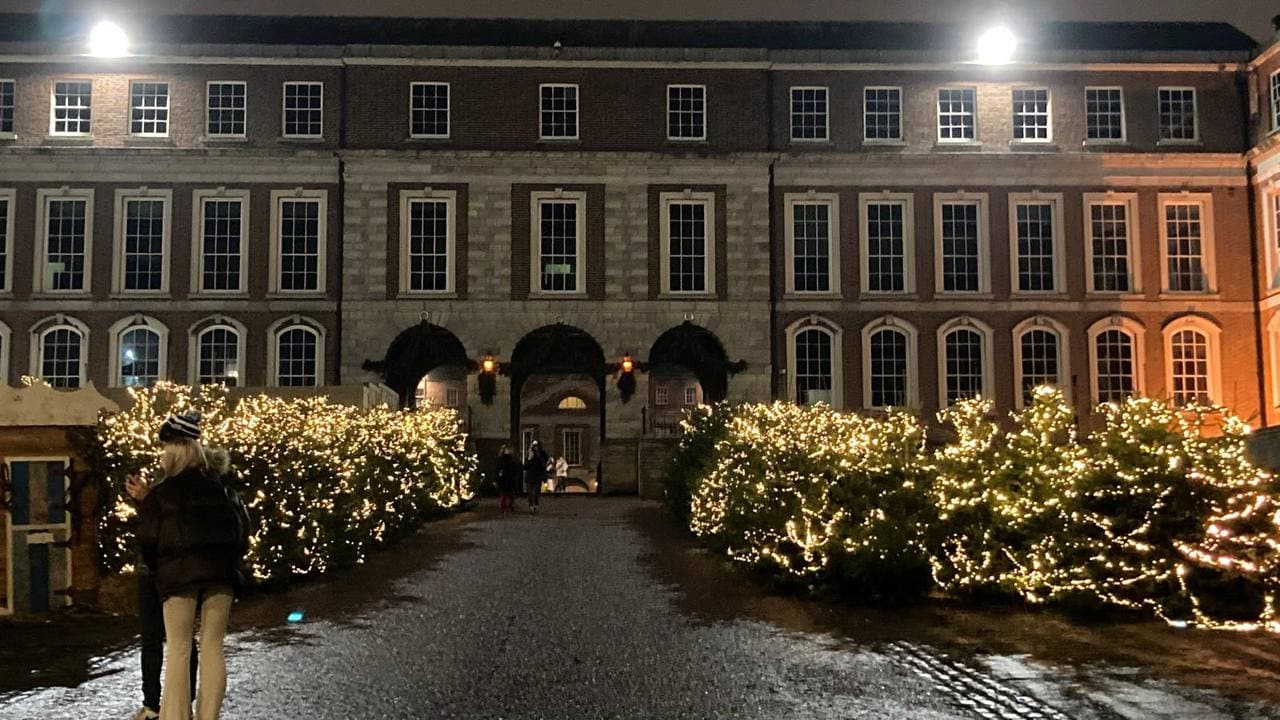
As winter nights lengthen, Ireland’s Christmas season unfolds in a warm blend of sacred tradition and spirited cheer. From placing a candle in the window on Christmas Eve to the boisterous Wren Boys on St. Stephen’s Day, many Irish holiday customs trace back to Gaelic culture and Catholic devotion. In rural villages and bustling cities alike, Christmas in Ireland is a time of hospitality, faith and folklore, celebrated with unique Irish touches. Travelers on tours in Ireland during the holidays will find a welcoming atmosphere – think peat fires glowing, carolers singing in candlelit churches and maybe a friendly invite for a “cupán tae” (cup of tea) or a pint by the tree. In this article, we explore Ireland’s beloved Christmas customs – old and new – and how they create a truly special Yuletide (Nollaig) on the Emerald Isle.
Gaelic Traditions Woven into an Irish Christmas
Christmas in Ireland (Nollaig) is a rich tapestry of Gaelic tradition and Christian observance. The holiday took root with the arrival of Christianity in Ireland by the 5th century, adapting and blending with older Celtic winter customs. Many practices now seen as typically “Irish Christmas” have Gaelic origins or symbolic meanings that date back centuries. For example, holly and ivy decorations, ubiquitous in Irish homes, were used in pre-Christian times to celebrate the winter solstice – evergreens symbolized life during the barren months. The Irish continued this practice within a Christian framework, decking halls with holly wreaths and mistletoe to bring cheer and ward off darkness (today you’ll still find a holly wreath on many an Irish front door in December). Even the timing of Ireland’s festivities reflects older rhythms: traditionally the Christmas season here lasts twelve days, from Christmas Eve through Epiphany on January 6th (hence the folk song “The Twelve Days of Christmas”). January 6th is nicknamed Little Christmas or Women’s Christmas (Nollaig na mBan), long considered the official end of the holidays when decorations are taken down and women, who often led the domestic preparations, would finally rest and celebrate together.
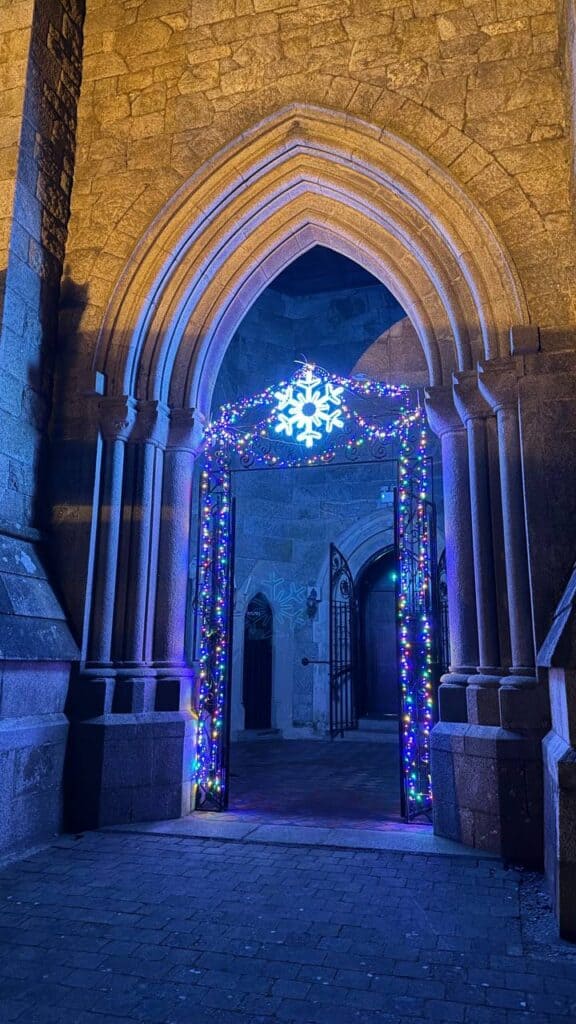
Ireland’s strong Catholic heritage also shaped Christmas with distinctive touches. Midnight Mass on Christmas Eve is a cornerstone – a spiritual gathering that, in many communities, is as anticipated as the Christmas Day feast. Historically held at midnight, the Mass has in modern times been moved a bit earlier (often 10 PM) in some parishes – partly to accommodate families and, humorously, perhaps because a few attendees would turn up “after one too many” at the pub if it were at midnight. Regardless of the hour, churches fill with congregants and flickering candles, and it’s common to hear Irish Christmas blessings or even an Irish carol during the service. In Gaeltacht (Irish-speaking) areas, the Mass or readings might be in the Irish language, keeping the Gaelic spirit alive.
Another gentle Gaelic touch is the practice of preparing the home for Christmas as though expecting honored guests. An old custom called “The Laden Table” involved setting out extra food on Christmas Eve – a loaf of fruit bread full of raisins and caraway seeds, a pitcher of milk, and a lit candle on the kitchen table, with the door left unlocked – so that Mary and Joseph, or any weary traveler, could find sustenance and shelter. While few Irish families literally leave their door unlatched overnight now, the symbolism of hospitality endures. Many households still place a Nativity crib in a special corner, often adding the baby Jesus figurine to the manger only on Christmas morning. This reflects both religious devotion and the tradition of waiting until “the guests” (Holy Family) truly arrive. Whether in a thatched cottage or a city terrace house, an Irish Christmas carries on the age-old values of open doors, kindness to strangers, and remembrance of heritage – quietly honoring the Gaelic notion of the meitheal, or community spirit, during the darkest time of year.
Light in the Window: A Candle for Hospitality and Hope
One of Ireland’s most poignant Christmas traditions is the placing of a lit candle in the window on Christmas Eve. As dusk falls on December 24th, you’ll notice many Irish homes with a single candle glowing in a front window, its warm flicker visible from the road. This simple gesture is laden with meaning. First and foremost, it is a symbol of welcome to Mary and Joseph, echoing the Holy Family’s search for shelter in Bethlehem. By lighting a candle, Irish families are wordlessly saying, “there is room at our inn.” It’s also a sign of hospitality to any passerby – in folk belief, the light told strangers they could approach for food or rest. One can imagine in earlier times a traveler on a cold winter night taking comfort at the sight of that little beacon.
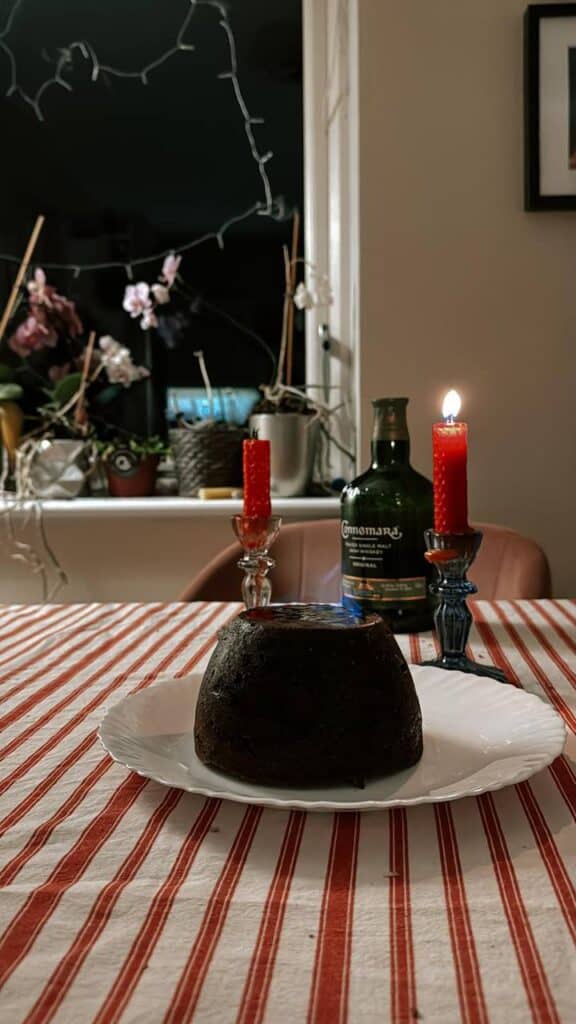
The tradition also has roots in Ireland’s history of religious persecution. During the Penal Laws of the 17th–18th centuries, Catholic priests were forbidden to say Mass openly. A candle in the window signaled to traveling priests that this home was a safe haven where the faithful gathered in secret for Christmas Mass. In those dark days, the candle’s light meant the difference between celebrating the Eucharist or not at all. Over time, even after the dangers passed, the Irish kept the Christmas Eve candle as a cherished custom, blending the practical with the spiritual.
In modern decades, the candle in the window has taken on an additional layer of significance – as a reminder of the Irish diaspora abroad. During her presidency in the 1990s, Mary Robinson famously reintroduced the custom at the presidential residence, Áras an Uachtaráin, placing an illuminated candle in the window as a sign to Ireland’s emigrants around the world that they are remembered back home. That gesture struck a chord; many Irish people have family overseas (from the famine waves of the 1800s to recent graduates working in Sydney or San Francisco), and Christmas can be a poignant time of separation. Lighting the candle is a way of saying “we miss you, you’re welcome home anytime.” In fact, countless Irish emigrants have carried this tradition with them – you’ll find Irish households in Boston or London also lighting candles on Christmas Eve, connecting back to their roots.
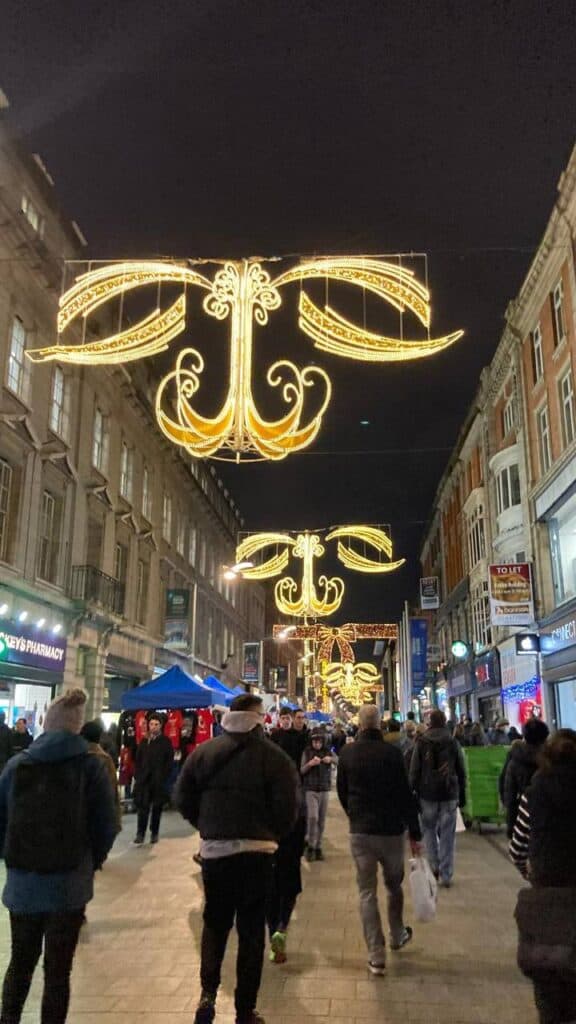
Today, the ritual is usually simple: just after dark on December 24th, someone (often the youngest in the family, for good luck) lights a single white candle and sets it by a front-facing window. Some use an electric candle for safety, but many still prefer real flame for authenticity. The candle may burn for only a few hours (unattended candles are not left lit overnight anymore), but its symbolic glow leaves a lasting impression. If you stroll through an Irish town on Christmas Eve, those little lights in windows create a collective warmth in the darkness. For visitors, it’s a beautiful sight – an entire community silently radiating welcome and hope. And if you’re staying with an Irish host or guide in Ireland on that night, don’t be surprised if you’re invited to light the candle yourself, participating in a meaningful piece of Irish Christmas heritage.
Festive Hearth and Home: Decorations, Carols, and Midnight Mass
Irish homes come alive with a mix of devout and festive touches during Christmastime. In keeping with Gaelic custom, many decorations are natural and symbolic. Families often collect holly, ivy, and mistletoe to adorn mantels and tables – a practice dating to ancient winter solstice rites, now intertwined with Christmas as a celebration of life in the dead of winter. You’ll commonly see a holly wreath on front doors (prickly holly was easy to find in Ireland and, in Celtic lore, its evergreen leaves and red berries signified the promise of spring). Of course, like everywhere, Ireland embraces the Christmas tree too. Traditionally, December 8th was the accepted day to “put up the tree” – aligning with the Feast of the Immaculate Conception when many country folk came to town to shop and would start decorating afterward. Even today, by early December the ritual of selecting a real Noble fir tree (often a family outing to a local farm or lot) is in full swing. The tree is then decked with lights and ornaments – some passed down for generations – and usually an angel or star on top. Irish families tend to keep the same ornaments year to year, giving the tree a homely, memory-laden character. Everything is typically in place by mid-December so that the house is ready to welcome visitors and the spirit of the season.
If you enter an Irish home at Christmastime, you might notice a few uniquely Irish flourishes. In many houses you’ll find a crib (Nativity scene) prominently displayed – sometimes a simple wooden stable on the mantel or a more elaborate set of figures. One charming tradition: the figure of Baby Jesus is left out of the crib until Christmas morning, then placed in the manger to mark His birth. It’s a small way the religious significance of the day is observed within the home. Some families also display symbols like the Listowel Christmas Carol Sheet or Irish-language Christmas blessings on wall hangings, blending language and faith.
As Christmas Eve transitions into Christmas Day, churches across Ireland fill up for Midnight Mass (or vigil Mass). Attending this late-night service is a hallmark of an Irish Christmas, even for some who are not regular churchgoers. It’s a time to reflect on the Nativity and sing beloved carols together. Stepping out into the cold night after Mass, people often exchange hearty “Merry Christmas” wishes (and compare how chilly the church was – many a faithful Irish granny has shivered through the rosary in an unheated stone chapel!). In recent years, some parishes hold this Mass earlier in the evening – around 9 or 10 PM – to make it easier for families and perhaps to avoid overzealous revelers showing up tipsy. The earlier schedule hasn’t dampened the atmosphere; if anything, it means more children can attend in their cozy pajamas, eyes wide at the candlelit altar and the strains of “O Holy Night” echoing in the nave.
Carol singing is another beloved aspect of Irish Christmas cheer. From early December, it’s common to encounter carolers in the streets and shopping centers, often raising money for charities. These aren’t the professional choirs, but rather local school groups, sports clubs, or charity volunteers, dressed in Santa hats or Victorian costumes, belting out classics like “Silent Night” (and occasionally an Irish carol such as “Don Oíche Úd i mBeithil” – That Night in Bethlehem). The jollity is infectious and most passersby will happily drop a few euros into the donation box. Churches and concert halls also host formal carol services. Notably, Dublin’s Christ Church Cathedral holds beautiful Carols by Candlelight concerts that sell out each year and in Cork, the annual Lord Mayor’s Concert features choirs singing seasonal favorites. These events blend community and culture: you might hear the audience join in for the chorus of “Adeste Fideles” (Latin for O Come All Ye Faithful) one moment, and then laugh at a witty Irish-language version of “Jingle Bells” the next.
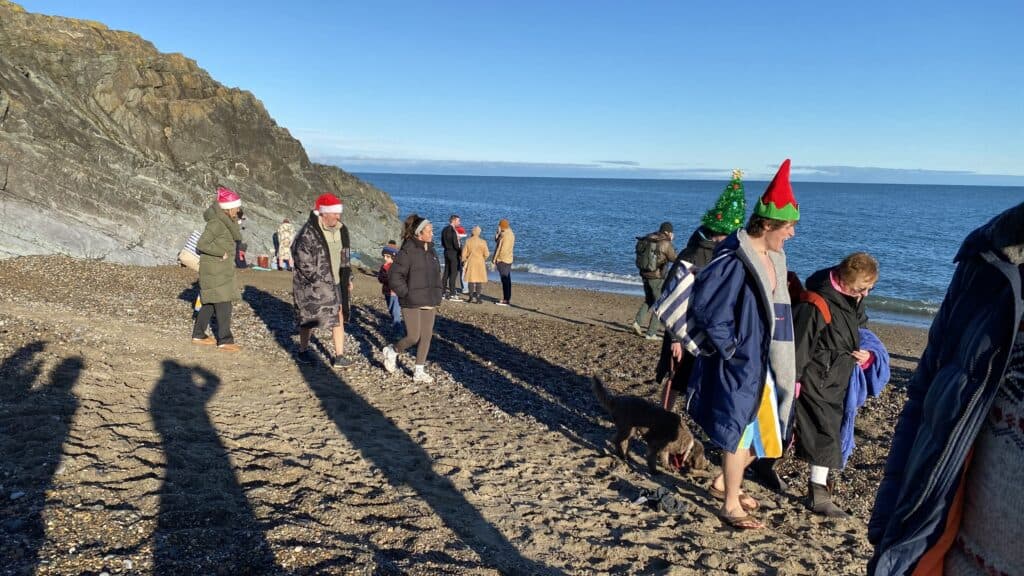
On Christmas Day itself, Ireland tends to be quiet and family-focused. In cities, the streets are nearly empty – no shops open, minimal public transport – as most people are at home with loved ones. After the excitement (or chaos!) of Christmas morning gift-opening, many families attend a late morning Mass if they didn’t go the night before. Others start prepping the big Christmas dinner. Either way, by early afternoon, extended families gather around the table for the feast (more on the festive foods in a moment). The Christmas Day meal is the heart of the home celebration – but lest we forget, there’s another quirky tradition earlier that day: the brave (or crazy) souls who partake in the Christmas morning swim. Yes, across Ireland, groups of hardy swimmers run into the icy ocean on Christmas morning as a challenge and charity fundraiser. The most famous is at the Forty Foot in Dublin’s Sandycove, where hundreds plunge into the frigid Irish Sea – often wearing Santa hats – cheered on by bundled-up onlookers sipping hot whiskey. Similar swims happen from Cork to Donegal. It’s “freezing madness,” as the Irish would say, but it has become a cherished tradition for those communities and it raises thousands for local charities. As one friend who does it told me, “It’s actually grand once you go numb!” For the less adventurous, staying by the fire and watching a classic film or playing board games is the preferred post-dinner activity. In the evening, some will pop down to the pub for a sociable pint with neighbors (most pubs open for a couple of hours on Christmas night, often with a cozy, low-key atmosphere – a few locals, a crackling fire, maybe someone playing fiddle softly in the corner).
In sum, Christmas Eve and Day in Ireland balance solemnity and merriment. The flicker of the Eucharist candle at Midnight Mass, the twinkle of fairy lights on the tree, the voices of friends singing “Deck the Halls” on Grafton Street, the clink of glasses and laughter from a family dinner – all of these sights and sounds weave together. It’s a time when even modern, tech-laden Ireland steps back into a somewhat nostalgic, timeless mode of being: shops closed, phones put aside, just people together enjoying simple traditions. And whether you’re visiting a thatched cottage in County Clare or an elegant Georgian home in Dublin, that genuine Gaelic Yuletide cheer – full of warmth, faith, and a good dose of humor – will make you feel right at home.
Feasting and Folklore: Irish Christmas Day Delights
The Irish know how to feast at Christmas, infusing the day with hearty food and age-old folklore. The centerpiece is the Christmas dinner, which in Ireland draws from both British influences and local specialties. On the afternoon of December 25th, families sit down to a spread that typically features roast turkey (a relatively recent 20th-century addition) and ham, accompanied by potatoes every way imaginable – roasties, mash, maybe even the beloved Irish mashed potato dish colcannon making an appearance. In some parts of Ireland, particularly Cork, there’s a tradition of spiced beef – a cut of beef brined with spices for days and then boiled or baked – served thinly sliced alongside the turkey. Stuffing (sometimes made with oatmeal in an old Irish recipe), Brussels sprouts, carrots and parsnips glazed in honey, and rich gravy round out the plate. To start, many Irish Christmas dinners begin with something light like a vegetable soup or smoked salmon, and to finish, there must be dessert even if everyone is stuffed.
Sweet treats are indispensable. Most tables proudly display a Christmas pudding – a dense, steamed fruit pudding doused in whiskey or brandy and set aflame for a dramatic presentation – as well as a Christmas cake, which is a rich fruitcake covered in marzipan and royal icing. These are typically homemade or from a family recipe. In fact, Irish tradition encourages making the Christmas cake weeks in advance (often right after Halloween) and “feeding” it with splashes of whiskey or porter stout to deepen the flavor as it matures. When you taste a slice, dark with vine fruits and spice, you’re tasting a labor of love that might have been prepared two months earlier. Mince pies (buttery tarts filled with spiced fruit mince) are also popular; they might be offered to any calling neighbor with a cup of tea throughout the holidays. And the laden table custom from yesteryear, where a seed cake and milk were left out on Christmas Eve, has today morphed into families sneaking an early piece of Christmas cake or mince pie on the 24th as a personal treat. Even the drink accompanying dessert has an Irish twist – perhaps a dram of Irish whiskey or a glass of Bailey’s Irish Cream to toast the day.
After dinner, a peculiar thing might happen: family members start telling stories or little superstitions come up in conversation. Irish Christmas folklore is rich, and while mostly light-hearted now, some families still observe certain beliefs. For instance, it’s said that at midnight on Christmas Eve, animals can momentarily speak – but it’s bad luck for humans to hear them, so perhaps it’s best to be in church at that hour! Another bit of lore: bees are thought to awaken and hum in their hives at the precise moment of Christ’s birth, showing even nature rejoices. In some rural areas, people would leave the door unlatched and the hearth fire burning all night on Christmas Eve to welcome any wandering souls – reflecting the belief in sí (fairies) or spirits being abroad on holy nights. While few truly expect to find strangers at the table or chatting cattle in the barn these days, such tales still get a smile or a “I remember my granny saying…” at the Christmas table.
St. Stephen’s Day (December 26th) is part of the Christmas feasting cycle too. Many Irish will visit relatives or friends and inevitably there’s another round of eating – often a more casual affair featuring leftover turkey and ham turned into sandwiches or turkey curry (yes, turkey curry has become something of a modern Irish Boxing Day tradition!). It’s also a big day for pub socializing – by evening on the 26th, pubs are lively with folks who’ve emerged from their family hibernation to meet friends, share weekend sports banter, and enjoy the “leftover” Christmas ale. If you’re lucky, you might encounter a group of musicians gathering for a spur-of-the-moment trad session at the local pub that night, fiddles and flutes ringing out jigs alongside holiday tunes.
Throughout these days, certain charitable traditions underscore the Irish Christmas spirit. Besides the aforementioned Christmas swims for charity, many communities host events like a “Simon Community Christmas Day dip” (in aid of homelessness) or charity Christmas morning runs. Carolers collect for St. Vincent de Paul or children’s hospitals. Even the resurrected Wren Boys (coming up next) now often collect money for good causes instead of for their own revelry. This blending of feasting and goodwill is very much in the Irish ethos — enjoy the abundance, and share it with others in need.
In short, an Irish Christmas feast is not only about the food on the plate, but also the stories, songs, and small acts of kindness that accompany it. It’s a time when folklore is at the dinner table along with the fine china, and when even the most skeptical uncle might recall a superstition or two from childhood. As you clink glasses and perhaps join in a chorus of “The Wexford Carol” (one of Europe’s oldest carols, from Ireland’s 12th-century tradition), you become part of the living tapestry of Ireland’s Nollaig. And if you’re traveling in Ireland, don’t be shy – dig in to that second helping of Christmas pudding and ask your hosts about their family customs. You might be rewarded with a charming tale of how “Granddad swears he heard the cows moo ‘Merry Christmas’ back in ’72” – a bit of Irish blarney served up as the final course of Christmas dinner!
St. Stephen’s Day (Dec 26): Wren Boys and Winter Revels
No sooner is Christmas Day over than Ireland gears up for another unique celebration: St. Stephen’s Day, on December 26th, known in Irish as Lá Fhéile Stiofáin or Lá an Dreoilín (Wren Day). This day, also observed as Boxing Day in other countries, has its own distinct flavor in Ireland – a mix of sporting events, visiting friends, and the curious Wren Boys tradition. Officially, it’s the feast of Saint Stephen, the first Christian martyr, but in Ireland it’s also a public holiday devoted to more earthly pursuits after the solemnity of Christmas.
One of the oldest and most eye-catching customs is “Hunting the Wren”, carried out by the Wren Boys (and Girls) on St. Stephen’s Day. Early in the morning (or nowadays, more often around midday), locals in certain towns – famously Dingle in County Kerry, and also parts of Clare, Dublin, and elsewhere – dress up in outlandish costumes often made of straw, ribbons, and old clothes. Faces are sometimes painted or hidden behind masks. These are the Wren Boys (called mummers in some areas). They parade through the streets carrying a pole with a bush attached, which in olden times would have a captured wren bird tied to it (today a fake wren or symbolic small bird is used). As they march, they play fiddles, accordions, tin whistles and drums, singing a repetitive traditional rhyme:
“The wren, the wren, the king of all birds,
On St. Stephen’s Day was caught in the furze;
Although he is little, his family is great,
I pray you, good landlady, give us a treat.”
They go from door to door or pub to pub, “bringing the wren” and collecting coins (now for charity) while engaging in general mischief and merriment. The effect is joyous chaos – imagine a roving band of colorfully disguised musicians and dancers, half-kidnaping people out of their homes to join the fun, while the music never stops. In Dingle, the whole town turns out for the Wren Boy procession, which can swell into a street céilí by afternoon, with hundreds dancing sets in the square.
But why the wren? The folklore behind it is fascinating and varied. One Christian legend says that during his escape, St. Stephen was betrayed by the chattering of a wren, leading to his capture – hence the wren was considered accursed and hunted in retribution. Another interpretation reaches further back: in Celtic mythology, the wren was regarded as the “king of all birds” (for outsmarting an eagle in a contest) and symbolized the old year; “hunting” the wren at year’s end ritually ushered in the new year, a practice possibly tied to pagan midwinter rites. Historically, groups of young men would indeed capture and kill a wren, carry it aloft on a decorated holly bush, and then bury it with great ceremony – the collected money would fund a big evening feast or “Wren Ball” for the participants. The church frowned on this rowdy, pagan-tinged custom, and it nearly died out by the mid-20th century due to clerical disapproval and rural depopulation.
However, Wren Day has seen a revival in recent decades. Thankfully, no real wrens are harmed now – the focus is on music, costume, and community heritage. In places like Dingle (Kerry) and Miltown Malbay (Clare), the Wren Boys tradition is going strong and has even become a tourist attraction. Each locale has its quirks: some have competitions for best straw outfit, others elect a “Wren Queen,” and many integrate Irish language song into the revelry. The money collected is donated to local charities or community projects, turning what was once a rambunctious hooley into a force for good. For visitors, encountering the Wren Boys can be a delightful surprise – suddenly you’re pulled into a circle to dance, or handed a drum to beat in rhythm with a hundred-year-old tune. The performers may be farmers, teachers, teenagers – all united by this eccentric shared heritage that lets them blow off steam after Christmas. As one Dingle local told me with a grin, “St. Stephen’s is the day we let loose – sure didn’t we spend yesterday in our Sunday best behaving for the family?”
Beyond the Wren Boys, St. Stephen’s Day in Ireland is also synonymous with sport and outdoor fun. It’s a major day for horse racing, with big meets like the Leopardstown Christmas Festival in Dublin attracting thousands who fancy a flutter (and an excuse to dress up and socialize). In the countryside, traditional fox hunts (or now drag hunts) often have a ceremonial St. Stephen’s Day Hunt – you might see riders in red coats trotting through town to start a hunt, followed by a pack of hounds. Even those not participating might walk down to the meet location just to see the splendid horses and wish the riders well. Many families will also go for a St. Stephen’s Day walk – it’s practically an unwritten rule to get some fresh air on the 26th. Hiking trails, beach promenades, and local parks are filled with folks walking off the feast from the day before. It’s common to drop by neighbors’ houses, bringing perhaps a tin of sweets or a piece of Christmas cake, to convey season’s greetings. Indeed, in Ireland the days after Christmas are often spent visiting friends and relations – sharing leftover goodies and plenty of tea.
For those looking for nightlife, the 26th is typically a big pub night. All the hometown friends who’ve been scattered during the year seem to be home, and St. Stephen’s is when everyone converges on the local pub. There’s an atmosphere of reunion and relaxation. In cities, many pubs host live music on the 26th, knowing the crowds will be out. In villages, it might be an informal sing-song or simply great craic as stories of “Santa’s deliveries” or how someone nearly burned the turkey are swapped. One modern trend among younger Irish is the Saint Stephen’s Day football matches or charity games – maybe a local GAA (Gaelic football) club organizes a fun match between married vs singles, or a soccer club holds a memorial game for a past member, drawing families out to spectate and support. By the end of St. Stephen’s Day, one has the sense that the solemnity of Christmas has given way fully to festivity and community fun.
For travelers in Ireland, December 26th can be a highlight if you know where to go. Joining the throngs at a horse race, or catching a Wren Boy parade, offers a glimpse of Irish celebration rarely seen by casual tourists. Even just enjoying the relative calm – strolling through a quiet city where the shop windows are still aglow with Christmas displays but the frantic pre-Christmas rush has vanished – can be magical. It’s like a collective sigh of contentment spreads across the country: the big day is done, and now it’s time to play, visit, and look ahead to the new year. And don’t forget to wish people “Happy St. Stephen’s Day” (or “Lá Fhéile Stiofáin sona daoibh” in Irish) – it’s an important part of the Irish holiday lexicon.
Nollaig na mBan: Little Christmas and Last Hurrah
By early January, as the Epiphany approaches, Ireland’s Christmas season winds down with one final tradition – Nollaig na mBan, meaning “Women’s Christmas,” observed on January 6th. On this date, also called Little Christmas or the Feast of the Epiphany, Irish tradition dictates that the holiday duties are inverted: women, who often bore the brunt of Christmas cooking and cleaning, get a well-deserved rest while the menfolk take over the household for the day. Historically, this was common in the south and west of Ireland. After weeks of preparing puddings, polishing the good silver, and ensuring everyone’s gifts were wrapped, the mothers and grandmothers would finally kick up their feet once the Twelfth Day of Christmas arrived.
On Nollaig na mBan, it’s customary for women to gather with their female friends, sisters, and neighbors – leaving the kids and chores to the men – and go out for a leisurely lunch or afternoon tea and cake. In times past, it might have been a simple visit to each other’s homes for a cup of tea, or a “lie-in” while the husband handled breakfast. In modern Ireland, the tradition has seen a bit of a revival: restaurants and pubs now often host Women’s Christmas events or specials on January 6th, and you’ll see groups of ladies of all ages laughing and chatting over glasses of wine, toasting the end of the holidays. It’s a charming custom that highlights the contribution of women to making Christmas happen, and it gives them a day to celebrate themselves. The somewhat old-fashioned gender roles behind it have evolved – nowadays it’s less about strictly dividing sexes and more about honoring the idea of “Mam has a day off.” In fact, many men fully support it, gamely donning the apron to serve up dinner that night!
Little Christmas also has general significance for everyone: all the decorations must come down by January 6th. Superstition holds that leaving decor up past the Epiphany brings bad luck, so January 6th sees Ireland on a mission of untrimming trees and carefully packing up Nativity sets. The once-bright baubles and wreaths get stored away, and dried holly is disposed of (sometimes ceremonially burned). There’s often a slight bittersweet feeling as the last lights are turned off; the living room corner looks empty without the tree. But there’s also a sense of completeness – the season has come full circle. In some towns, January 6th might be marked with a final switching off of the public Christmas lights or a community carol service to close Christmas. And being a religious feast, many attend a special Epiphany Mass that day, marking the visit of the Three Wise Men – in Ireland, Epiphany is colloquially called “Little Christmas” because, historically, it was celebrated in a simpler way than the big day on Dec 25th.
For Irish people, especially women, Nollaig na mBan is often nostalgic. They recall their mothers or aunts gathering on that day and perhaps themselves being shooed out of the kitchen. In recent times, it has even taken on a new life as an occasion to discuss women’s issues or fundraise for women’s charities, linking the domestic tradition to broader themes of women’s empowerment. But at its heart, it remains a fun, lightly observed holiday. You might see an article in the Irish papers on January 6th each year noting the tradition and encouraging people to revive it (often with a female columnist humorously urging, like the Dochara writer did, “personally I am ALL about bringing it back!”).
For travelers, if you happen to be in Ireland on January 6th, you’ll notice it’s not marked by parades or large public events – it’s more intimate. But if you step into a pub or cafe, you might overhear a group of local women clinking glasses and saying “Happy Little Christmas!” to each other. Feel free to wish them “Nollaig na mBan sona daoibh” – they’ll be tickled by your knowledge of this unique custom. And don’t be surprised if one responds with a grin, “Ah, sure isn’t every day women’s Christmas now!” – a wink to how times have changed indeed. By the end of Little Christmas, Ireland’s festive season gently fades out. The next day life returns to routine, but the glow of the recently passed holiday – the candles, the laughter, the shared memories – lingers on, ready to be rekindled next year.
Leave a Reply