
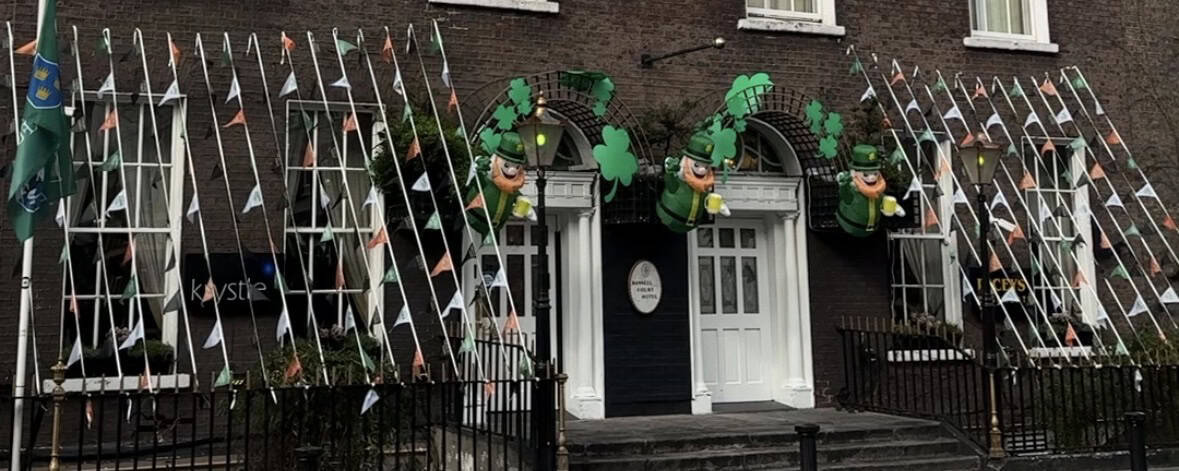
Every year on March 17th, Ireland dons a mantle of green to celebrate St. Patrick’s Day – the country’s most famous festival and national holiday. What began as a religious feast day honoring Ireland’s patron saint has blossomed into a vibrant celebration of Irish culture, heritage, and community pride, enjoyed both at home and around the globe.
From the legend of Saint Patrick himself and ancient customs like the shamrock tradition, to the booming parades and lively pub gatherings of today, St. Patrick’s Day offers a unique window into the Irish spirit. Travelers planning tours in Ireland around mid-March can expect a warm, festive atmosphere and a chance to experience Ireland at its most welcoming.
In this article, we delve into the origins of St. Patrick’s Day, its evolution over the centuries, and how you can join in the celebrations.
Saint Patrick: The Origins of the Feast Day
St. Patrick’s Day is named for Saint Patrick, the 5th-century missionary who became the patron saint of Ireland. The man behind the holiday led an extraordinary life that shaped the island’s history and legends. Patrick was born in Roman Britain (likely in the late 4th century) and, as a teenager, was kidnapped by Irish raiders who brought him to Ireland as an enslaved shepherd. After six years in captivity, he escaped back to Britain, but he felt a calling to return to Ireland. Patrick would come back as a Christian missionary, determined to convert the Irish from pagan traditions to Christianity.
Over years of preaching and traveling across Ireland, Patrick’s influence grew. According to tradition, he died on March 17 (around 461 AD) in the mid-fifth century. In the centuries that followed, Patrick was venerated as Ireland’s national apostle. Perhaps the most famous legend of St. Patrick is that he used the three-leaf shamrock plant to explain the Christian Holy Trinity (Father, Son, and Holy Spirit) to the Irish people. This simple teaching tool – a tiny green clover – became one of the enduring symbols of St. Patrick and, eventually, of Irish identity itself. (Another popular legend claims Patrick banished all snakes from Ireland, symbolizing his driving out of evil; while it’s true Ireland has no native snakes today, scientists note this may have been more metaphor than fact.)
By the early Middle Ages, St. Patrick’s Day was established as a religious feast day on the Catholic liturgical calendar, to be observed every March 17th in honor of the saint . For over a thousand years, Irish people have marked this date in remembrance of Patrick. During the medieval and early modern era, celebrations were modest and pious: St. Patrick’s Day was a “holy day of obligation”, meaning the faithful attended Mass and avoided work. It fell during Lent – the solemn six-week period before Easter when fasting and abstaining from meat were customary – but on March 17th those Lenten restrictions were relaxed for the day of feasting . This allowed families to indulge in a hearty meal and conviviality in Patrick’s honor. In fact, a traditional Irish dish of bacon and cabbage became closely associated with the feast . Many Irish families would attend church in the morning, then come home to boil bacon (salted pork) and cabbage for lunch, celebrating together with singing, dancing, and maybe a drop of whiskey – a brief reprieve from Lent’s austerity .
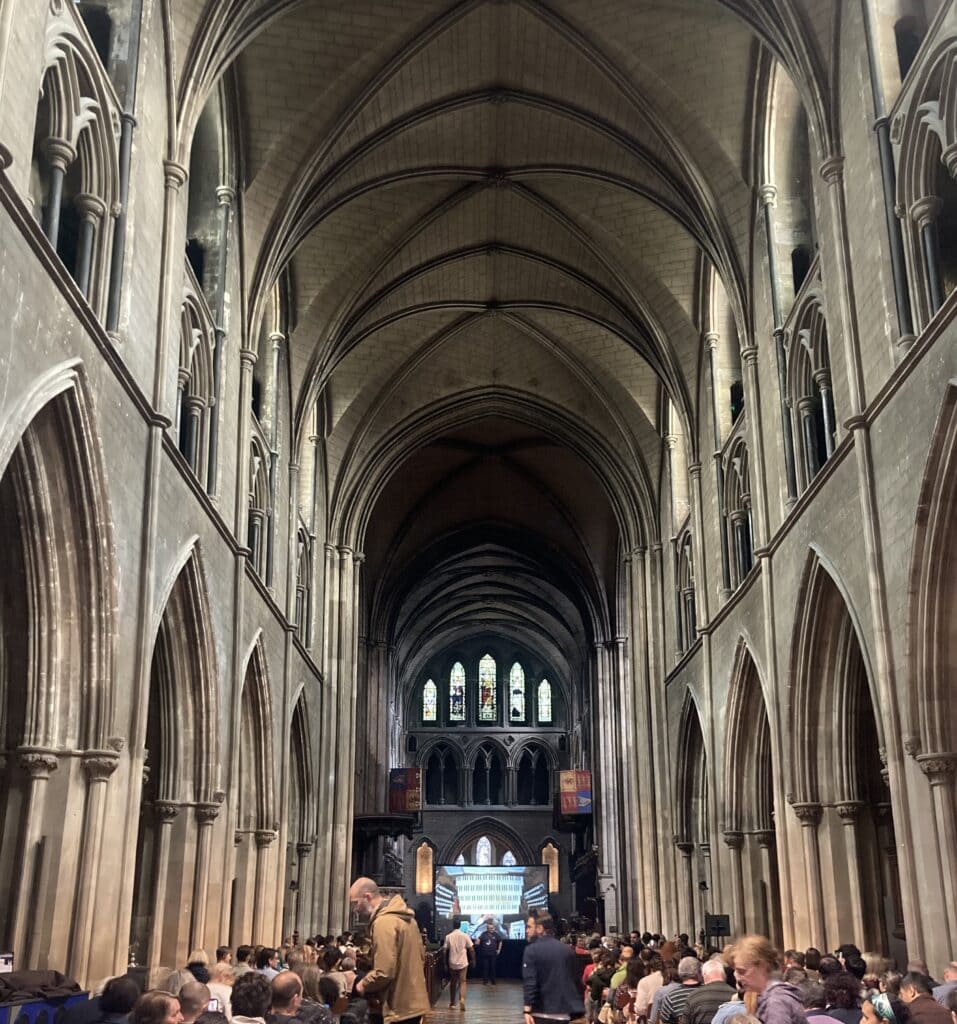
Through centuries of political upheaval in Ireland, St. Patrick’s Day remained a cherished observance of national faith and identity. Even in the dark days of the 18th century when Irish Catholic worship was suppressed under Penal Laws, people risked gathering at secret “Mass rocks” in the countryside on March 17 to practice their faith in defiance. Patrick’s legacy gave hope and unity to the Irish, and the feast day continued to be kept alive in villages and parishes across the country.
It wasn’t a party or a public event as we know it today, but rather a solemn day of prayer, family, and remembrance of Ireland’s spiritual heritage. This humble reverence for St. Patrick’s Day as a religious holiday would continue well into the 20th century – until larger cultural shifts transformed it into something more exuberant.
Traditions and Symbols of St. Patrick’s Day
Although rooted in spirituality, St. Patrick’s Day has accumulated a wealth of folk traditions and symbols that reflect Irish culture. The shamrock, for example, is ubiquitous on March 17th – you’ll see this little green trefoil decorating everything from shop windows to lapels. As noted, its significance comes from the tale of Patrick using a shamrock to teach the Trinity , but it also symbolizes Ireland more broadly. Many Irish people will pin a real sprig of shamrock to their coat on St. Patrick’s Day or wear shamrock-themed jewelry. There’s even a customary toast called “drowning the shamrock”: at the end of the celebrations, you put a shamrock leaf in your final glass of whiskey or beer and drink to Ireland and St. Patrick . If the shamrock floats, it’s said to bring good luck for the coming year.
Another beloved tradition is wearing the color green on St. Patrick’s Day – so much so that the holiday is often nicknamed “The Wearing of the Green.” In Ireland, it’s considered bad luck to neglect wearing green on March 17th; a playful superstition suggests that mischief-loving leprechauns will give a pinch to anyone not sporting Ireland’s signature color ! The emphasis on green is relatively modern (in older centuries, Patrick was sometimes associated with the color blue, believe it or not ), but green came to represent Irish nationalism and the Irish landscape. It’s one of the three colors of Ireland’s flag (standing for the Irish Catholic majority, alongside orange for Protestants and white for peace between them) . On St. Patrick’s Day, people across communities dress in green hats, scarves, jerseys – whatever adds a festive emerald flair. Children in particular love this custom, and schools often have little St. Patrick’s events where kids wear green and paint shamrocks.
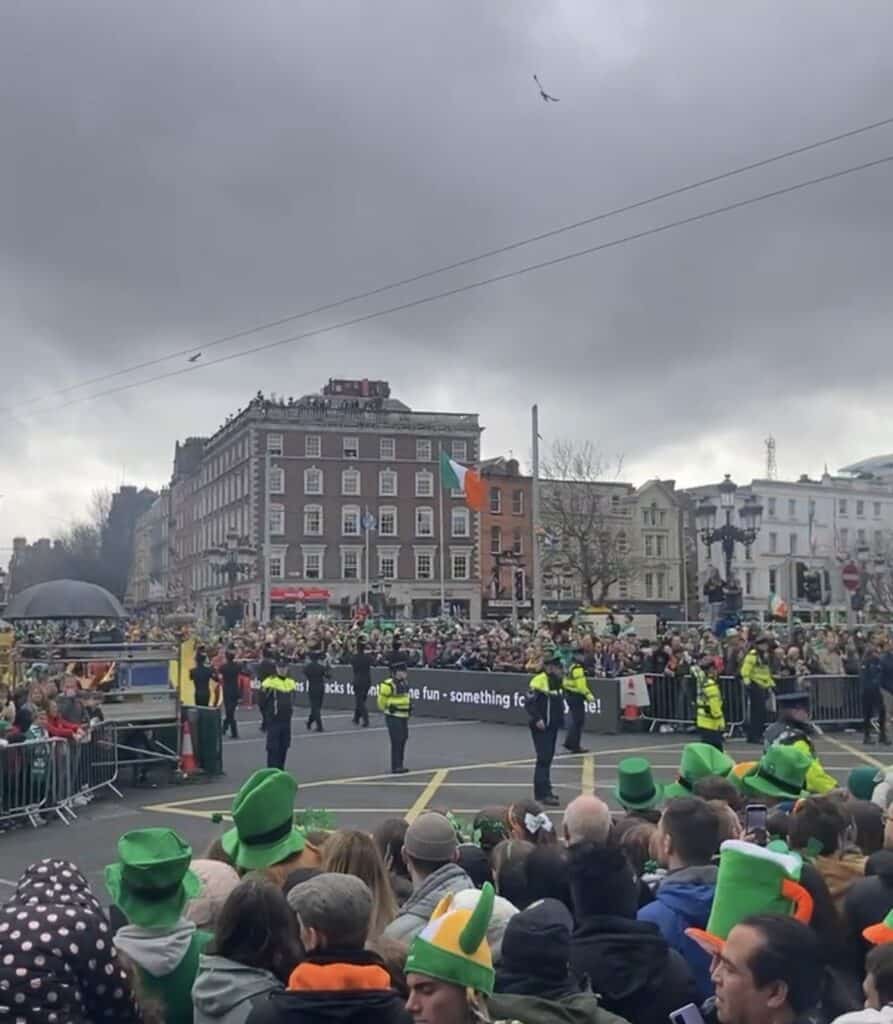
Parades are the most visible St. Patrick’s Day tradition today, though they weren’t originally part of the religious observance. In fact, the practice of holding big public parades on March 17 started outside of Ireland, among the Irish diaspora. Historical records show that the first-ever St. Patrick’s Day parade was held in 1601 in St. Augustine, Florida (then a Spanish colony) by Irish settlers and soldiers. Later, as Irish immigrants spread through North America, cities like Boston and New York began organising parades in the 18th century – New York’s first parade took place in 1762.
These were expressions of pride and community for Irish expatriates. Over time, such parades grew into grand civic events, especially in the United States where today New York and Chicago host some of the world’s largest St. Patrick’s Day spectacles.
Back in Ireland, large-scale parades came about more slowly. The first recorded parade in Ireland wasn’t until 1903 in the city of Waterford, and for decades, any celebrations were relatively subdued due to the day’s religious focus. Traditional observances in the 19th and early 20th centuries often involved community dances, céilís (folk dance gatherings), concerts, or plays put on by local groups to mark the occasion in addition to church services . People might have a village procession or wear their shamrocks, but nothing like the flamboyant parades elsewhere.
One reason festivities stayed low-key in Ireland was that, for a long time, St. Patrick’s Day was literally “dry” – pubs were closed by law. The Irish Pub is central to social life, but from 1903 (when St. Patrick’s Day became an official public holiday) until the late 20th century, Irish laws prohibited pubs from opening on March 17th out of respect for the holy day . The idea, championed by some Irish lawmakers of the time, was to prevent the feast day from turning into a drinking fest and to keep it devout. Thus, for about 70 years, March 17 in Ireland was notable for its lack of alcohol sales – no pint of Guinness with your Patrick’s Day dinner! Instead, the celebrating happened at home or in church halls, and the holiday retained a more sober (figuratively and literally) character.
Of course, not everyone refrained from merriment. Private house parties and informal music sessions still took place. And in some towns, creative local traditions thrived. For example, in parts of Ireland there’s a custom of early-morning parades: in Dingle, County Kerry, a fife-and-drum band marches through the streets at dawn on St. Patrick’s Day (around 6 AM), a practice that harkens back to older times when the day began with music in the misty morning. Such local color shows how communities found their own ways to celebrate Patrick’s spirit.
Food is another part of St. Patrick’s Day tradition, though there’s no single “required” dish beyond the aforementioned bacon and cabbage. This meal – similar to corned beef and cabbage adored in Irish-American celebrations – remains popular. Families might also prepare hearty Irish stew (lamb or beef stewed with potatoes and vegetables) or bake soda bread. Special regional recipes come out too: some might bake shamrock-shaped cookies or cakes with green icing for fun. And let’s not forget the drinks: once the prohibition on pubs was lifted (officially in 1973 ), raising a glass on St. Patrick’s Day became common. Enjoying a pint of Guinness or a dram of Irish whiskey on March 17th is now very much the norm – always in moderation, and often accompanied by the toast “Sláinte!” (to your health). The concept of “drowning the shamrock”, as noted, ritualizes the final drink of the night as a tribute to the saint . With a shamrock in your glass and good friends at your side, you toast to Ireland – a fitting end to the day’s celebrations.
St. Patrick’s Day in Modern Ireland
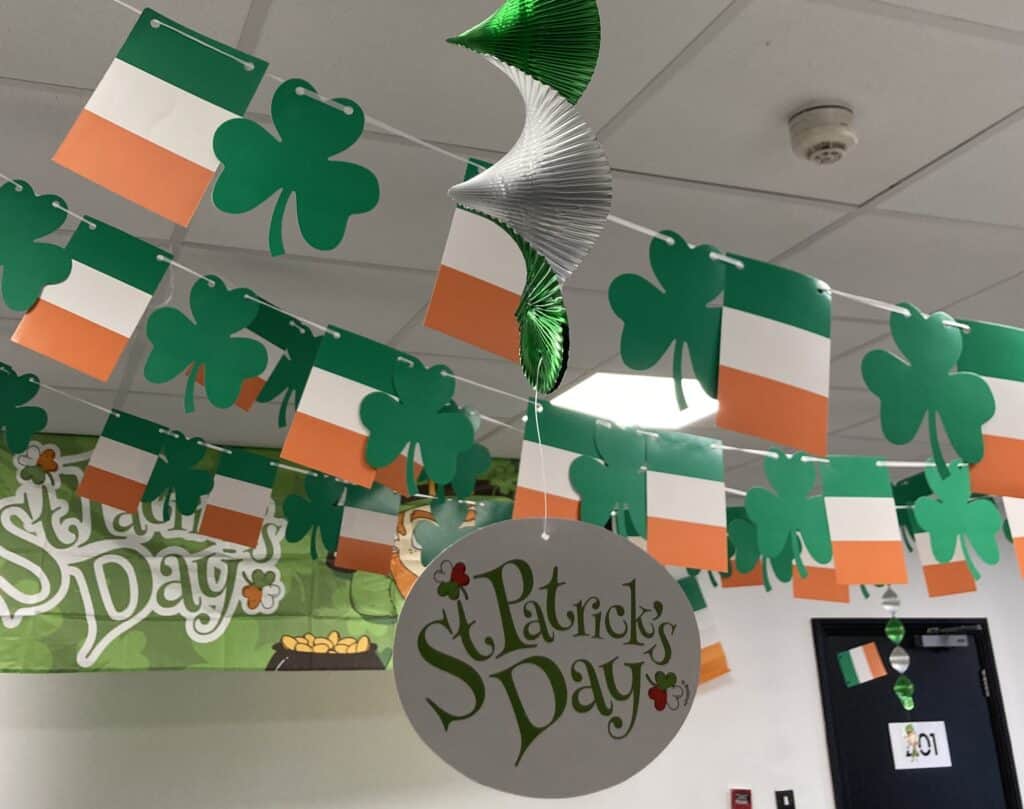
Today’s St. Patrick’s Day in Ireland is a dynamic blend of faith, culture, and festive fun, celebrated by communities large and small with a shared sense of pride. It is officially a national public holiday, banks, schools, and offices close for the day, and for many it kicks off a long weekend of festivities every March.
The religious aspect hasn’t disappeared: many Irish people still begin March 17th by attending a special St. Patrick’s Day Mass in the morning, especially in rural areas or among older generations. Churches hold services honoring St. Patrick, often followed by community gatherings with tea and scones. But by late morning and afternoon, the spirit shifts to celebration in the streets.
The most prominent events are the St. Patrick’s Day parades held in cities and towns throughout Ireland. Dublin, the capital, hosts the largest and most spectacular parade. In fact, Dublin has expanded St. Patrick’s into a multi-day St. Patrick’s Festival, typically running over 3 to 5 days with art shows, live concerts, theatre, and family activities – all centred around Irish culture.
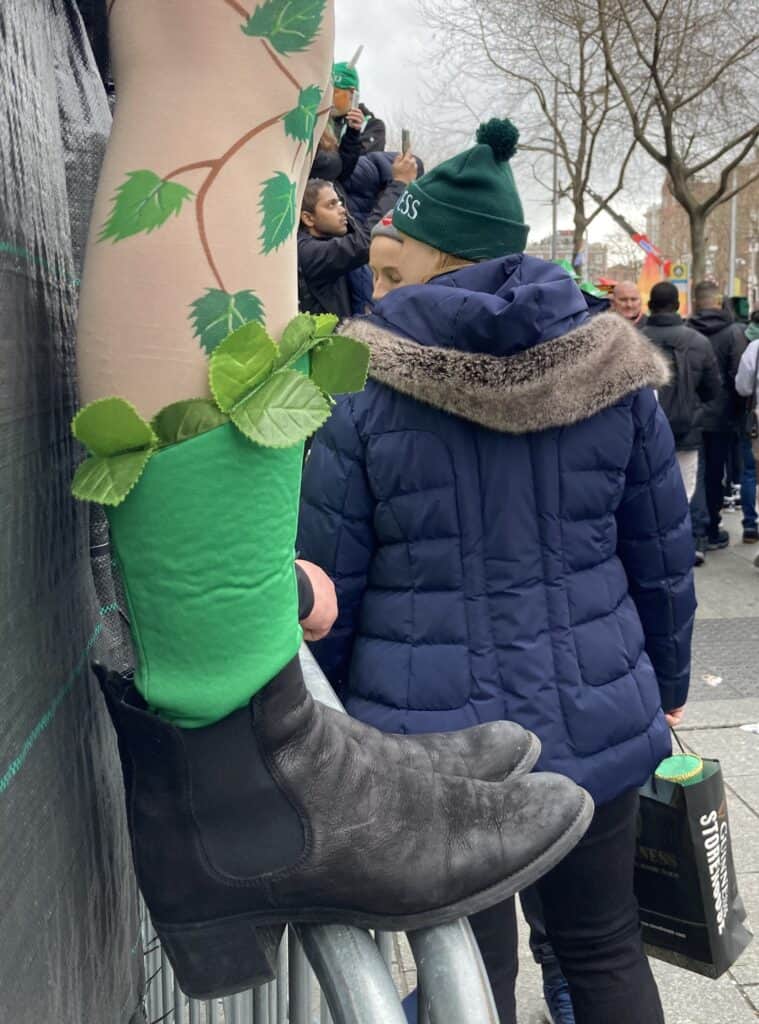
The Dublin parade, usually held on March 17th itself, is the highlight: it draws approximately half a million spectators lining the route. The parade features a vibrant procession of marching bands, elaborate floats, costumed performers, and representatives from all walks of Irish life. You might see energetic schoolchildren’s dance troupes, international marching bands (some travel from the US and beyond to participate), street theatre companies in fantastical outfits, and giant puppets or balloons bobbing above the crowd. It’s a carnival atmosphere, with streets awash in green and orange, and cheers in both English and Irish (listen for cries of “Éirinn go Brách!” meaning “Ireland Forever!”).
It’s a carnival atmosphere, with streets awash in green and orange, and cheers in both English and Irish (listen for cries of “Éirinn go Brách!” meaning “Ireland Forever!”). Dublin’s city center becomes one big ceili – an Irish party – with music and merriment at every corner.
Other Irish cities have significant celebrations as well. Cork in the south holds its own festival, including “An Céilí Mór” – an outdoor extravaganza of traditional music and dancing. Galway, Limerick, Derry, Belfast, Waterford, Kilkenny, and Dingle are among the places with distinct St. Patrick’s events, each adding local flavor. For instance, the coastal town of Dingle (Daingean Uí Chúis) not only starts the day with its 6 AM musical wake-up call, but later holds a charming local parade featuring fishing boats on trailers and teams of Irish dancers, all cheered by townsfolk and visitors in a truly intimate setting. In County Down (Northern Ireland), where St. Patrick is said to be buried, there are walking pilgrimages and a cross-community parade in Downpatrick, emphasizing the saint’s role in both Catholic and Protestant traditions. Every village or parish, if it can, will have at least a small parade or community gathering – perhaps just the local school band and some tractors decked in green bunting, but carried out with great enthusiasm.
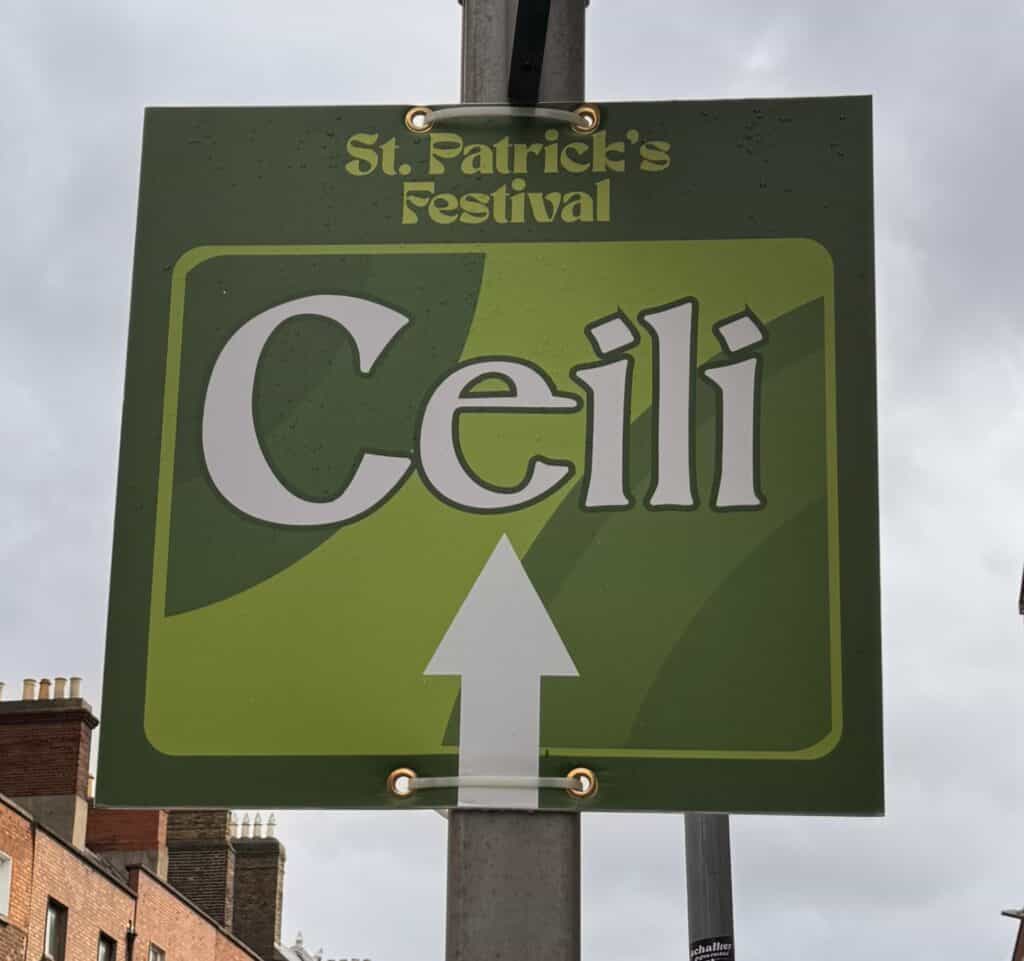
A notable shift in modern times is that the Irish government actively supports St. Patrick’s celebrations as a showcase of national culture. Starting in the mid-1990s, Ireland began to amp up its St. Patrick’s Day festivities to rival those abroad and to attract tourism . The result was the creation of the St. Patrick’s Festival in Dublin (launched in 1996) , and encouragement for cities and towns to celebrate in style.
What was once mainly a day of religious observance has turned into a long weekend of concerts, street performances, céilí dances, food markets, and even fireworks in some places. This doesn’t mean the day has lost its meaning – on the contrary, modern celebrations often highlight Irish language and arts. March 17th usually falls during Seachtain na Gaeilge (Irish Language Week), so you’ll hear plenty of Irish (Gaelic) spoken or sung in events. From traditional fiddlers to contemporary rock bands, Irish talent of all kinds is on display.
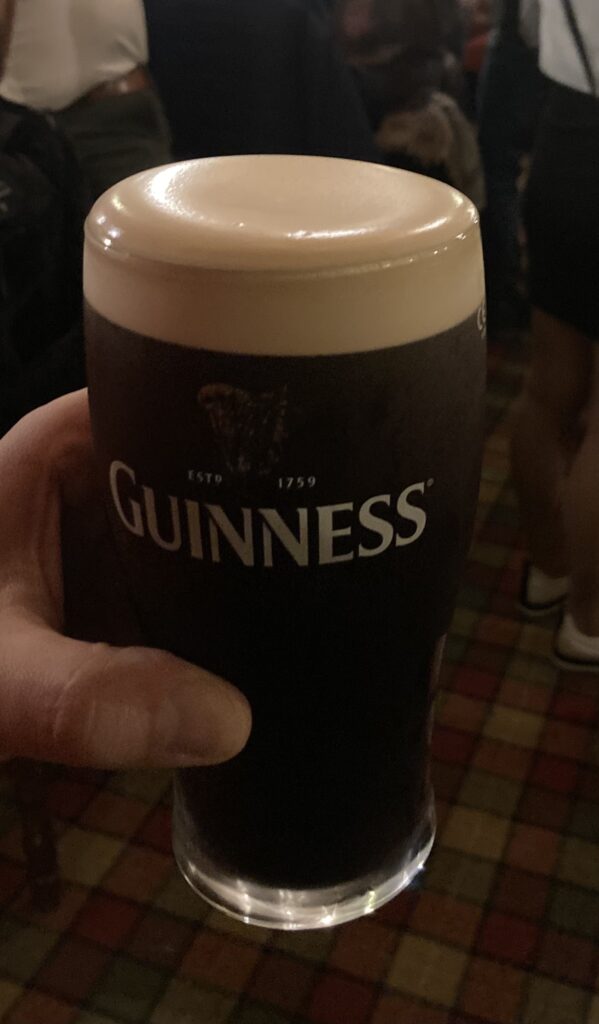
Throughout the country, pubs and restaurants are bustling on St. Patrick’s Day. Since the lifting of the old “dry” laws, enjoying a pint has become part of the tradition. It’s common for friends to gather at the pub after the parade to continue the craic (fun), where there might be live Irish music sessions – fiddles, flutes, and bodhráns whipping up jigs and reels. Tourists are very much welcomed into the fun, and you’ll find the atmosphere on this day is exceptionally friendly. People tend to be in high spirits (sometimes literally, with whiskey in hand), eager to chat and include newcomers in the celebration. Many pubs will have special performances or events (from rock bands playing U2 covers to storytellers recounting Irish myths). And no matter where you are, at 17:17 (5:17 pm) on 17/3, you might notice a moment of cheering – a little “happy St. Patrick’s Day” toast that has organically become a mini-tradition.
Meanwhile, Ireland’s natural landscape often seems to join in the celebration of its patron saint. By mid-March, the countryside is starting to shake off winter – hillsides and parks show fresh green growth (40 shades of green, as the saying goes). In some areas, you’ll see early daffodils or shamrock sprouts in bloom. The greening isn’t just literal either: as highlighted, a global Tourism Ireland initiative means many landmarks across Ireland and the world glow green on St. Patrick’s Night . In Ireland, buildings like Dublin Castle, city halls, and even small town bridges might be illuminated in emerald hues. It’s a modern symbol of Ireland’s unity and the worldwide kinship of the Irish diaspora.
The modern Irish St. Patrick’s Day experience: imagine a day that begins with church bells and quiet prayer, then bursts into a riot of color and music in the streets, and finally winds down with laughter among friends old and new. It’s both secular and sacred, respectfully commemorating a saint while unabashedly rejoicing in Irish identity. This balance of old and new is a hallmark of Ireland itself – and one of the reasons experiencing St. Patrick’s Day in Ireland is so special.

Leave a Reply