
Kilkenny surprised me in the best way: it feels like Ireland distilled. Castle rooms that still carry Victorian glamour, a museum that turns archaeology into a human story, and a cathedral-and-round-tower climb that ends with views and a deep exhale. Everything sits close enough that I could spend my energy experiencing the city instead of rushing between stops, thanks to the walkable Medieval Mile route linking the castle side of town to the cathedral. I wrapped the day with lunch (and legend) at Kyteler’s Inn, where the city’s witch-trial folklore still clings to the stone like a well-told story you can’t un-hear. By the time I left, I understood why Kilkenny isn’t just “a nice stop”; it’s a kilkenny day trip that reads like a whole chapter of Ireland.
Why we chose a Kilkenny day trip
I wanted a day out that felt genuinely Irish, rich history, a bit of myth, and enough walking to earn a good lunch, without turning the day into a logistics exercise.
Kilkenny fit perfectly because the main sights are stitched together by the Medieval Mile: a walkable route that (in the simplest terms) connects the castle side of the city to the cathedral side, with stories in between.
Even better, the city’s “big” heritage experiences – Kilkenny Castle, the Medieval Mile Museum, and St Canice’s Cathedral, each hit a different note: power, people, and faith (plus a very real sense of time passing).
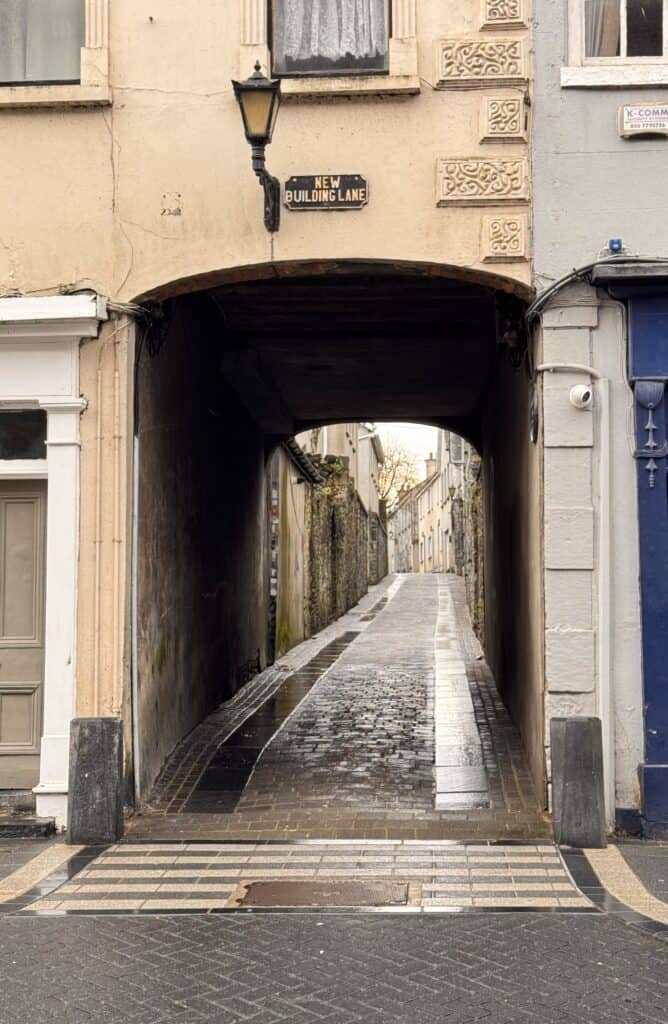
If you’re reading this because you’re deciding where to spend a precious free day in Ireland, here’s my honest take: Kilkenny doesn’t feel like a “checklist town.” It feels like a place you can enter, quickly understand, and still leave wanting a second visit. The city’s footprint makes it ideal for a private day tour, less time watching the clock, more time noticing details (like the way the stone changes colour when it rains, or how many corners here still feel medieval even when the shops are modern).
Morning at Kilkenny Castle
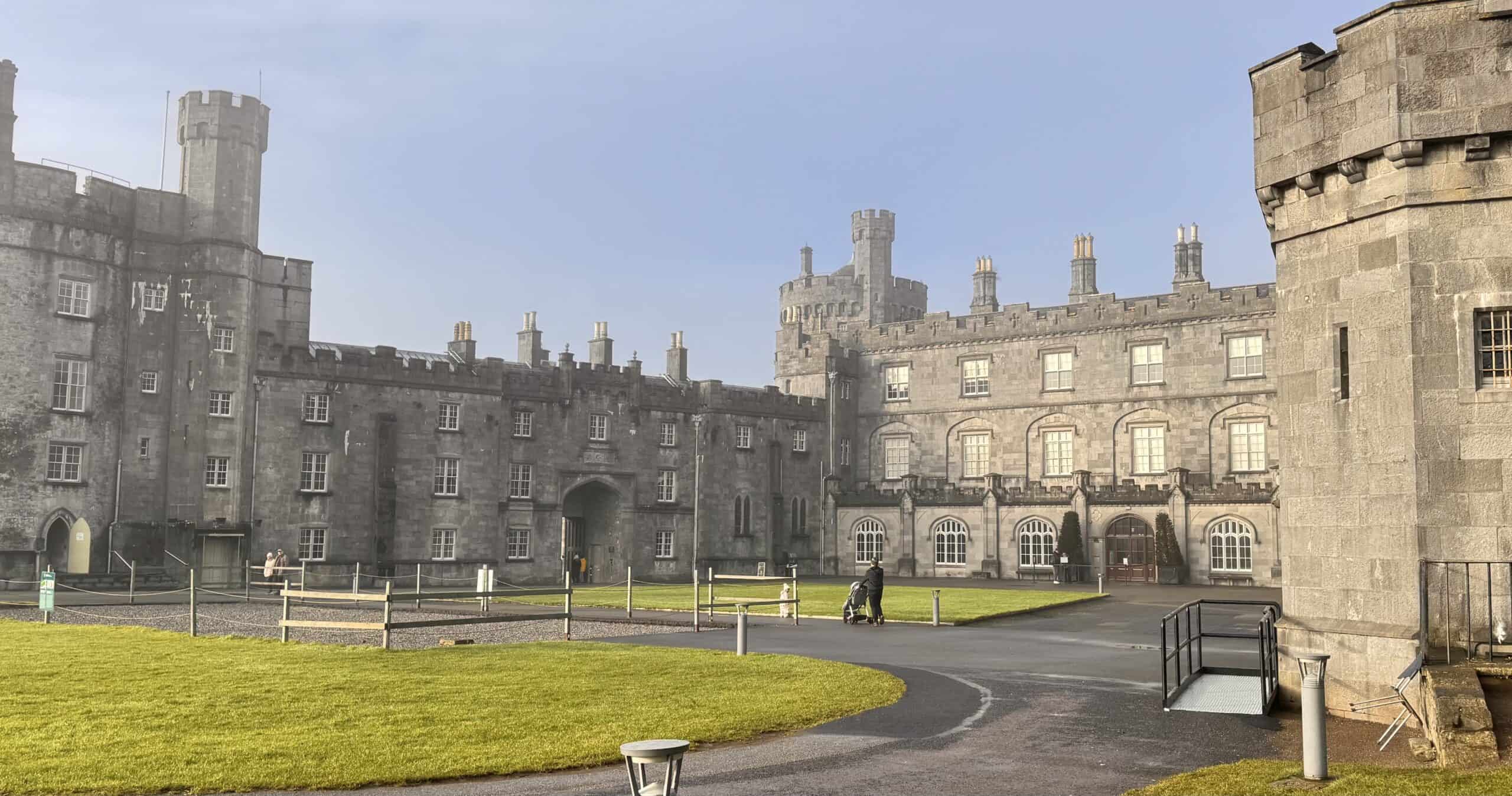
We started where Kilkenny practically insists you start: Kilkenny Castle. It’s the kind of place that dominates your mental map the moment you arrive, set above a River Nore crossing, visibly strategic, and visibly loved. The official visitor leaflet sums up what you sense immediately: this place has been reworked and remodeled across centuries, and what you see today is a complex layering of architectural styles.
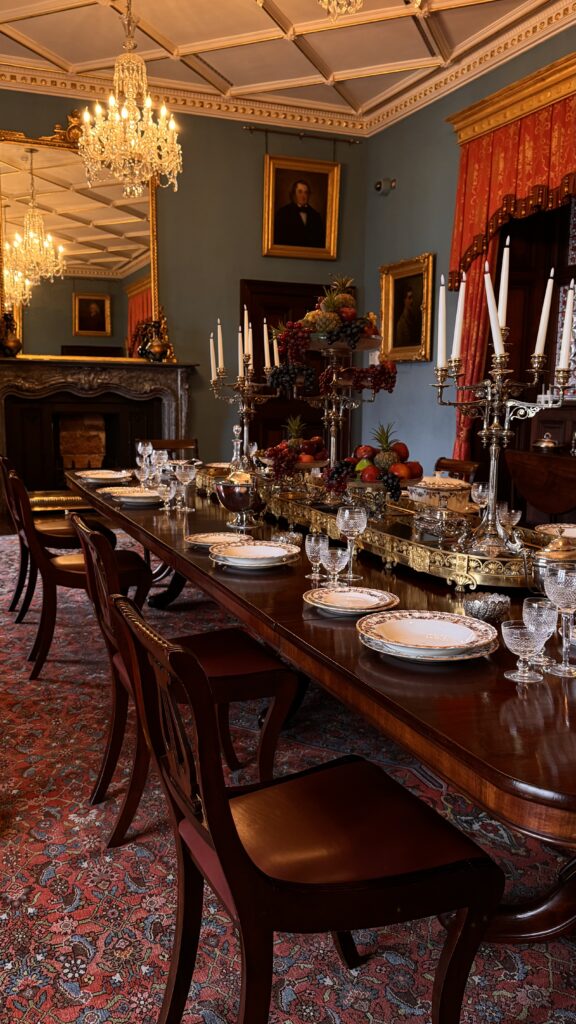
Inside, the story is not just medieval battles and thick walls (though those exist); it’s also a later, more domestic kind of power. The castle describes itself as “largely a Victorian remodelling” of the earlier defensive structure, which is exactly how it feels: medieval bones wearing 19th-century polish.
Knowing that helped us read the rooms differently, less “fairytale castle,” more “how aristocratic life staged itself.”
History note, because it matters: the castle’s own interpretation credits its 13th-century construction to William Marshal (4th Earl of Pembroke), framing it as a symbol of Norman control that later became the principal Irish seat of the Butlers of Ormonde for centuries.
That long arc – conquest, settlement, dynasty, and later state stewardship, is the spine of your visit whether you realise it or not.
One detail I loved (and you might miss if you rush): even the floors are local storytelling. The black-and-white stone flooring in the entrance hall uses Kilkenny Black Marble and sandstone, an elegant visual hint of the “Marble City” identity you’ll keep hearing about as you walk through town.
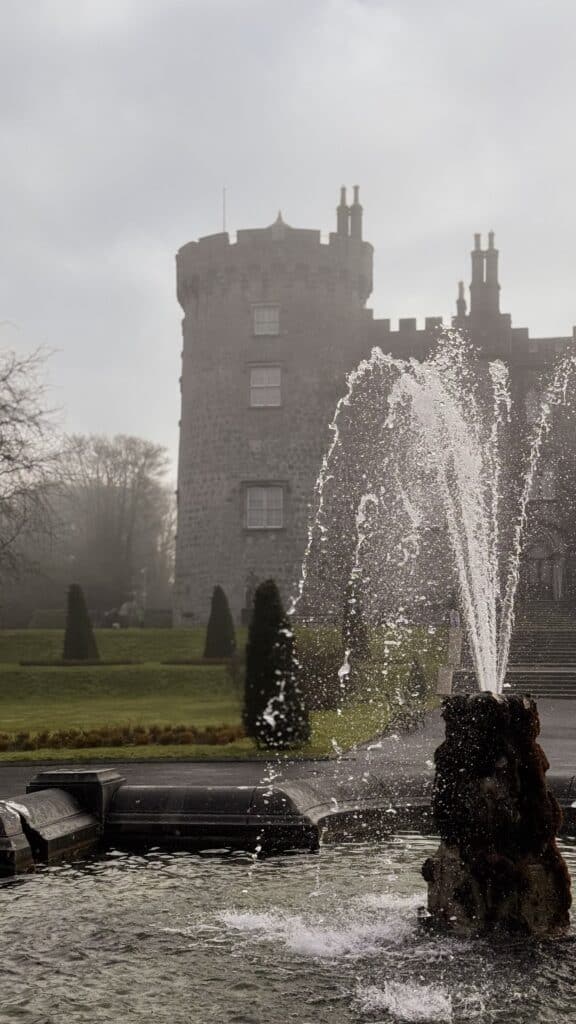
After the rooms, we stepped back outside into the parklands. This is where a day trip becomes relaxing: the grounds are free to enter and run on their own monthly opening schedule, staying open later in summer and closing earlier in winter. The castle site even notes that park locking begins 30 minutes before the posted closing time (a small detail, but exactly the kind that saves stress at the end of a day).
Medieval Mile Museum: “800 years under one roof”
From the castle, we walked toward High Street and into the Medieval Mile Museum – an easy distance that sets your day’s rhythm. The museum itself confirms it’s roughly a 5–7 minute walk from the castle and sits right along the Medieval Mile route toward the cathedral, which is why it works so well in a one-day plan: you’re not backtracking.
The museum’s setting is part of the experience: it’s housed in St Mary’s, a former medieval church site, and the museum’s own messaging leans into that layered feeling, history displayed inside a structure that is itself historic. (In other words: you don’t forget where you are.) The building’s origins around 1202 and ties that era to William Marshal, which helps connect this stop back to the castle’s Norman foundation story.
What hit me most was how the museum moves beyond “objects behind glass.” Its visitor pages highlight the permanent “3 Lives” exhibition, based on the remains of three Kilkenny citizens uncovered during archaeological excavations in 2016. That’s not abstract history, that’s a reminder that medieval cities were full of ordinary human lives, and archaeology can still surprise us right under today’s streets.
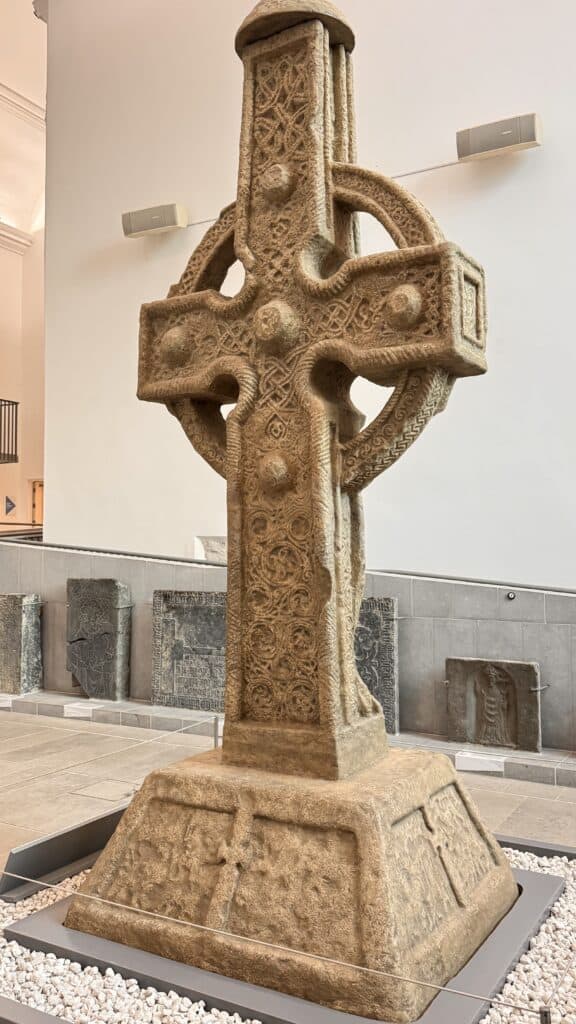
If you like guided interpretation, this is where it pays off. The museum runs guided tours daily (published as 10 a.m. and 2 p.m.), and it also offers a Medieval Mile walking tour (published as 11 a.m. and 3 p.m.) that lasts about 75–90 minutes and finishes in the museum graveyard. Their trail page even mentions the graveyard contains the remains of about 40,000 citizens—an astonishing number that reframes the site as a civic memory bank, not just a tourist stop.
Walking Kilkenny: the city as a living museum
Between stops, we did what Kilkenny quietly rewards: walked without trying to “optimize” every second. Kilkenny is the kind of city where the in-between streets are part of the point. If you want a small “treasure hunt” that’s both kid-friendly and deeply local, use the city’s stone itself: educational fossil-trail resources explain that dark grey limestone paving stones around Kilkenny can contain visible fossils (brachiopods and corals), and that these fossils can be seen all around the city centre. Once you know that, you start looking down—and the city literally changes.
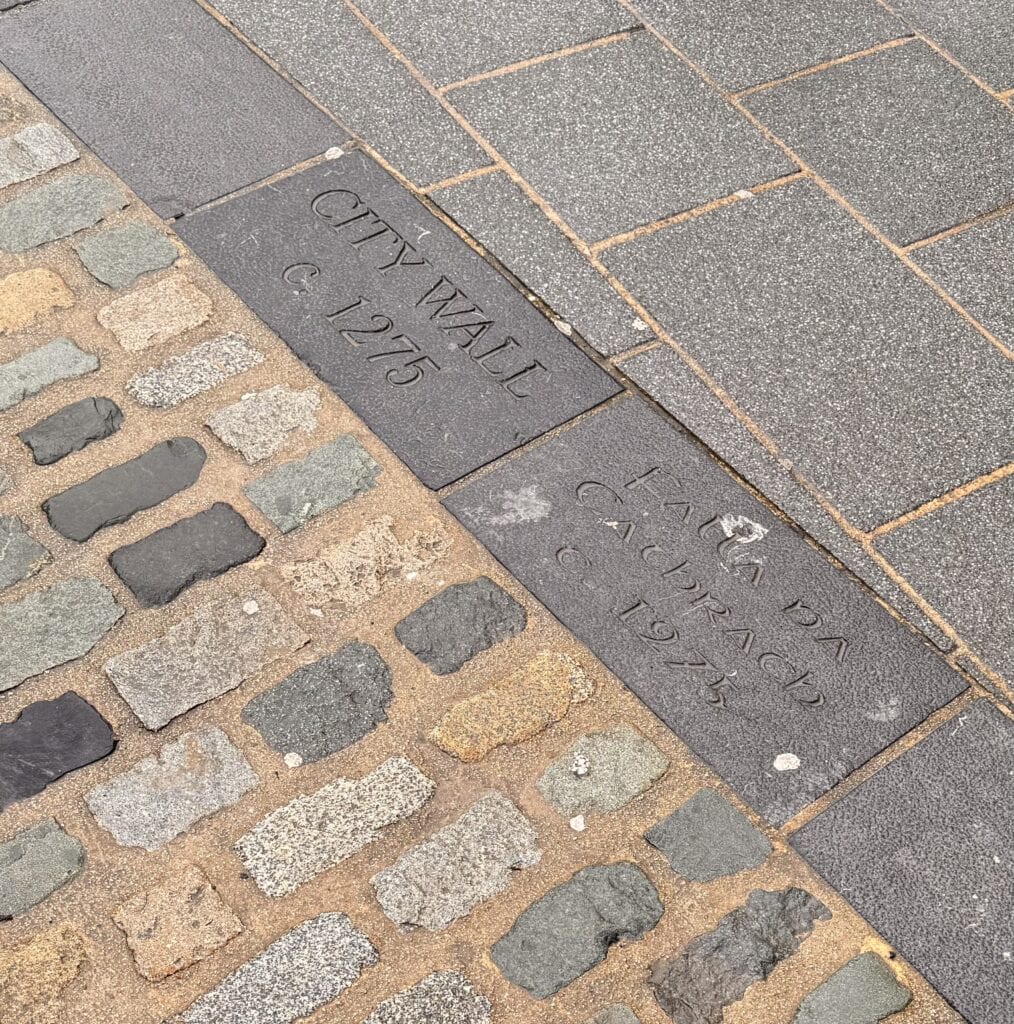
This is also where the “Marble City” nickname starts to make sense. County heritage material explains that Kilkenny City is known as “The Marble City” due to locally quarried “black marble” (geologically limestone). The name is poetic rather than strictly geological and that’s fine. The point is that Kilkenny’s local stone culture shaped both its identity and its streetscapes.
The “Marble City” and fossils underfoot:
County heritage material explains Kilkenny is known as “The Marble City” because of locally quarried black “marble” (limestone). Fossil trail materials add a fun, family-friendly layer: the dark limestone paving stones contain brachiopods and corals, and the trail explicitly encourages “Leave No Trace” and not removing fossils.
Lunch at Kyteler’s Inn: history with a heartbeat
By lunch, we were ready for something that felt distinctly Kilkenny and Kyteler’s Inn delivered atmosphere in the way only a genuinely old place can.
Discover Ireland describes it as dating back to 1324 and connects it directly to the notorious Alice Kyteler story, while framing the inn today as a lively gathering place where music and conversation still matter. It also states bar food is served daily from noon to 9 p.m., which makes it a friendly mid-day anchor for a day-trip itinerary.
Kyteler’s own site underlines the live-music angle, noting traditional music sessions nightly in high season and listing typical start times (with weekday and weekend differences).
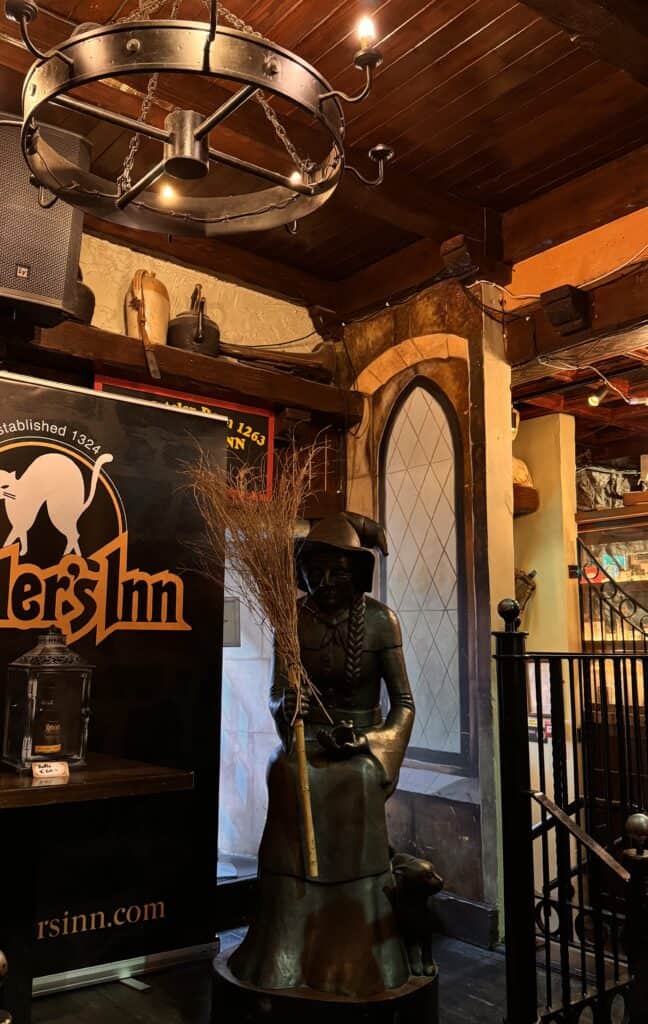
That matters for planning: even if you’re only in town for a day, you can still catch a little of Kilkenny’s social life, especially if your itinerary leaves you an extra hour before heading back.
Afternoon at St Canice’s Cathedral
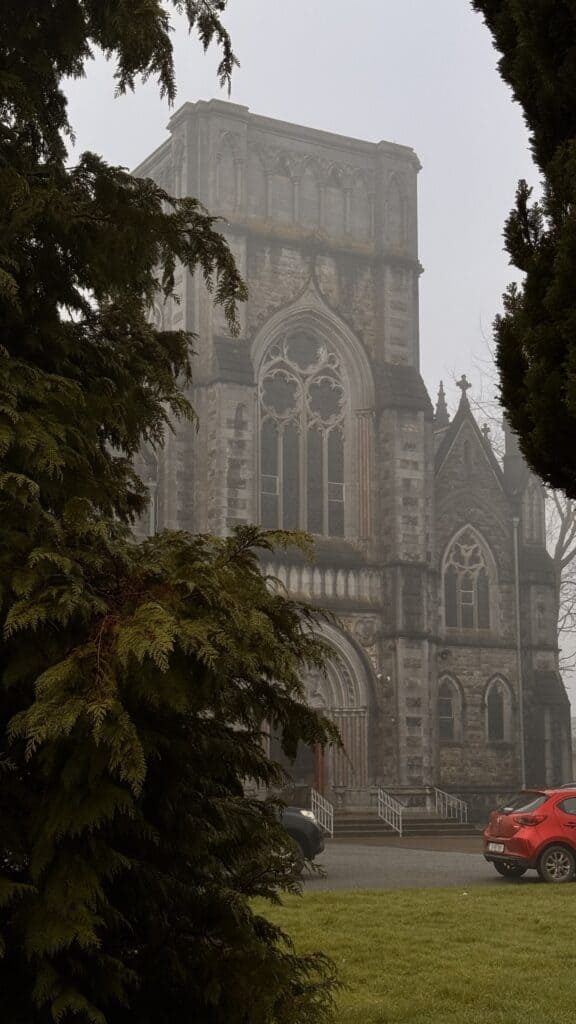
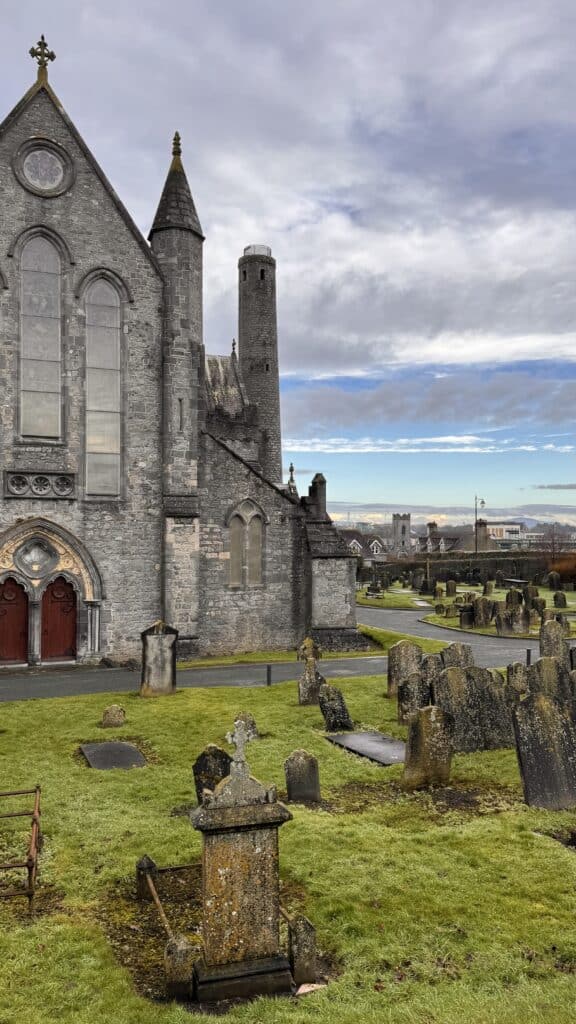
After lunch, we headed to the north end of the Medieval Mile for the place I was most excited about: St Canice’s Cathedral and its round tower.
Even if you’re not a “cathedral person,” this site works because it combines interior beauty and outside adventure – stonework, memorials, and then a climb that ends with the city laid out below.
Discover Ireland frames the cathedral as dating back to 1285 and emphasizes the round tower as a 30-metre climbable landmark, while also describing the wider site as a place of Christian worship since the 6th century.
Folklore and traditions to weave into the story
Alice Kyteler and the Kilkenny Witch Trials (1324):
Local heritage reporting describes a long, politically charged trial that tested boundaries between secular and clerical power and culminated in the execution of Petronilla de Meath on 3 November 1324, after repeated torture; Alice Kyteler is described as having fled. This is powerful material, but it deserves careful tone: acknowledge tragedy, avoid sensationalism, and connect it to present-day interpretation (commemorations, community reflection).
“Fighting like Kilkenny cats”:
Language/etymology sources describe the phrase “fight like Kilkenny cats” as a story of mutually destructive conflict—two cats that fight so fiercely “only their tails remain,” with multiple folk explanations and later rationalisations reported in the Victorian-era Notes & Queries tradition. In a blog post, treat it as folklore and language history rather than literal local history.
More than a day trip
By the end of the day, Kilkenny felt like so much more than a stop on the map. It was a place of layers – Norman stone, medieval stories, quiet churchyards, lively streets, and the kind of history that still feels close enough to touch. From the grandeur of Kilkenny Castle to the human stories inside the Medieval Mile Museum, from the view at St Canice’s to the folklore-filled atmosphere of Kyteler’s Inn, the city unfolded in a way that felt rich, personal, and wonderfully memorable.
What stayed with me most was not just what we saw, but how Kilkenny made me feel: connected to Ireland’s past, but also completely present in the moment. It is the kind of day that lingers long after you leave, a day of beauty, story, and small discoveries.
If you are looking for a destination that offers history, charm, atmosphere, and an easy sense of wonder, Kilkenny is a day trip that truly stays with you.

Leave a Reply