
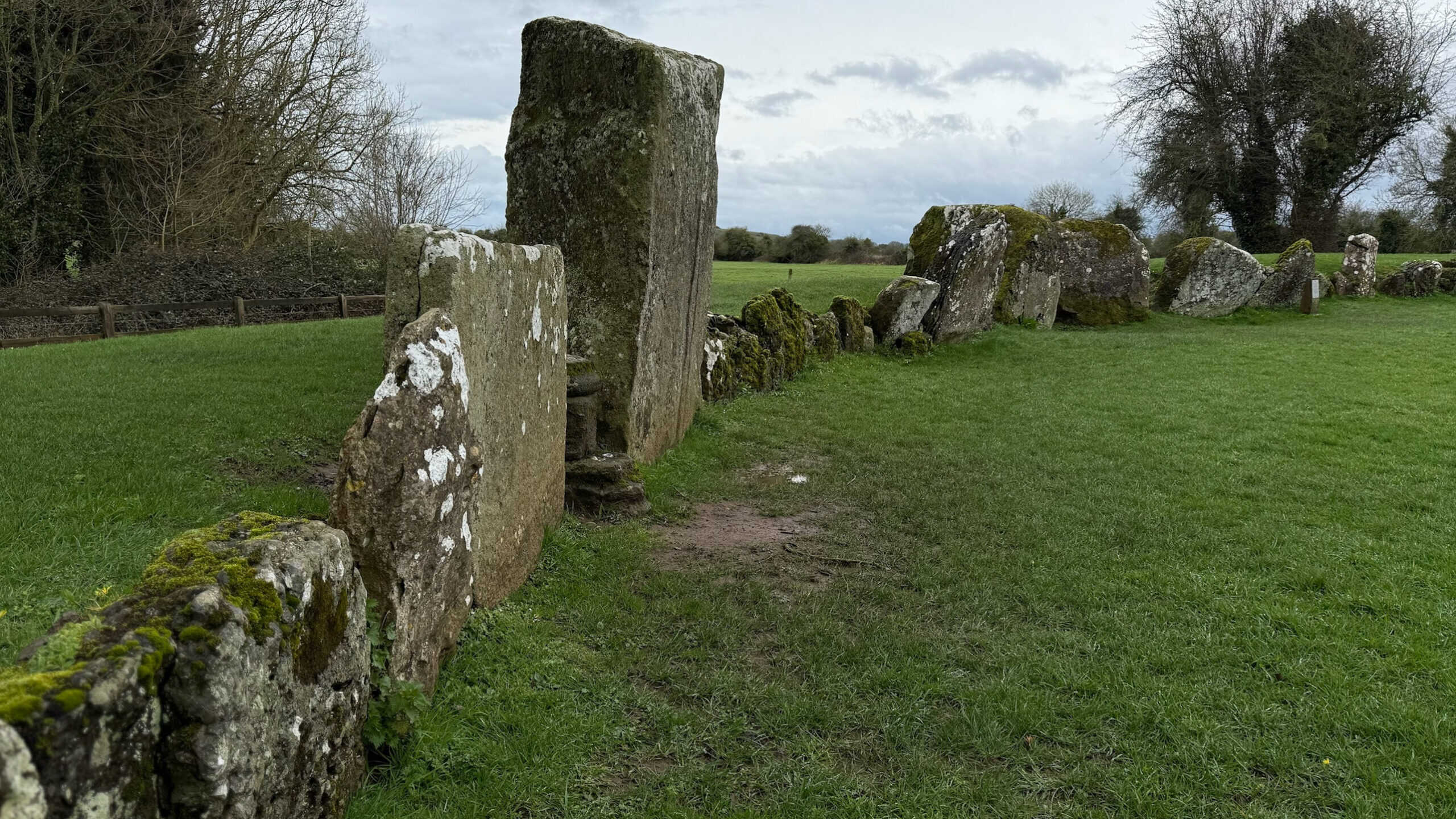
Ireland is a land where history does not begin with castles or monasteries. Long before medieval towers, Viking ports or Georgian cities, communities on this island were raising massive stones, building ceremonial megalithic tombs and shaping sacred landscapes that still feel powerful today. From the world-famous passage tombs of the Boyne Valley to the wind-swept stone circles of Cork, Kerry, Donegal and Tyrone, Ireland’s prehistoric sites offer some of the most atmospheric and memorable travel experiences on the island.
For travellers planning day trips in Ireland, these monuments open a remarkable window into the distant past. They are not simply old stones in a field. They are part of ritual landscapes shaped by astronomy, ceremony, burial traditions, memory and myth. Some are associated with equinox or solstice light. Others are linked to local legends of giants, goddesses, witches and sacred kingship. Many stand in beautiful places that make the journey worthwhile even before the history begins.
If you are looking for the best Ireland stone circles, Ireland ancient sites, and old historic sites to include in an itinerary, this guide covers the most famous megalithic tombs and ancient circles across the island, along with ideas for unforgettable day trips around them.
What are megalithic tombs and stone circles?

The word megalithic simply means “built with large stones,” but in Ireland it covers a rich variety of monument types. The best-known include passage tombs, portal tombs or dolmens, court tombs, wedge tombs, and stone circles. Together they belong mainly to the Neolithic and Bronze Age worlds, and they reveal that prehistoric Ireland was far more organised, imaginative and symbolically complex than many people first assume.
Heritage Ireland’s prehistoric sites range from tombs and royal ceremonial places to field systems and ancient ritual landscapes, showing just how wide this prehistoric heritage really is.
Passage tombs are usually mound-like monuments with a passage leading to an inner chamber. Portal tombs are the dramatic “dolmen” structures where a giant capstone rests on upright stones. Court tombs include an open forecourt area and are particularly associated with the north and northwest. Wedge tombs generally belong to the later prehistoric period and often narrow toward the rear. Stone circles are different again: they are open-air ceremonial monuments whose alignments, settings and associated traditions still spark debate and wonder.
The most famous passage tombs in Ireland

Brú na Bóinne: Newgrange, Knowth and Dowth, County Meath
No guide to megalithic tombs in Ireland can begin anywhere else. Brú na Bóinne in County Meath is Ireland’s richest archaeological landscape, centred on the spectacular passage tombs of Newgrange, Knowth and Dowth, built around 3200 BC. The complex is one of the most important Neolithic sites in the world, and Heritage Ireland notes that it contains the largest collection of megalithic art in Western Europe. Newgrange is especially famous for its winter solstice alignment, when the rising sun illuminates the inner chamber.
For visitors, this is one of the finest ancient-site day trips from Dublin. It combines world-class archaeology with the wider Boyne Valley, making it easy to pair with other historic sites in Meath. It is also a perfect introduction to the sophistication of prehistoric Ireland: engineering, astronomy, symbolism and artistic expression all meet here in one extraordinary landscape.
Loughcrew, County Meath
Less internationally famous than Newgrange but loved by many visitors for its atmosphere, Loughcrew Megalithic Cemetery is a group of Neolithic passage tombs spread across hills near Oldcastle in County Meath. Heritage Ireland dates the tombs to around 3000 BC and highlights Cairn T, with its beautiful megalithic art and equinox sunrise alignment. The site is also known as the Hills of the Witch, a name that immediately hints at the rich folklore surrounding it.
Loughcrew has a different character from Brú na Bóinne. It feels wilder, more elevated and more intimate, and the climb adds to the sense of pilgrimage. At equinox, people still gather here to greet the light entering the chamber, a modern echo of ancient seasonal observance. For travellers interested in Ireland’s spiritual landscapes, Loughcrew is one of the most rewarding prehistoric sites in the country.
Fourknocks, County Meath
Another important Meath monument is Fourknocks Passage Tomb, a Neolithic complex built about 5,000 years ago. Meath.ie describes it as decorated with abstract art and notes that it bears what may be the earliest depiction of a human face in Irish prehistoric art. That alone makes it a remarkable stop for anyone interested in symbolism and sacred imagery in ancient Ireland.
Fourknocks is far less visited than Newgrange, which gives it a different appeal. It feels like a hidden layer of the Boyne Valley story, ideal for travellers who want to go beyond the most famous headline sites and experience a quieter but highly significant monument.
Carrowmore and Carrowkeel, County Sligo
County Sligo is one of the great prehistoric landscapes of Ireland. Carrowmore Megalithic Cemetery is described by Heritage Ireland as the oldest and densest concentration of Neolithic tombs in Ireland, with the remains of more than 35 passage tombs near Sligo town. The broader Sligo passage-tomb landscape has been recognised on Ireland’s UNESCO Tentative List for its concentration and interconnectedness.
Further south in the Bricklieve Mountains, Carrowkeel forms another major passage-tomb cemetery. Discover Ireland describes it as a group of 14 cairns built between roughly 3200 and 2400 BC, beautifully placed in upland scenery. Together, Carrowmore and Carrowkeel show how prehistoric communities in Sligo selected landscapes of visibility, drama and ritual significance. For visitors, this is one of Ireland’s most compelling archaeology-focused regions.
Creevykeel Court Tomb, County Sligo
Although technically not a passage tomb, Creevykeel Court Tomb deserves a place in any serious guide to Ireland ancient sites. Heritage Ireland describes it as one of the largest and finest examples of a court tomb in Ireland, dating to the Neolithic period. Its scale and setting make it one of the standout prehistoric monuments in the northwest.
Creevykeel is especially useful in a blog like this because it helps readers understand that Ireland’s megalithic heritage is diverse. A trip through Sligo can include passage tomb cemeteries, court tombs and myth-rich landscapes all within relatively easy reach.
Ireland’s most famous stone circles

Drombeg Stone Circle, County Cork
Among all Ireland stone circles, Drombeg is one of the most celebrated. Heritage Ireland calls it one of the finest examples in the country. The circle originally had 17 stones and is associated with nearby huts and a fulacht fiadh, showing that it formed part of a wider ritual and domestic landscape. The site also has a solstice-related alignment, which adds to its enduring fascination.
Drombeg is ideal for travellers exploring West Cork because it combines archaeology, scenery and mood in one place. It is atmospheric in any weather, and its location makes it easy to pair with Glandore, Union Hall or a longer West Cork driving route.
Grange Stone Circle, Lough Gur, County Limerick
At Lough Gur, Grange Stone Circle stands out for its scale. Official Lough Gur and Limerick sources describe it as the largest standing stone circle in Ireland, with about 113 stones and a diameter of roughly 45–46 metres. Limerick.ie also notes that aspects of the monument have been associated with the sunset around Samhain, adding a strong seasonal and ritual dimension.
Lough Gur is one of the best ancient-site day trips in Ireland because it offers more than one monument. The area is a whole archaeological landscape with lake views, folklore and a deep sense of continuity. It is ideal for travellers who want a prehistoric experience that is both visually impressive and easy to interpret.
Beltany Stone Circle, County Donegal
Beltany Stone Circle in Donegal is one of the largest stone circles in Ireland. Heritage Ireland says it is composed of 64 standing stones, though originally there may have been more than 80, and that the monument has possible connections to the festival of Beltaine. Its hilltop setting and broad views make it a powerful place to visit.
The name alone gives the site extra appeal for readers interested in tradition and seasonal ritual. Even where certainty is impossible, the continued association between Beltany and Beltaine shows how prehistoric monuments remained active in folk memory long after their original builders were gone.
Kenmare and Kealkill, Counties Kerry and Cork
In southwest Ireland, Kenmare Stone Circle is notable for being egg-shaped, a rare feature in Munster. Discover Ireland and the site’s own official page describe it as one of the largest circles in the southwest, with a central boulder burial and the local nickname The Druid’s Circle.
Nearby in West Cork, Kealkill Stone Circle is smaller but very distinctive. Discover Ireland describes it as a five-stone circle with two tall standing stones and a cairn, dramatically positioned high above the surrounding landscape with views across Bantry Bay. It is one of the clearest examples of the characteristic Cork–Kerry stone-circle tradition.
Beaghmore and Drumskinny, Northern Ireland
Northern Ireland also deserves a place in any island-wide guide. Beaghmore Stone Circles in County Tyrone consist of seven stone circles associated with cairns and a stone row. The Department for Communities notes that the site was discovered during peat cutting and may reflect a long ceremonial response to environmental change in the landscape.
Further west, Drumskinny Stone Circle in Fermanagh is a smaller but closely related monument, with a stone circle, cairn and alignment. Together, Beaghmore and Drumskinny broaden the reader’s sense of Ireland’s ancient circles beyond the southwest and show how rich Ulster’s prehistoric heritage is.
Best day trips around Ireland’s ancient sites
For travellers based in Dublin, the easiest and strongest prehistoric day trip is Brú na Bóinne and the wider Boyne Valley, potentially paired with Loughcrew for a deeper megalithic theme. This makes an excellent route for visitors who want world-famous archaeology without travelling too far.
For the west and northwest, Sligo is one of the most rewarding regions in Ireland for megalithic travel. Carrowmore, Carrowkeel and Creevykeel can anchor a full day or even several days of exploration. This is one of the rare areas where a visitor can truly feel surrounded by a prehistoric ritual landscape rather than visiting only a single isolated monument.
For the southwest, there are several standout options. In West Cork, Drombeg, Kealkill and Labbacallee create a powerful prehistoric thread through the region. In Kerry, Kenmare Stone Circle works beautifully as part of a Ring of Kerry or Beara Peninsula itinerary. In Clare, Poulnabrone is one of the most iconic stops in the Burren. In Limerick, Lough Gur is one of the best all-round day trips for archaeology, scenery and folklore.
For those travelling in the north, Beaghmore, Drumskinny and Legananny can add a superb prehistoric element to a Northern Ireland itinerary. They are especially appealing for travellers who enjoy quieter sites, open landscapes and places that still feel slightly under the radar.
Folklore, tradition and the lasting magic of the stones

One reason ancient sites in Ireland remain so compelling is that they were never just archaeological objects.
Communities continued to tell stories about them.
Loughcrew became the Hills of the Witch. Beltany retained possible associations with Beltaine.
Kenmare became known as the Druid’s Circle. Labbacallee was remembered as the Hag’s Bed. Proleek became part of giant legend and wish-making tradition.
That layering of meanings matters. It reminds us that these monuments were not abandoned by culture simply because their original purpose faded. Instead, they were reimagined, absorbed into folklore, and allowed to live on in local memory. That is one of the things that makes travelling through prehistoric Ireland so rewarding: the stones belong to several worlds at once: archaeological, mythical, seasonal and emotional.
Finally, Ireland’s megalithic tombs and stone circles are among the island’s greatest historical treasures. They connect visitors not only to the Neolithic and Bronze Age, but also to Ireland’s landscapes, festivals, legends and long continuity of place. Whether you stand inside the Boyne Valley passage tombs, walk the Burren to Poulnabrone, watch the light move across the stones at Drombeg, or climb toward Loughcrew at equinox, you are entering one of Europe’s richest prehistoric traditions.
For travellers who want more than a checklist of famous attractions, these old historic sites offer something deeper: a chance to feel the age of Ireland in the landscape itself. They are ideal for day trips, extraordinary for photography, and unforgettable for anyone drawn to history, folklore and the mystery of the ancient world.
 Get in touch to plan your visit to the ancient side of Ireland
Leave a Reply