
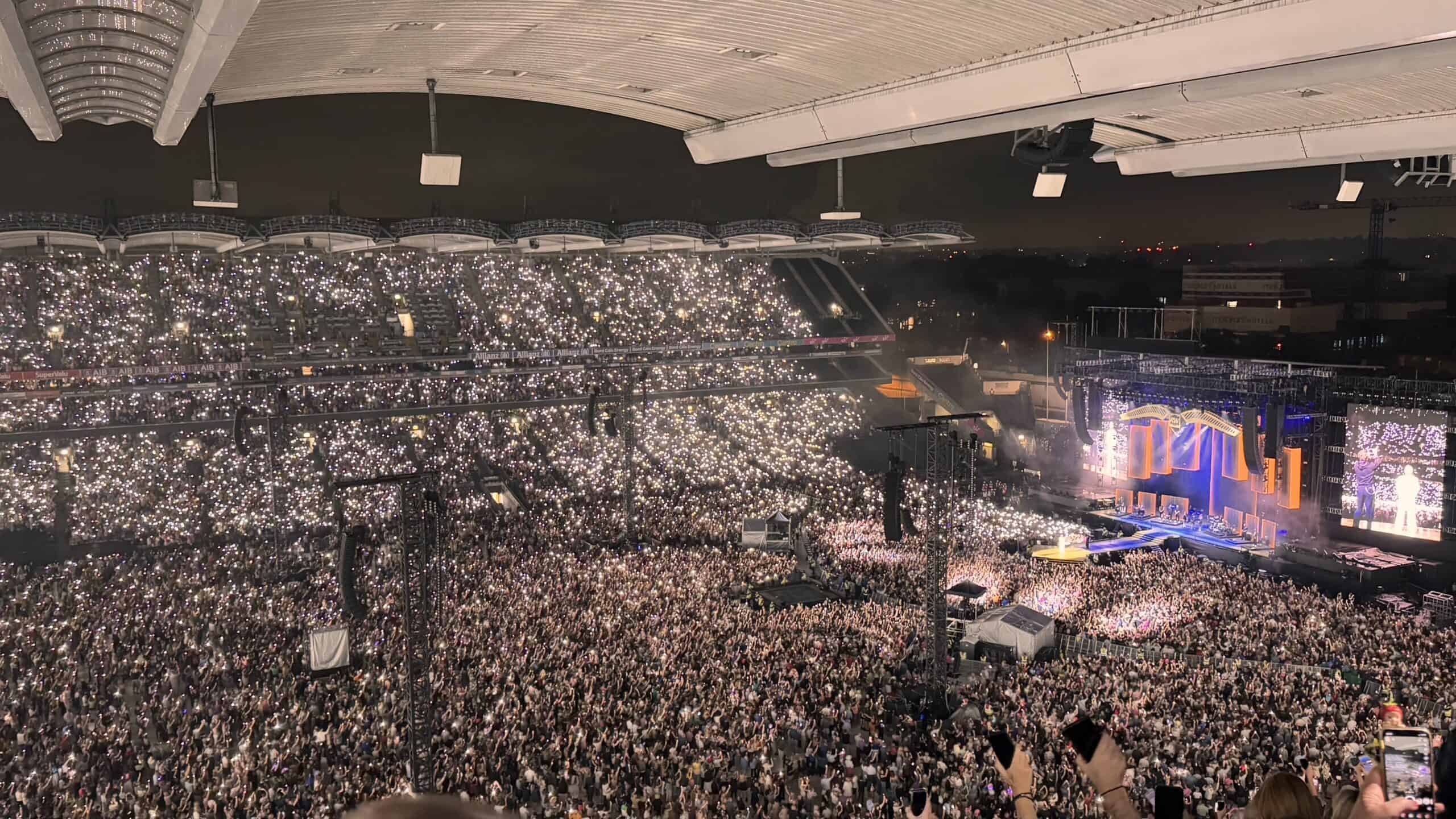
Ireland in summer is something else entirely. The days stretch long, the light turns golden over green hills, the pubs spill out onto the streets and the music comes alive in a way that is uniquely, unmistakably Irish. Whether you are a visitor arriving on a private tour from Dublin, a music lover planning a dedicated festival trip, or a traveller who simply stumbled into a town buzzing with fiddles and bodhráns, Ireland’s summer festival season has a way of getting under your skin. The excitement peaks as various music festivals in Ireland invite people from all walks of life to celebrate together.
As we dive into the details of the summer of 2026, it’s important to highlight the diversity and vibrancy of music festivals in Ireland that showcase both local talent and international acts.
From world-class trad competitions in Belfast’s cathedral quarter to boutique outdoor stages in the Wicklow mountains and a fortnight of spectacle in Galway’s cobbled streets, the summer of 2026 is shaping up to be one of the richest festival seasons the island has ever seen. This guide covers the standout music festivals in Ireland this summer with dates, what to expect, the history behind each event, and practical tips to help you plan an unforgettable trip.
Why Ireland and Music Go Hand in Hand
Before diving into the 2026 calendar, it is worth understanding why music holds such a central place in Irish culture. Unlike many countries where folk music has retreated to heritage centres and tourist shows, Irish traditional music, known simply as “trad”, is still a living, breathing, evolving art form that fills pubs and village squares every night of the week.

The roots of this tradition stretch back millennia. Ireland’s Brehon laws (the ancient Gaelic legal system) listed the harper among the most honoured members of society, alongside chieftains and poets.
The harp remains the national symbol of Ireland today, the only country in the world whose national emblem is a musical instrument. Irish music survived colonisation, famine, and diaspora precisely because it was passed person to person, ear to ear, not written down but lived. The concept of the seisiún (session) where musicians gather informally in a pub, no stage required, to play together, is not a performance. It is a conversation that has been continuing, without interruption, for centuries.
The summer festival tradition takes this living music and places it in extraordinary settings: on clifftop stages along the Wild Atlantic Way, in demesne parklands carpeted with wildflowers, on the streets of medieval towns, and in great marquee tents beside Atlantic harbours. Summer 2026 offers all of that and more.
Music Festivals in Ireland: Summer 2026
1. Fleadh Cheoil na hÉireann: Belfast, 2–9 August 2026
The world’s largest celebration of traditional Irish music comes to Belfast for the first time.
If you attend only one music event in Ireland this summer, make it this one. Fleadh Cheoil na hÉireann (pronounced Fla Kyul na Hayrin and meaning “Festival of Music of Ireland”) is the grand finale of the traditional music calendar. Organised by Comhaltas Ceoltóirí Éireann (CCÉ), the organisation founded in 1951 to promote Irish music, song, dance and language, the Fleadh is not simply a concert. It is an immense cultural gathering that transforms an entire city into a living, breathing musical landscape.
The 2026 Fleadh is historic on multiple levels. It marks the 75th anniversary of Comhaltas itself, and it represents the first time in the festival’s history that Belfast has hosted the All-Ireland, an occasion so significant that Belfast has already been confirmed as host for 2027 as well. Over 800,000 visitors are expected over the eight days, a figure that reflects just how extraordinary this event has become.
What happens at the Fleadh?
The core of the festival is the All-Ireland competition: musicians, singers, dancers, and storytellers who have qualified through county and provincial heats compete for the most coveted titles in traditional Irish music. Over 230 championship events took place at the 2024 Fleadh alone. But competitions are only part of the story. Spontaneous street sessions erupt at every corner. Headline concerts fill outdoor stages. Céilí dances spill into car parks. Pubs host back-to-back sessions from morning until well past midnight. Children sit in doorways watching masters play and then try to imitate them, which is, of course, exactly how the tradition has always been passed on.
Why Belfast in 2026?
Belfast is the only city on the island of Ireland to hold UNESCO City of Music status, a designation that recognises its extraordinary musical heritage across every genre. The Cathedral Quarter, once the heart of the linen trade, is now lined with pubs that pulse with live music seven nights a week. The city’s recent decades have seen a remarkable cultural transformation, and the Fleadh represents a powerful symbol of that journey – a festival rooted in shared Irish culture, hosted in a city that has become one of the island’s most vibrant and welcoming destinations.
For visitors, Belfast during the Fleadh is an unforgettable experience. Most of the outdoor events, sessions, and street performances are free to attend.
Practical Information: 2–9 August 2026, Belfast city centre. Major events centred around Belfast City Hall, the Cathedral Quarter and Ulster University.
2. Galway International Arts Festival: Galway City, 13–26 July 2026
Two weeks of world-class music, theatre, circus, and spectacle in the heart of the west.
The Galway International Arts Festival (GIAF) has been transforming the City of Tribes into Europe’s most creative stage every July since 1978. Now in its 49th year, GIAF is one of the continent’s leading multidisciplinary arts festivals, and its music programme sits at the heart of the experience.
Each evening during the festival fortnight, the Heineken Big Top at Fisheries Field – pitched on the campus of the University of Galway overlooking the River Corrib and the city’s magnificent cathedral – hosts major concerts. The 2026 lineup includes The Flaming Lips making their only Irish appearance of the year, supported by Mercury Rev; pop icons James; the Patti Smith Quartet; Sophie Ellis-Bextor performing with guest Kate Nash; beloved Irish band Bell X1; country singer Emeli Sandé; and legendary Galway folk heroes The Saw Doctors. These are not festival warm-up acts, they are headline performances in an atmospheric setting that most venues cannot match.
But the Big Top is only one thread in GIAF’s rich tapestry. Free street spectacle – roaming performers, large-scale outdoor installations, and pop-up events – fills the lanes and squares of the city every day. Visual art exhibitions open in unexpected spaces. Theatre companies from across the world perform in intimate venues. The city itself becomes the festival: you do not go to watch GIAF, you walk into it.
History and Tradition
The festival was founded by a group of Galway artists who wanted to bring international culture to the west of Ireland at a time when major arts events were largely confined to Dublin. What began as a small community initiative has grown into a programme that collaborates with artists from every continent, and has launched productions that have subsequently toured the world. Galway’s identity as a creative city, reinforced by its own UNESCO designation as a City of Film, is inseparable from what GIAF has built over nearly five decades.
Practical Information: 13–26 July 2026, venues across Galway City. Many events are free; Big Top concerts are ticketed. Accommodation books out quickly, especially as the Galway Races overlap in late July.
3. Electric Picnic: Stradbally, Co. Laois, 28–30 August 2026
Ireland’s largest and most beloved music and arts festival.
There are festivals, and then there is Electric Picnic. Every August Bank Holiday weekend, Stradbally Hall in County Laois is transformed into a temporary city of roughly 80,000 people, spread across meadows and woodlands that spend the rest of the year in quiet Midlands peace. Electric Picnic describes itself as a “rock and roll circus,” and that is not hyperbole. It is the most delightfully chaotic, joyfully diverse end-of-summer party in the country.
The festival’s music programme spans multiple stages and every conceivable genre, from headline pop and rock acts on the Main Stage to electronic DJs in the Body & Soul arena, folk and trad on the Trenchtown stage, hip-hop, indie, and much more scattered across tents and clearings throughout the grounds. Over 40 new names were added to the 2026 lineup in April alone, with the full programme building towards one of the biggest editions in the festival’s history.
Beyond music, Electric Picnic offers theatre, comedy (including a dedicated Trailer Park comedy village), food from some of Ireland’s best street food operators, holistic health and wellness experiences, and art installations that reward the curious wanderer who strays from the main stages.
The Stradbally Connection
Stradbally Hall, the venue, is an 18th-century estate belonging to the Cosby family. The Cosbyshave hosted the festival since its founding in 2004, and the grounds, which include mature woodland, open fields, and the remains of formal gardens, give Electric Picnic a distinctive pastoral character that distinguishes it from urban festival settings. There is a beautiful irony in 80,000 music fans camping in the parkland of a Georgian country estate in the Irish Midlands, but somehow it works perfectly.
Practical Information: 28–30 August 2026 (with early camping Thursday 27 August), Stradbally Hall, Co. Laois. Tickets sell out extremely fast.
4. Beyond the Pale: Glendalough Estate, Co. Wicklow, 12–14 June 2026
A boutique festival in one of Ireland’s most stunning landscapes.
If you are staying in Dublin or travelling through Wicklow on a private day tour, Beyond the Pale offers a genuinely one of the special music festivals in Ireland experience just 40 minutes from the city. The festival takes place in the grounds of Glendalough Estate – a setting that combines ancient monastic heritage, glacial lakes, and dramatic mountain scenery in a way that few festival locations anywhere in the world can rival.
Beyond the Pale positions itself at the intersection of outstanding live music and wellbeing: alongside performances from international talent, homegrown favourites, and breakthrough artists, the programme includes late-night DJ sets, chef pop-ups, craft cocktails, morning yoga, forest foraging, and cold-water dipping in the glacial lakes that surround the famous monastic city. The 2026 lineup features artists including Of Monsters and Men, Father John Misty, Caribou, Groove Armada, Primal Scream, and Sister Sledge.
The Wicklow Context
The Wicklow Mountains have been a place of retreat and spiritual significance since at least the 6th century, when St Kevin established his famous monastic settlement at Glendalough, a site that draws visitors from across the world today. To hold a music festival in that landscape carries a resonance that goes beyond ordinary festival staging. The combination of ancient stone ruins, glacial lakes, and mountain air gives Beyond the Pale a unique atmosphere that attendees consistently describe as transformative.
Practical Information: 12–14 June 2026, Glendalough Estate, Co. Wicklow. Boutique capacity with limited tickets.
5. Forbidden Fruit: Dublin, 30–31 May 2026
Dublin’s most stylish city-centre festival kicks off the summer season.
Forbidden Fruit has opened Ireland’s summer festival season every June Bank Holiday weekend for over a decade, and its setting alone makes it unmissable. The festival takes place in the grounds of the Royal Hospital Kilmainham, a 17th-century baroque building designed by Sir William Robinson and now home to the Irish Museum of Modern Art. The contrast between that architectural grandeur and the five stages of electronic and alternative music creates an atmosphere that is unmistakably Forbidden Fruit’s own.
The 2026 headliners include Kaytranada, Kettama, Nia Archives, Joy Crookes, and Ben Böhmer, establishing the festival firmly as Ireland’s premier event for electronic, alternative, and leftfield music. The festival is cashless, 18+ only, and requires no camping, making it ideal for Dublin-based festival-goers who want the atmosphere without the tent.
Practical Information: 30–31 May 2026, Royal Hospital Kilmainham, Dublin 8.
6. Galway Folk Festival: Galway City, 3–7 June 2026
Five days of world-class folk, roots and traditional music in the heart of the west.
Now in its fifth year, the Galway Folk Festival brings five days of top-tier folk, roots, and traditional music to Galway city across multiple venues, with free pop-up performances adding to the atmosphere throughout the streets. The festival has already established itself as a genuine destination for folk music lovers, with past acts including Steve Earle and a consistently strong programme of Irish and international artists.
Unlike larger festival events, the Galway Folk Festival has an intimate, community-rooted character that reflects both the city’s personality and the nature of folk music itself – conversational, generational, rooted in place. It is an excellent complement to the broader Galway International Arts Festival in July, giving visitors a reason to visit the city in early June as well.
Practical Information: Early June 2026, Galway city centre venues. Mix of free and ticketed events.
7. West Cork Chamber Music Festival: Bantry, 26 June–5 July 2026
One of Europe’s finest chamber music gatherings, set on the shores of Bantry Bay.
Not every summer festival is about muddy fields and festival wristbands. Curated by virtuoso fiddle player Martin Hayes, the West Cork Chamber Music Festival brings some of the world’s finest soloists and ensembles to the beautiful seaside town of Bantry in County Cork for ten days of exceptional classical music. The main venue is Bantry House, a Georgian mansion overlooking the bay and the combination of world-class music and that extraordinary setting makes this one of the most memorable cultural experiences in Ireland.
Martin Hayes, who leads the festival’s artistic direction, brings the same depth of feeling to classical programming that he has spent a lifetime bringing to Irish traditional music. The result is a festival that draws serious music lovers from across Europe and beyond, and has built a reputation that extends well beyond Ireland’s shores.
Practical Information: 26 June–5 July 2026, Bantry, Co. Cork. Ticketed concerts.
8. O’Carolan Harp Festival: Co. Roscommon, 27 July–3 August 2026
A celebration of Ireland’s greatest traditional composer, in the landscape that inspired him.
Turlough O’Carolan (1670–1738) was the last of the great Irish harpers, a blind itinerant musician who composed over 200 tunes that remain part of the living trad repertoire today. He travelled the roads of Connacht and Ulster for decades, composing for the families who gave him hospitality, and his music carries a quality that straddles the boundary between Irish traditional music and baroque classical composition. O’Carolan died in County Roscommon, and it is there that the festival in his honour takes place each summer.
The O’Carolan Harp Festival is one of the most distinctive events in Ireland’s summer calendar – a week of performances, workshops, masterclasses, and sessions that focus on the harp and its traditions, set in the landscape that O’Carolan himself would have known. For anyone who wants to understand the deeper roots of Irish music culture, this is an event of extraordinary resonance.
Practical Information: 27 July–3 August 2026, County Roscommon. Mix of free and ticketed events.
9. Night and Day Festival: Lough Key Forest Park, Co. Roscommon
A magical musical weekend in one of Ireland’s most beautiful forest parks.
Set in the stunning woodland and lake scenery of Lough Key Forest Park in Boyle, County Roscommon, Night and Day is one of the most atmospheric boutique festivals in Ireland. The 2026 lineup includes Richard Thompson, The Saw Doctors, Hothouse Flowers, Paddy Casey, The Complete Stone Roses, and Cronin, a programme that mixes Irish folk-rock heritage with broader roots sounds in a setting that feels genuinely enchanted.
Night and Day also includes a family zone, political debates, wellness sessions, and art exhibitions alongside its music programme, making it one of the most genuinely multidisciplinary events outside of Galway International Arts Festival. For visitors exploring the Irish Midlands or planning a journey along the Wild Atlantic Way, this festival offers a compelling reason to spend a weekend in a corner of Ireland that is too often overlooked.
Practical Information: Summer 2026, Lough Key Forest Park, Boyle, Co. Roscommon.
10. TuneFest Dungarvan: Co. Waterford
One of Ireland’s most exciting emerging trad festivals.
Dungarvan in County Waterford has been growing its reputation as a trad music destination in recent years, and TuneFest is the centrepiece of that identity. The festival features world-class musicians, pub sessions, workshops, a busking competition, and open-air concerts in a harbour town that combines maritime charm with genuine trad credentials. For visitors combining festivals with scenery along Ireland’s Ancient East, Dungarvan is an excellent base.
Practical Information: Summer 2026, Dungarvan, Co. Waterford. Check tunefest.ie for dates and full programme.
Planning Your Festival Trip: Practical Tips for Visitors
Ireland’s summer festival season draws hundreds of thousands of visitors from the United States, Europe, and beyond, and with good reason. Here is how to make the most of it:
Book accommodation early. This cannot be stressed enough. During major festivals, particularly the Fleadh Cheoil in Belfast and Galway International Arts Festival, hotels and guesthouses in the surrounding area can book out months in advance. Prices in Galway city alone can more than double during the festival overlap with the Galway Races in late July. If you are travelling with Gateway to Ireland Tours on a private itinerary, we can help you build a tour that combines festival experiences with Ireland’s iconic landscapes, historic sites, and hidden gems.
Plan transport in advance. For city-based festivals like Forbidden Fruit (Dublin) and Fleadh Cheoil (Belfast), public transport is excellent. For countryside events like Electric Picnic (Stradbally), Beyond the Pale (Glendalough), and Night and Day (Lough Key), a private car or organised transport is essential.
Combine festivals with touring. Ireland is a small island with extraordinary density of things to see. A trip to the Fleadh Cheoil in Belfast pairs naturally with a drive along the Causeway Coastal Route. The West Cork Chamber Music Festival combines beautifully with the Beara Peninsula and Mizen Head. Beyond the Pale in Glendalough is practically built to complement our Wicklow Mountains day tours. A private tour lets you see the country at your own pace, with a knowledgeable guide who can help you discover the stories behind the landscape — and get you to the right pub for the right session.
Embrace the sessions. Whatever festival you attend, some of the best music you will hear will not be on any stage. Pub sessions (informal, unscheduled, and completely free) are the heart of Irish music culture. Ask locally where that evening’s session is expected. Sit down, order a pint of Guinness (or a pot of tea), and let the music find you.
A Note on Irish Music Traditions and Folklore
Irish festivals carry traditions that stretch back far beyond the modern festival format. The concept of the Fleadh itself is ancient a gathering for feasting, music-making, and community ritual that features in some of the oldest Irish mythological texts. The word appears in descriptions of the great feasts of the Tuatha Dé Danann, the supernatural race who (in Irish mythology) preceded humanity on the island.
The harp, celebrated at the O’Carolan festival, was so central to Irish identity that it was banned by English authorities at various points in history, an attempt to suppress a culture by silencing its music that ultimately failed completely. The tradition of the céilí (a communal dance gathering, often with live music) was likewise suppressed during the 19th and early 20th centuries, only to come back stronger each time.
The bodhráns, uilleann pipes, tin whistles, fiddles, and flutes played at today’s festivals are the same instruments that accompanied Irish life through centuries of upheaval, and the tunes themselves often carry names that hint at their origins: The Morning Dew, The Lark in the Morning, The Trip to Athlone, The Rocky Road to Dublin. To hear these tunes played in the places that inspired them is one of the great travel experiences Ireland offers.
FAQ: Ireland Music Festivals 2026
Q: What is the best music festival in Ireland in summer 2026 for first-time visitors?
A: It depends on your interests, but Fleadh Cheoil na hÉireann in Belfast is an extraordinary introduction to Irish music and culture. Most events are free, the atmosphere is electric, and the festival gives visitors an authentic window into the living tradition of Irish trad music at its highest level. For a more all-round arts festival experience with a mix of music, theatre, and spectacle, Galway International Arts Festival (13–26 July 2026) is equally hard to beat and Galway itself is one of the most beautiful and culturally rich cities in Ireland.
Q: Can I combine an Irish music festival with a private guided tour of Ireland?
A: Absolutely! And this is one of the best ways to experience Ireland’s summer. Gateway to Ireland Tours specialises in private day tours and multi-day itineraries from Dublin, and we can build an itinerary that combines festival attendance with visits to iconic landscapes, historic sites, and hidden gems across the island. Beyond the Pale Festival in Glendalough, for example, sits right in the heart of the Wicklow Mountains that we tour regularly. The Fleadh Cheoil in Belfast pairs naturally with the Causeway Coast, Giant’s Causeway, and the Antrim Glens. Get in touch and we’ll help you plan a summer in Ireland you won’t forget.
Q: Are Irish music festivals family-friendly?
A: Many are, but policies vary significantly by event. Fleadh Cheoil is one of the most family-friendly major festivals in Ireland as it is deeply community-rooted and welcomes all ages. Galway International Arts Festival includes extensive family programming. Night and Day Festival has a dedicated family zone. Forbidden Fruit is strictly 18+. Always check the individual festival’s age policy before booking.

Leave a Reply