Travel from Dublin through the heart of Ireland to two of the country’s most famous historic landmarks on a Blarney Castle and Rock of Cashel private day tour from Dublin.
Begin among the towers, cathedral ruins and ancient stories of the spectacular Rock of Cashel, rising high above County Tipperary’s Golden Vale. Continue south into County Cork to explore Blarney Castle and Gardens, climb the medieval tower, kiss the legendary Blarney Stone and wander through one of Ireland’s most fascinating historic estates.
This is a long but exceptionally rewarding private day tour, combining medieval history, Irish legends, magnificent landscapes and beautiful gardens in one journey.
Travelling privately means there is no large coach timetable to follow. Your professional driver-guide can adjust the pace around your interests and help you make the most of both major attractions.
Quick Answer
This Blarney Castle and Rock of Cashel private day tour from Dublin combines two of Ireland’s most famous historic attractions in approximately 11–12 hours.
The recommended itinerary includes the Rock of Cashel, views towards Hore Abbey, Blarney Castle, the famous Blarney Stone, and time to explore highlights of the extensive Blarney Gardens such as the Rock Close and Poison Garden.
Because Blarney Castle and Gardens deserve time to explore properly, this tour concentrates on these two major destinations rather than trying to rush through several additional attractions.
Tour at a Glance
Duration: Approximately 11–12 hours
Pickup: Your Dublin hotel, accommodation or another agreed location
Tour style: Private driver-guided day tour
Main destinations: Rock of Cashel and Blarney Castle
Counties visited: Tipperary and Cork
Main highlights: Rock of Cashel, Hore Abbey views, Blarney Castle, Blarney Stone and Blarney Gardens
Optional: Additional garden exploration, Blarney village or Blarney Woollen Mills where timing permits
Best for: Irish history, castles, legends, gardens, photography and first-time visitors
Recommended departure: Approximately 7:00–7:30 am
Pace: Moderate, with walking and historic stairways
Tour Highlights
- Private pickup and return to Dublin
- Travel through the countryside of Ireland’s Ancient East
- Explore the spectacular Rock of Cashel
- Discover the stories of the Kings of Munster
- Hear the legends connecting St Patrick and Cashel
- See the Round Tower, Gothic Cathedral and Cormac’s Chapel
- Enjoy sweeping views across the Golden Vale
- See Hore Abbey beneath the Rock
- Continue through southern Ireland into County Cork
- Explore historic Blarney Castle
- Climb to the top of the medieval tower
- Kiss the legendary Blarney Stone
- Discover the enchanting Rock Close
- Wander through beautiful Blarney Gardens
- Visit the unusual Poison Garden
- Enjoy time for lunch or refreshments
- Optional time in Blarney village or at Blarney Woollen Mills
- Travel privately with your own professional driver-guide
Detailed Itinerary
Early Morning – Private Pickup in Dublin
Your day begins with an early collection from your Dublin hotel, accommodation or another agreed location.
Leaving the capital behind, we travel south-west through Counties Kildare and Tipperary.
The changing landscape becomes part of the experience as Dublin’s suburbs give way to open farmland, small towns and the broad agricultural countryside of Ireland’s interior.
Your driver-guide can introduce the history, geography and stories of the regions we travel through while you relax and enjoy the journey.
Eventually we enter the fertile countryside traditionally known as the Golden Vale.
And rising dramatically from the surrounding plains is one of Ireland’s most extraordinary medieval landmarks.
The Rock of Cashel
The Rock of Cashel creates one of the great first impressions in Irish heritage.
A cluster of medieval towers, cathedral walls and historic buildings rises from a limestone outcrop high above the surrounding County Tipperary countryside.
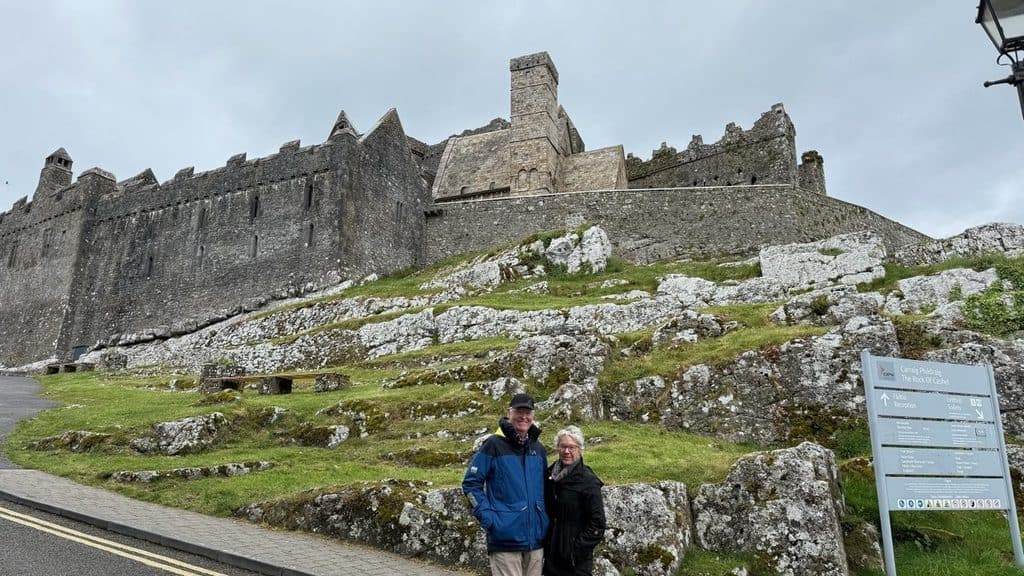
For centuries, Cashel was associated with the Kings of Munster.
Long before the Rock became one of Ireland’s most important religious centres, it was a place of royal power, political ceremony and legend.
The site allows us to explore several different layers of Irish history in one location — Gaelic kingship, early Christianity, medieval church power and some of Ireland’s most remarkable surviving medieval architecture.
St Patrick and the King of Munster
According to tradition, St Patrick came to Cashel in the fifth century and converted King Aenghus of Munster to Christianity.
One of Cashel’s best-known legends tells how Patrick accidentally pierced the king’s foot with the pointed end of his crozier during the baptism.
Aenghus supposedly remained silent throughout the pain because he believed this must simply be part of the Christian ritual.
Whether the story happened exactly this way or not, it illustrates the close association between Cashel, Irish kingship and the spread of Christianity.
Kings of Munster and Brian Boru
For centuries, Cashel was linked with the rulers of Munster.
Among the most famous names connected with this tradition is Brian Boru, who rose from Munster kingship to become one of the most celebrated High Kings of Ireland.
The Rock eventually changed from a royal centre into an ecclesiastical one.
In 1101, the King of Munster transferred the site to the Church.
The centuries that followed created much of the remarkable architectural complex visible today.
Instead of looking at one castle or one church, you are walking through several different periods of Irish history concentrated on the same dramatic hilltop.
Exploring the Rock of Cashel
We normally allow approximately 1–1.5 hours at the Rock of Cashel.
The complex includes several important medieval structures.

The Round Tower
The tall stone Round Tower is among the oldest surviving structures on the Rock and remains one of the defining features of Cashel’s skyline.
Round towers are among the most distinctive features of early medieval Irish religious sites, and Cashel provides a particularly dramatic example.
Cormac’s Chapel
Cormac’s Chapel is one of Ireland’s finest surviving examples of Romanesque architecture.
Its stone construction, decorative carving and surviving medieval wall paintings make it one of the great treasures of the site.
Interior access is controlled through official guided tours and availability is limited, so entry cannot be guaranteed on every visit.
The Gothic Cathedral
The enormous roofless Cathedral dominates the centre of the Rock.
Walking beneath its high stone walls gives an immediate impression of Cashel’s importance and wealth during the medieval period.
Hall of the Vicars Choral
The Hall of the Vicars Choral helps tell the story of the clergy who lived and worked at the site during its later medieval period.
Views Across the Golden Vale
The elevated position of the Rock provides wonderful views across the surrounding countryside.
And directly beneath the Rock lies another atmospheric medieval ruin.
Hore Abbey
Looking down from Cashel, you can see the ruins of Hore Abbey sitting quietly among the fields.
Founded for the Cistercians in the thirteenth century, the ruined abbey creates one of the most memorable views from the Rock.
The contrast is striking.
Above you stands the powerful ecclesiastical complex of Cashel.
Below, an isolated monastery sits surrounded by green farmland.
Where timing and weather permit, we can include a closer photo stop or short visit.
On this particular itinerary, however, we normally keep the focus on the Rock itself because another major destination still awaits us in County Cork.
Through Munster to County Cork
After Cashel, we continue south towards County Cork.
This journey gives you a broader view of the Irish countryside as we travel deeper into Munster.
The route passes through rich agricultural landscapes with distant views towards the mountain ranges of southern Ireland before eventually reaching the village of Blarney, just outside Cork city.
Here we arrive at one of Ireland’s most famous castles.
But Blarney is much more than one stone.
Blarney Castle
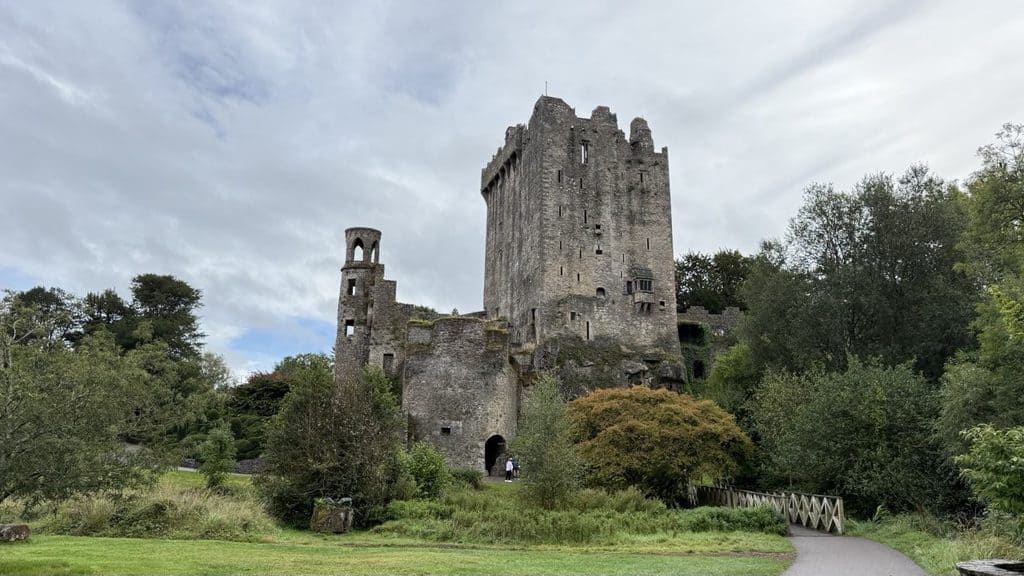
Blarney Castle is one of Ireland’s most recognisable historic attractions.
The castle standing today dates principally from the fifteenth century and is closely associated with the MacCarthy family, one of the great Gaelic dynasties of Munster.
Unlike many ruined castles, Blarney invites you to experience the structure vertically.
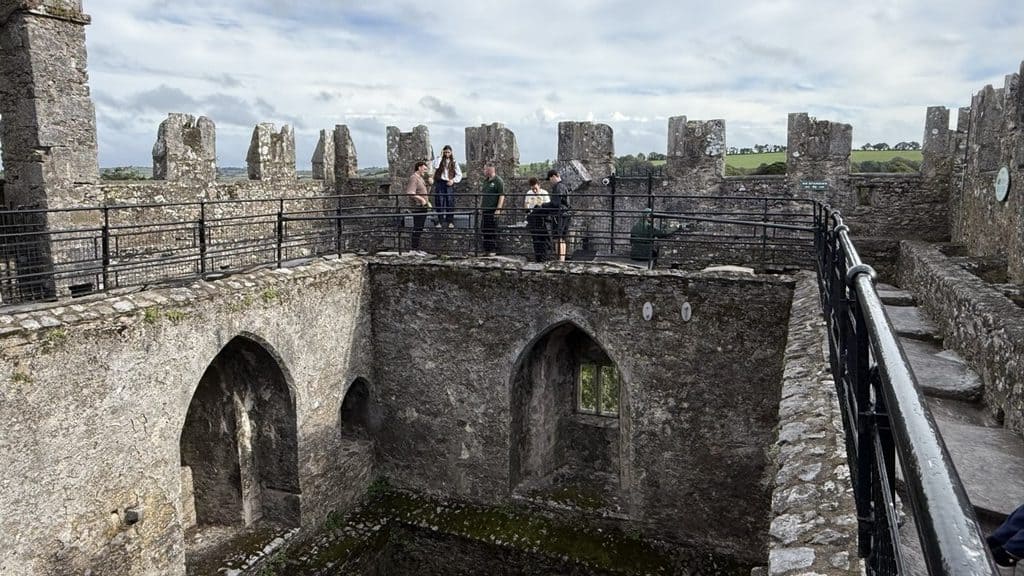
You enter at ground level and gradually climb through the medieval tower, passing chambers and defensive features until you eventually reach the battlements high above the surrounding gardens.
And here, built into the castle wall, is the attraction that made Blarney famous around the world.
The Blarney Stone
For generations, travellers have climbed to the top of Blarney Castle to kiss the legendary Blarney Stone, traditionally believed to bestow the gift of eloquence — or the “gift of the gab.”
To kiss the stone, visitors lie back beneath the battlements while supported by staff.
It is certainly one of Ireland’s more unusual travel rituals.
Millions of visitors have made the climb over the years, from ordinary travellers to writers, entertainers and political figures.
But where did the tradition come from?
Like many good Irish legends, there is more than one explanation.
Where Did “Blarney” Come From?
One famous tradition connects the word “blarney” with Queen Elizabeth I and the MacCarthy family.
The English Crown wanted Cormac MacCarthy to formally surrender Blarney Castle.
MacCarthy repeatedly delayed, negotiated, promised and produced explanations without ever quite delivering what the Queen wanted.
According to the story, Elizabeth eventually became so frustrated that she described his elaborate speeches as nothing but “Blarney.”
The word entered the language to describe skilful, charming or flattering talk.
Whether the linguistic story developed exactly this way is debated, but it fits perfectly with Blarney’s lasting reputation as the home of eloquence.
Exploring Blarney Castle
The experience begins long before you reach the Stone.
As you climb through the medieval tower, you pass through rooms and spaces that help demonstrate how this fortified residence functioned.
The castle has narrow stone stairways and historic surfaces, so visitors should be comfortable with steps and confined medieval spaces.
From the battlements there are excellent views across the surrounding estate.
After kissing the Stone — if you choose to do so — we descend back into the grounds.
And this is where many first-time visitors discover that Blarney Castle is only part of the attraction.
Blarney Gardens
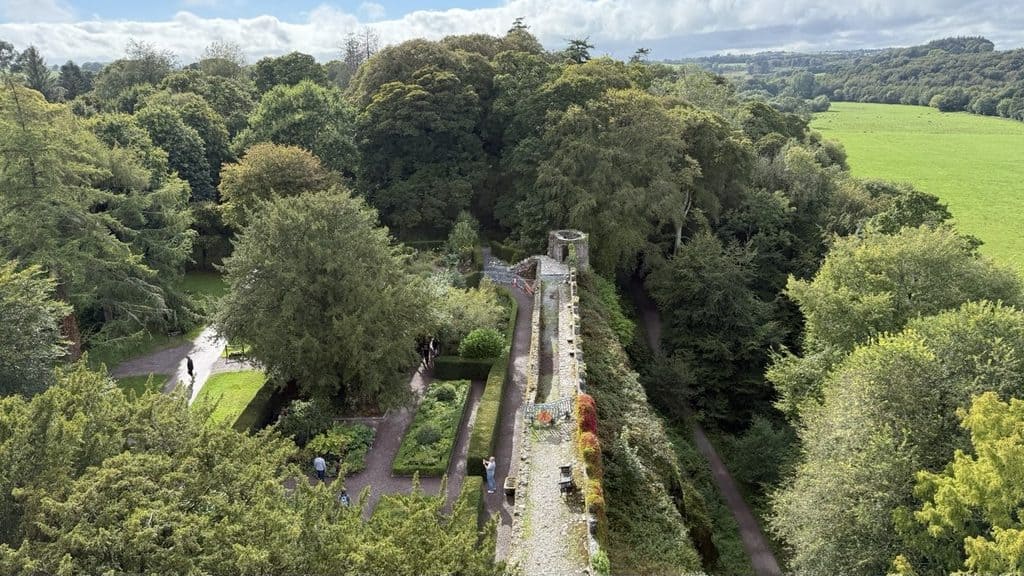
The castle stands within an extensive historic estate filled with gardens, woodland, waterways and unusual landscape features.
Blarney is therefore not simply a castle visit.
It is also a garden and walking experience.
After exploring the castle, we recommend leaving enough time to discover at least some of the estate.
The Rock Close – Myths, Druids and Witches
One of the most atmospheric parts of the Blarney estate is the Rock Close.
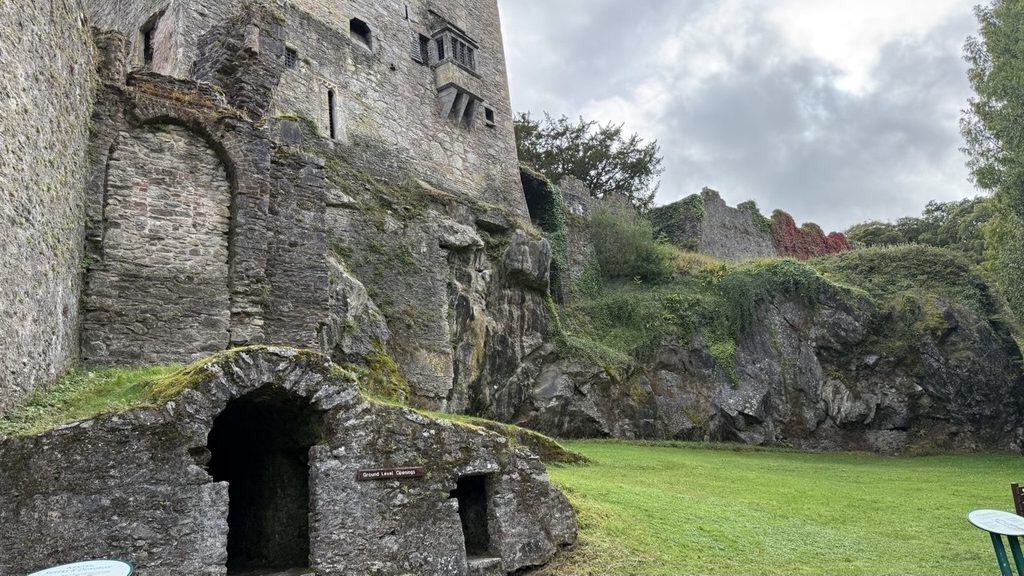
This shaded garden of ancient trees, rocks and narrow pathways is filled with folklore.
The landscape contains features with names such as:
- Witch’s Kitchen
- Wishing Steps
- Druid’s Circle
- Sacrificial Altar
- Dolmen
- Witch’s Stone
Some of the garden features were incorporated into the landscape by the estate owners during the eighteenth century, while others are connected with much older local traditions and stories.
The result feels intentionally mysterious.
Huge tree roots twist around rocks, paths disappear beneath foliage and legends seem to accompany almost every turn.
It is one of the best places at Blarney to experience the mix of landscape and folklore that has made the estate so famous.
The Wishing Steps
One of the Rock Close’s most popular legends surrounds the Wishing Steps.
Tradition says that a wish may be granted if you walk down and back up the steps while concentrating only on that wish.
There are, naturally, particular rules associated with doing this correctly.
Whether or not you expect magic to intervene, the steps are another example of how Blarney combines historic landscape with Irish folklore.
The Poison Garden
Close to the castle you can also explore Blarney’s unusual Poison Garden.
Unlike a conventional decorative garden, this area contains plants associated with toxicity, medicine and traditional uses.
It is both beautiful and slightly unsettling.
The garden demonstrates that the difference between a medicinal plant and a dangerous one can often depend on preparation, dose and knowledge.
For visitors interested in botany, folklore or simply something unusual, it is one of the estate’s most memorable smaller attractions.
More of the Blarney Estate
If you prefer gardens to castles, there is much more to explore.
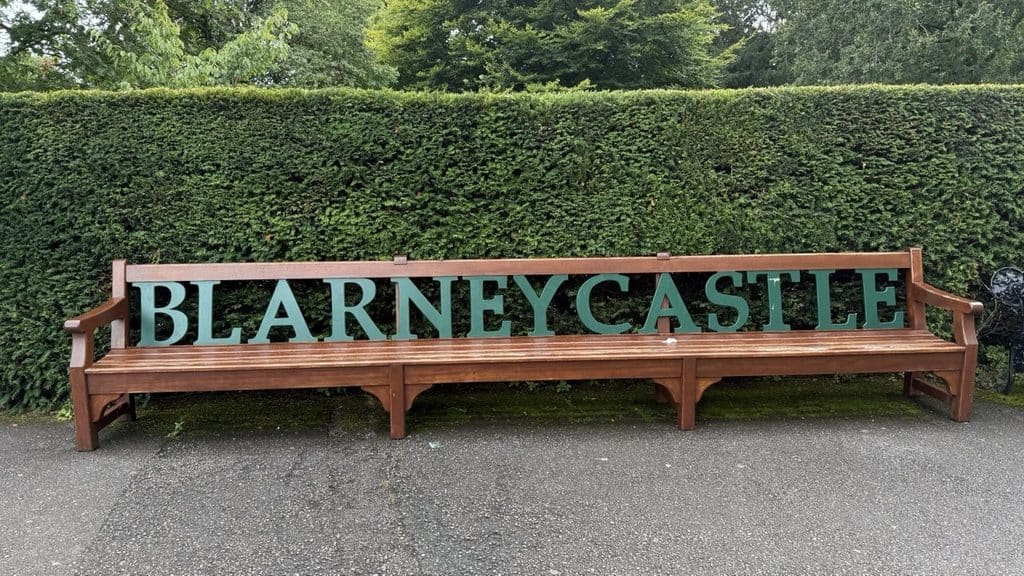
Depending on available time and the season, the Blarney estate contains woodland walks, water gardens, specimen trees, colourful borders and quieter sections away from the castle itself.
It would be possible to spend most of a day here.
On this combined tour we therefore choose the areas that interest you most rather than trying to walk every path.
Typical priorities are:
Blarney Castle → Blarney Stone → Rock Close → Poison Garden
with additional garden exploration where timing allows.
Lunch at Blarney
We normally plan lunch or refreshments around the Blarney part of the day.
Depending on your preferences and the pace of the tour, you can enjoy lunch in or around Blarney village before continuing with the gardens or beginning the return journey.
Your driver-guide can make recommendations based on what you prefer — a traditional pub, café, restaurant or a quicker lunch that leaves more time for sightseeing.
Optional Time at Blarney Woollen Mills
If shopping for Irish gifts, knitwear or souvenirs is important to you, we can allow some time for Blarney Woollen Mills where the day’s schedule permits.
However, we regard the Rock of Cashel, Blarney Castle and Blarney Gardens as the principal experiences.
Shopping should not reduce the time available at the historic sites unless it is something you particularly want to include.
Return to Dublin
After our time at Blarney, we begin the journey back towards Dublin.
This is a substantial drive, which is why travelling privately makes the day considerably easier.
You can relax while your driver-guide handles the journey and enjoy the changing landscape as we travel north-east across Ireland.
Depending on departure time, traffic and the pace of your visits, arrival back in Dublin is normally in the evening.
Suggested Timing for Blarney Castle and Rock of Cashel private day tour from Dublin
The following schedule is illustrative rather than fixed.
07:00–07:30 – Private pickup in Dublin
Morning – Travel towards County Tipperary
Approx. 09:30–10:00 – Rock of Cashel
Late morning – Explore the Rock of Cashel and enjoy Hore Abbey views
Late morning / midday – Continue towards County Cork
Approx. 12:30–13:00 – Arrive in Blarney
Early afternoon – Blarney Castle and Blarney Stone
Afternoon – Lunch and Blarney Gardens, including Rock Close and Poison Garden
Optional – Blarney village or Blarney Woollen Mills
Late afternoon – Depart Blarney
Approx. 19:00–20:00 – Return to Dublin, depending on traffic and the pace of the day
Because this is a private tour, exact timing can be adjusted around attraction opening hours, traffic, weather and your interests.
Why We Focus on Cashel and Blarney
It is possible to find coach itineraries that try to combine Rock of Cashel, Blarney Castle, Cork city and sometimes another castle in a single day.
Our approach is different.
Blarney Castle is not simply a place to rush upstairs, kiss the Stone and return to the vehicle.
The gardens and Rock Close are an important part of the experience.
Likewise, the Rock of Cashel deserves enough time to understand what you are seeing rather than treating it as a roadside photograph.
For this reason, the standard private itinerary concentrates on two major destinations: Rock of Cashel and Blarney Castle.
The result is still a full day, but one that allows you to experience both places properly.
What’s Included
- Private transportation
- Professional driver-guide
- Pickup and return to your Dublin hotel or agreed location
- Private tour exclusively for your party
- Rock of Cashel visit
- Hore Abbey viewpoint where practical
- Journey through Counties Tipperary and Cork
- Blarney Castle and Gardens visit
- Historical commentary and Irish storytelling
- Flexible itinerary
- Recommendations for lunch and refreshments
- Comfort stops during the journey
- Assistance planning attraction timings
Optional Experiences
Depending on timing and your interests, we can discuss including:
- Cormac’s Chapel official guided interior visit
- Longer Blarney Gardens exploration
- Rock Close
- Poison Garden
- Blarney village
- Blarney Woollen Mills
- Additional photography stops
Optional experiences depend on opening arrangements, availability and the time available during your tour.
Not Included Unless Stated in Your Quote
- Attraction admission fees
- Meals and drinks
- Optional attraction tickets
- Shopping
- Third-party guided experiences
- Gratuities
If attraction admission is included in your particular booking, this will be clearly stated in your confirmation.
Practical Information
This Is a Long Day
Blarney is close to Cork city and significantly farther from Dublin than destinations such as Wicklow or Kilkenny.
Allow approximately 11–12 hours for this tour.
An early departure is strongly recommended.
The advantage of a private tour is that you can relax during the longer road sections while your driver-guide manages the journey.
Walking and Steps
This tour includes moderate walking.
The Rock of Cashel has uneven historic stone surfaces and exposed outdoor areas.
Blarney Castle requires visitors wishing to reach the Stone and battlements to climb a medieval tower using narrow and sometimes steep stone stairways.
Visitors who do not wish to climb the castle can still enjoy the gardens and estate.
Please tell us about any mobility requirements when booking so that we can recommend the most appropriate way to experience the day.
Kissing the Blarney Stone
Kissing the Blarney Stone is entirely optional.
You can climb the castle and enjoy the views without kissing it, or concentrate on the gardens instead.
During busy periods, there can also be a queue to reach the Stone, and this can affect the amount of time available for other parts of the estate.
Because your tour is private, we can discuss your priorities and adapt accordingly.
Weather
Both Cashel and Blarney include substantial outdoor sightseeing.
Irish weather can change quickly, so we recommend comfortable walking shoes, layers and a waterproof jacket even when the morning forecast looks good.
Attraction Tickets
Opening hours and visitor arrangements can change.
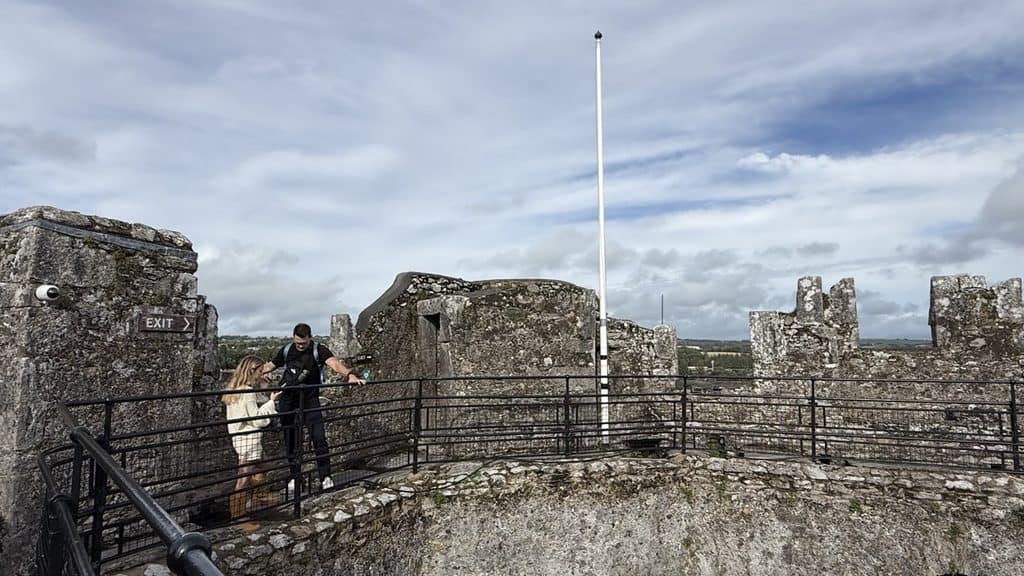
Blarney Castle tickets can be purchased in advance, and advance planning is recommended.
At the Rock of Cashel, interior access to Cormac’s Chapel is by official guided tour only and places are limited.
Please tell us if Cormac’s Chapel or another particular experience is important to you when booking.
Frequently Asked Questions
Can you visit Blarney Castle and the Rock of Cashel in one day from Dublin?
Yes.
They can be combined into a full-day private tour from Dublin, but it is a substantial journey.
We recommend allowing approximately 11–12 hours and departing Dublin early in the morning.
Which do we visit first?
We normally recommend visiting the Rock of Cashel first and then continuing south to Blarney Castle.
This breaks the journey naturally, allows us to reach Cashel earlier in the day and leaves the larger block of afternoon time for Blarney Castle and Gardens.
The order can be adjusted if opening arrangements or other circumstances make another sequence preferable.
How long do we spend at the Rock of Cashel?
We normally allow approximately 1–1.5 hours.
This provides enough time to explore the principal medieval complex and enjoy the views without rushing.
How long do we spend at Blarney Castle?
We recommend approximately 2.5–3 hours where the day’s schedule permits.
This gives you time to explore the castle, kiss the Blarney Stone if you wish and experience some of the gardens rather than visiting only the tower.
During busy periods, the queue for the Blarney Stone may affect how the time is divided.
Do we get to kiss the Blarney Stone?
Yes, if you wish.
The Blarney Stone is located at the top of Blarney Castle.
Visitors reach it by climbing the medieval tower and can then take part in the traditional kissing ritual with assistance from attraction staff.
Kissing the Stone is entirely optional.
Is Blarney Castle suitable for visitors with limited mobility?
The gardens can still be enjoyed by visitors who do not climb the castle.
However, reaching the Blarney Stone requires climbing narrow historic stairways inside the medieval tower.
Please tell us about mobility requirements before booking so that we can adapt the itinerary as much as possible.
What else is there to see at Blarney besides the Stone?
A great deal.
Blarney Castle stands within an extensive historic estate containing gardens, woodland walks and unusual features.
Highlights include the Rock Close, Wishing Steps, Poison Garden, ancient trees and landscaped gardens.
For many visitors, these become just as memorable as kissing the Stone.
Is the Rock Close included?
You can explore the Rock Close during your Blarney visit, subject to the amount of time available.
We recommend it particularly for visitors interested in Irish folklore, atmospheric gardens and photography.
Is the Poison Garden included?
It is part of the Blarney Castle estate and can be visited during your time there.
The exact amount of garden exploration depends on how long you spend inside the castle and whether there is a queue for the Blarney Stone.
Do we visit Hore Abbey?
Hore Abbey can normally be seen clearly from the Rock of Cashel.
Where timing and weather permit, we can include a closer photo stop or short visit.
On this route we normally avoid a lengthy additional stop because we want to preserve enough time for Blarney.
Can we visit Cormac’s Chapel?
Cormac’s Chapel is part of the Rock of Cashel complex, but entry to its interior is available only through an official guided tour with limited availability.
Interior access therefore cannot be guaranteed.
Do we visit Cork city?
Cork city is not included in the standard itinerary.
Although Blarney is only a short distance from Cork, adding a meaningful Cork city visit would reduce the time available at Blarney Castle and the Rock of Cashel.
If visiting Cork city is particularly important to you, please ask us about a customised itinerary or a multi-day tour.
Can we also visit Cahir Castle?
We do not normally recommend adding Cahir Castle to this itinerary.
Our dedicated Rock of Cashel and Cahir Castle private day tour is a better choice if you want to explore County Tipperary in greater depth.
For the Blarney route, concentrating on Cashel and Blarney gives you a much better balance.
Where do we have lunch?
We normally plan lunch around Blarney village or the Blarney Castle visit.
Your driver-guide can recommend a restaurant, café or pub depending on your preferences and how much time you want to dedicate to sightseeing.
Can we visit Blarney Woollen Mills?
Yes, where timing permits.
If shopping is important to you, tell us in advance and we can allow time for Blarney Woollen Mills.
Is this tour suitable for children?
Yes, particularly for families who enjoy castles, legends and gardens.
However, parents should consider whether children are comfortable with a long day in the vehicle and with the narrow stairways inside Blarney Castle.
Can the tour be customised?
Absolutely.
Because this is a private tour, you can prioritise:
- medieval history
- Blarney Castle
- kissing the Blarney Stone
- gardens and folklore
- photography
- less walking
- shopping at Blarney
- more time at Cashel
- more time at Blarney
Tell us what matters most to you and we will recommend the best balance.
Why Combine the Rock of Cashel and Blarney Castle?
These two destinations complement one another exceptionally well.
At the Rock of Cashel, the story is one of Irish kings, medieval bishops, St Patrick and the rise of one of Ireland’s great ecclesiastical centres.
At Blarney Castle, you step into the world of a powerful Gaelic family, medieval tower-house life, folklore, gardens and one of Ireland’s most famous traditions.
One site rises dramatically above the open countryside of Tipperary.
The other stands within a lush Cork estate filled with trees, gardens, myths and hidden paths.
Together they create a journey through Irish history that is both serious and playful — kings and saints in Cashel, legends and eloquence in Blarney.
Two Irish Icons in One Private Day
Begin your morning among cathedral ruins and medieval towers overlooking the Golden Vale.
Hear stories of kings, saints and centuries of political and religious power.
Then continue south into County Cork, climb the winding stairs of Blarney Castle and decide whether you are brave enough to kiss the most famous stone in Ireland.
Afterwards, leave the crowds behind and wander into gardens filled with ancient trees, mysterious rocks, witches, wishing steps and hidden pathways.
The Blarney Castle and Rock of Cashel private day tour from Dublin is a long journey, but it brings together two completely different sides of Ireland in one memorable day.
Ready to Explore Cashel & Blarney?
Tell us:
- your preferred date
- number of guests
- where you are staying in Dublin
- any mobility requirements
- whether kissing the Blarney Stone is a priority
- whether you would like extra time in the gardens or at Blarney Woollen Mills
and we will help you plan the best itinerary for your day.
Contact Gateway to Ireland to check availability for your Blarney Castle and Rock of Cashel private day tour from Dublin.