
Ireland’s rich architectural heritage is like a timeline you can walk through, from prehistoric tombs older than the pyramids to grand Georgian boulevards and cozy thatched cottages. Whether you’re a general traveler or an architecture enthusiast, the Emerald Isle offers a fascinating journey through time in its buildings and ruins. Let’s dive into Ireland’s architecture, its styles, history, influences, and some interesting facts. By the end, you’ll see why exploring these sites is a must on any Irish adventure.
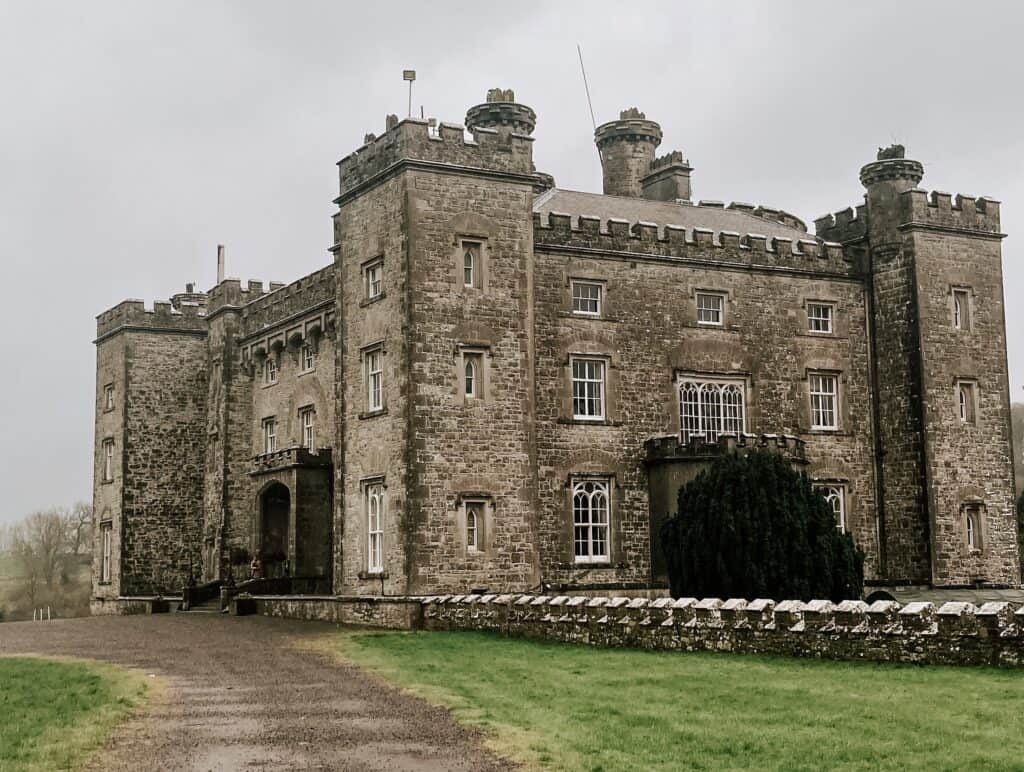
30,000+ Castles & Ruins: Ireland is home to over 30,000 castles and castle ruins scattered across its countryside, from ancient Norman keeps to romantic Gothic mansions.
You’re never far from a medieval ruin or a towering fortress, a testament to Ireland’s turbulent history and love of legends.
Ancient Wonders: The prehistoric passage tomb Newgrange (built c. 3200 BC) is older than Stonehenge and the Egyptian pyramids. Its Neolithic builders engineered it so that every winter solstice, sunrise light illuminates its inner chamber, a 5,200-year-old astronomical marvel you can still witness today.
Irish Influence Abroad: Irish architecture has even touched other nations. Did you know an Irish architect designed the White House? James Hoban, born in Kilkenny, went on to create the U.S. President’s residence in Washington D.C.. Some of Dublin’s Georgian landmarks (like Leinster House) are even said to have inspired aspects of the White House’s design!
Ancient Roots: Megaliths and Mysteries
Long before there were castles or cathedrals, Ireland’s inhabitants built enduring monuments of earth and stone. The Boyne Valley in County Meath, boasts Newgrange, Knowth, and Dowth, massive Neolithic passage tombs that boggle the mind. Newgrange, as mentioned, predates most of the world’s famous ancient structures and is part of a UNESCO World Heritage Site. This giant mound of stone and earth has a white quartz façade that gleams in the Irish sun, and its interior passage is perfectly aligned to capture the midwinter sunbeam.
Standing before Newgrange’s entrance stone, swirling with megalithic art carvings, you feel a connection to people who lived 5,000 years ago, it’s a humbling experience.
Scattered across Ireland are also mysterious stone circles and dolmens (portal tombs). In places like Drombeg Stone Circle in West Cork or Carrowmore in Sligo, you can walk among these prehistoric “architectural” remains and imagine ancient rituals. While their exact purposes remain partly mysterious, they form the earliest chapter of Irish architecture. The best part is many of these sites lie in beautiful countryside settings, often free of crowds, making them perfect hidden gems on a private tour.
Irish Architecture & Celtic Christian Heritage: Monasteries and Round Towers
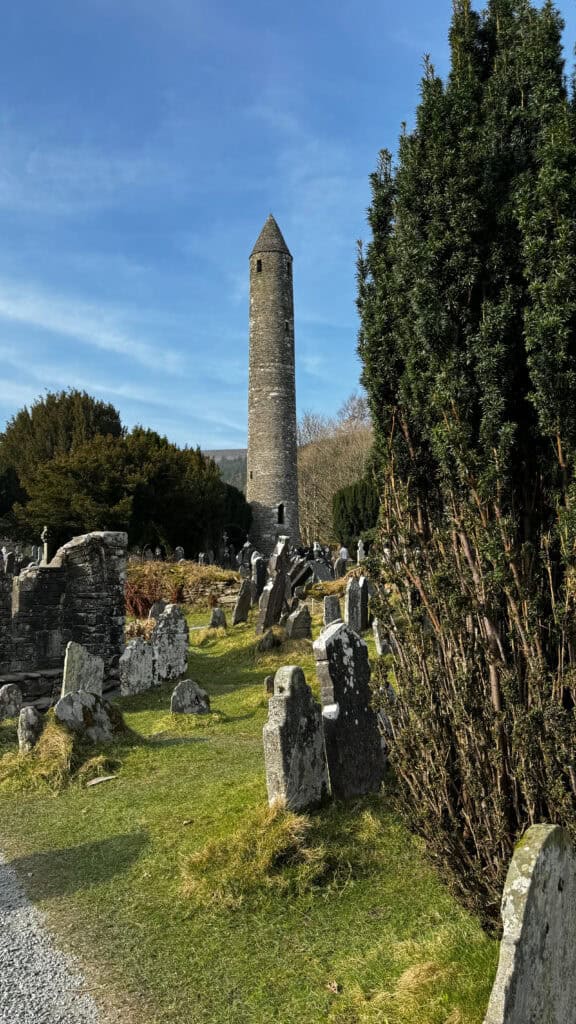
Fast forward to the early medieval period when Ireland earned the title “land of saints and scholars.” The landscape from roughly the 6th to 12th centuries flourished with monasteries, remote sanctuaries of prayer, learning, and impressive building. If you visit Glendalough in County Wicklow (a highlight on our Wicklow Mountains day tour), you’ll encounter the serene ruins of a monastic city nestled in a valley of lakes and forests. What immediately catches the eye is the slender, circular round tower rising about 30 meters tall. These round towers are uniquely Irish, virtually not found outside Ireland. Monks built them as bell towers and perhaps as safe refuges during Viking raids (their doors are high off the ground to fend off intruders). At Glendalough, as you crane your neck up at the tower, you can almost picture a watchful monk keeping an eye out for Norse longships on the horizon.
Other monastic sites dot Ireland’s map: Clonmacnoise by the River Shannon with its evocative ruins and Celtic crosses, Skellig Michael’s beehive huts clinging to a rock in the Atlantic, and Jerpoint Abbey (Kilkenny) with its beautiful stone arches. These sites showcase early Irish Romanesque architecture: thick stone walls, rounded arches, and intricate carvings of biblical scenes or knotwork. St. Cronan’s Church in County Clare, a humble 10th-century chapel, is even noted as one of the oldest continuously used churches in Ireland (over 1,000 years old!). Visiting these places, you’ll notice how closely intertwined architecture and nature are in Ireland – many monasteries were built in secluded, stunning landscapes that still feel spiritual today.
Interesting fact: Many Irish monasteries include high crosses and towers that have stood for a millennium, yet none of the Vikings’ wooden forts survived. The Vikings did, however, found Ireland’s first towns (Dublin, Waterford, Limerick, Wexford). While no Viking buildings remain intact, the street layouts in areas of Dublin and Waterford trace back to those Viking settlements. So when you stroll Dublin’s Temple Bar or visit Waterford’s Viking Triangle, you’re walking in footsteps of Norse traders.
Medieval Marvels: Castles, Cathedrals, and Fortified Towns
Nothing says “medieval Ireland” like the silhouette of a castle ruin on a hill. Travelers are often amazed by just how many castles they see, from major attractions to random ivy-covered walls in a farmer’s field. In fact, Ireland has over 30,000 castles and castle ruins across its landscape. These range from grand Anglo-Norman fortresses to small tower houses (the fortified homes of Gaelic chiefs or Anglo-Irish gentry). As you drive through the Irish countryside on tour, you might spot a crumbling tower house right next to a modern farmhouse – the past and present literally side by side.
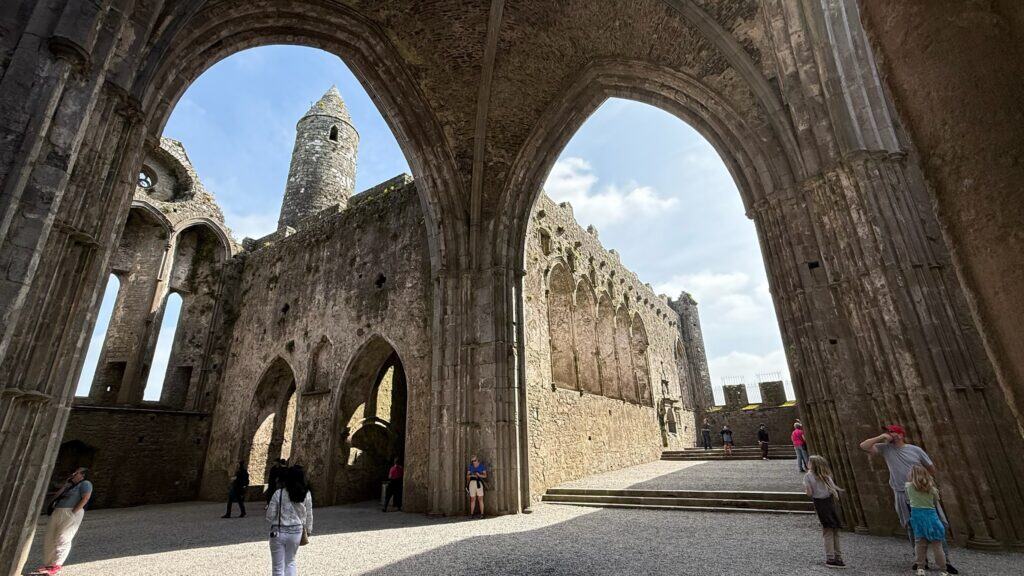
The Normans, who arrived in the 12th century, were prolific castle-builders. One of the earliest and best-preserved is Carrickfergus Castle in Northern Ireland, built in 1177. It’s often cited as the most perfectly preserved Norman castle on the island, its thick walls and coastal position allowed it to withstand sieges for centuries. In the Golden Vale of County Tipperary (a region we love to guide tours through), you’ll find the dramatically perched Rock of Cashel. This wasn’t a castle residence but a seat of kings and churchmen, an amazing complex of medieval architecture including a 12th-century round tower, a Gothic cathedral, and Cormac’s Chapel with Ireland’s oldest frescoes. The site feels like a movie set, yet it’s real history you can walk around! Cashel’s round tower and chapel are fine examples of Romanesque architecture with carved stone decoration, while the later cathedral shows early Gothic influence.
Speaking of Gothic, the style arrived in Ireland thanks to the Normans. Christ Church Cathedral and St. Patrick’s Cathedral in Dublin – two must-see stops if you’re exploring the capital – were originally built in the Norman era and showcase pointed arches and ribbed vaults of Gothic design. Wandering their interiors today, you’ll see medieval stonework, medieval tombs (like Strongbow’s grave in Christ Church), and even the odd quirky treasure (St. Patrick’s has the remains of Jonathan Swift, the author of Gulliver’s Travels). These cathedrals have been restored and modified in later centuries, but they remain magnificent survivors of medieval Dublin.
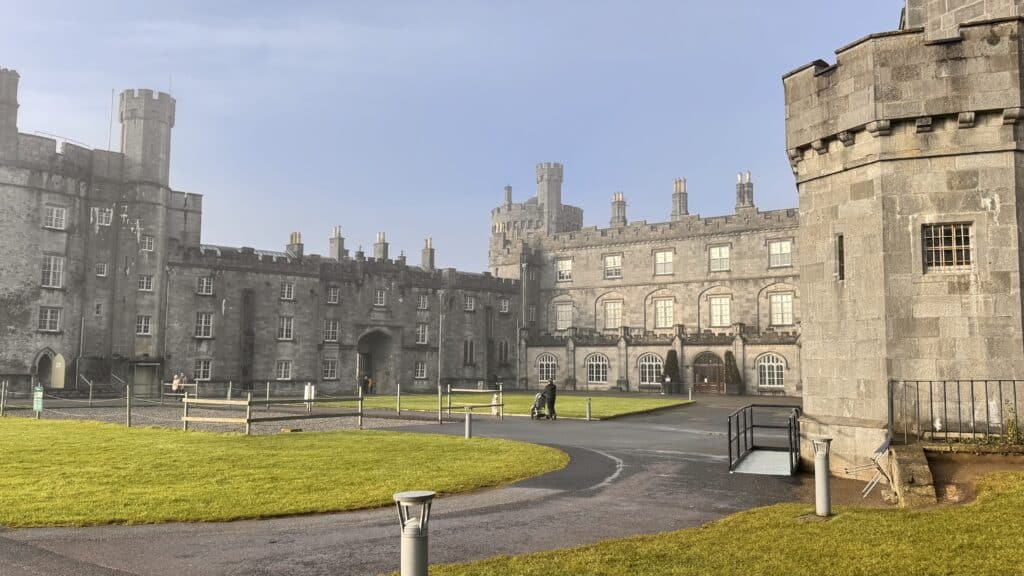
Other medieval gems include Kilkenny Castle, a centerpiece of the charming medieval city of Kilkenny (often called the “Medieval Marble City” for its black limestone buildings). The castle was built in 1195 and later updated, and today you can tour its furnished chambers, a great way to compare medieval fortification with later Victorian comfort. Bunratty Castle in County Clare (not far from the Cliffs of Moher) is another 15th-century fortress, fully restored with authentic interiors. Many of our private tours heading west include a stop at Bunratty, often timing it for the evening medieval banquet with music, a touristy but fun plunge into the past.
Grace and Grandeur: Georgian and Neoclassical Ireland
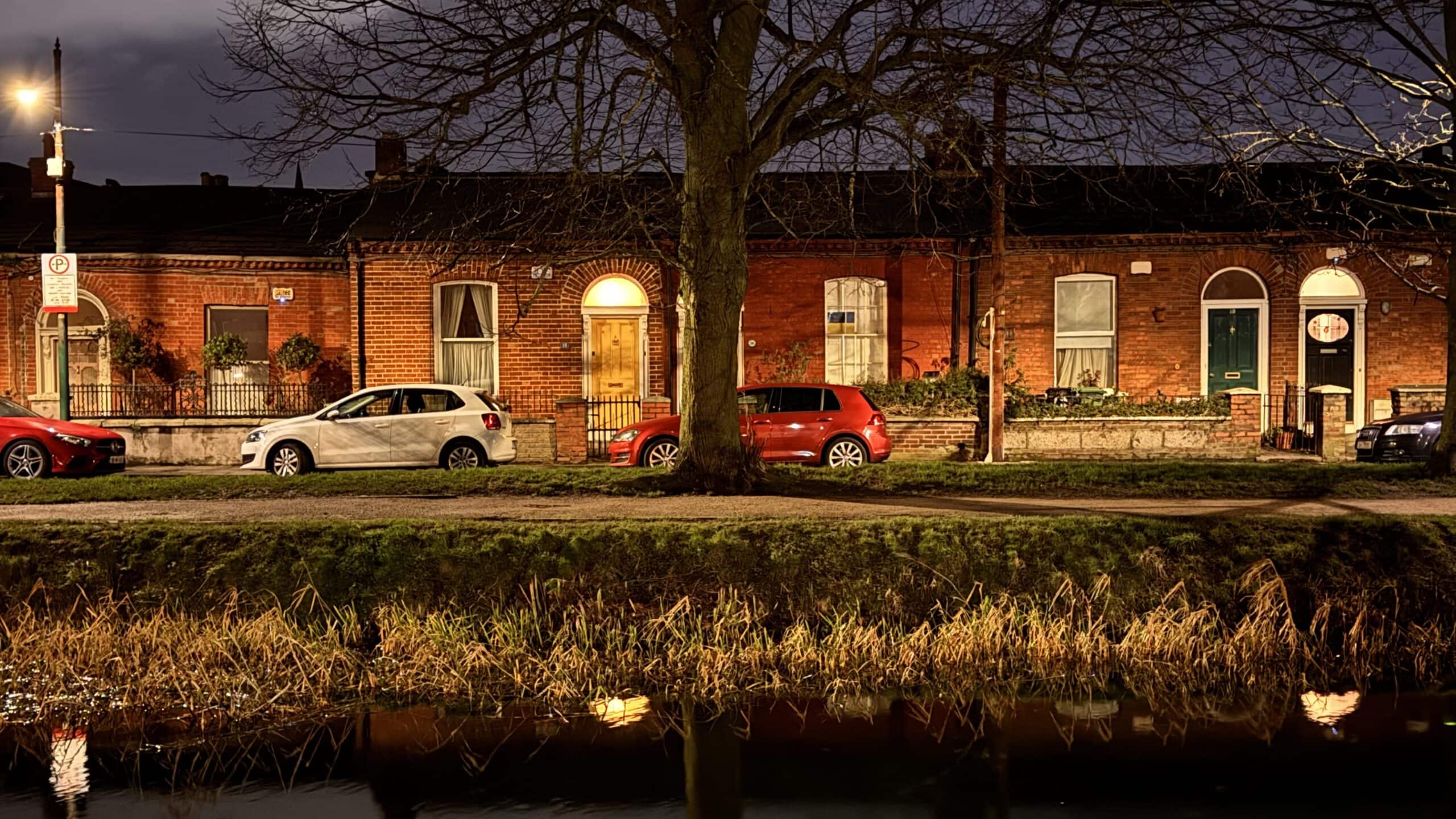
Jump to the 18th century, and Ireland’s architectural landscape shifted from fortified and medieval to elegant and classical. This was the Georgian era (roughly 1714–1830, the reigns of Kings George I-IV), and it left an indelible mark on cities like Dublin and Limerick. In fact, Dublin is often nicknamed “Georgian Dublin” because large parts of the city center were laid out in that period. Strolling through Dublin’s south city (Merrion Square, St. Stephen’s Green, and Fitzwilliam Square), you’ll see rows of stately townhouses with uniform brick façades, symmetrical sash windows, and ornate fanlights over painted doors – each door a bright color (legend says the colorful doors started as a way to spite a Victorian order to paint them black, but they certainly make the streets pop!). These graceful terraces and squares were designed with an eye for symmetry, proportion, and decorative detail, following trends from Britain and continental Europe.
A great example of Georgian elegance is Powerscourt House in County Wicklow (which you can visit on a day tour from Dublin). Originally a 18th-century mansion (later modified in Victorian times), it sits amid gorgeous gardens. Even in ruins (it tragically burned in 1974), the façade and the Italianate gardens reflect that Palladian symmetry so beloved in Georgian times.
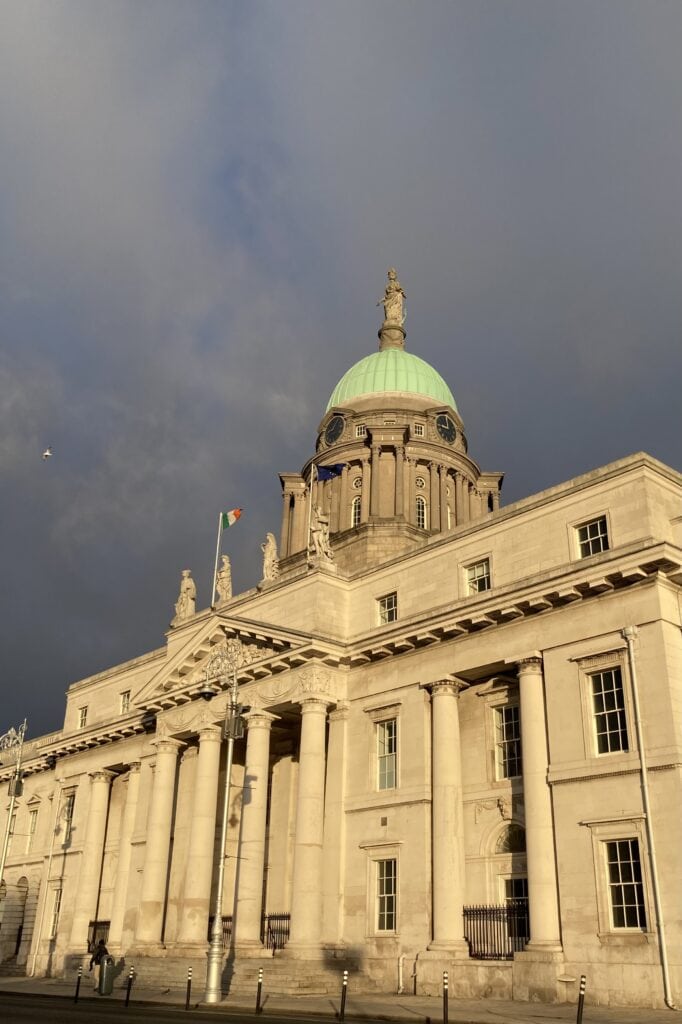
Another must-see is the Custom House in Dublin, a neoclassical masterpiece by James Gandon on the River Liffey, its grand dome and columns were built in the 1790s as a symbol of the city’s importance.
If you fancy country estates, Ireland has many Georgian “big houses”: for instance, Castletown House in County Kildare, the first Palladian style house in Ireland (c. 1720s), which set the trend for manor homes with its classical portico and elegant halls. And in County Laois, Emo Court is a stunning neoclassical mansion you can tour, complete with landscaped grounds.
Cities beyond Dublin also got the Georgian treatment. Limerick’s Newtown Pery district has Georgian terraces (giving Limerick the moniker “Georgian City”), and even smaller towns like Westport in Mayo were designed with Georgian planning (Westport’s tree-lined boulevard, the Mall, is straight out of 18th-century aesthetics). This era’s architecture often impresses visitors not by sheer size, but by its harmonious beauty – it feels like stepping into a Jane Austen novel. On a private tour, we love pointing out little details: the wrought-iron window guards, the intricate “fan” glass above doors, and the fact that many Georgian buildings hide lovely private gardens or courtyards in their rear (often visible only through archways). It’s a reminder that architecture can be as much about lifestyle and social life as stone and brick.
Vernacular Charm: Cottages & Local Traditions
Not all of Ireland’s architecture is grand monuments, in fact, much of the country’s heart lies in its vernacular architecture, the humble homes and structures built by local hands with local materials. Perhaps nothing is more quintessentially Irish than the whitewashed thatched cottage. These single-storey cottages with thatch roofs were typical for hundreds of years in rural Ireland. A traditional family cottage usually had a simple rectangular layout, just one room wide, because large timbers for roofing were scarce, builders often had to use driftwood or whatever they could find, leading to narrow structures. The thatch (made of straw or reeds) would be tied down with ropes and stones to withstand Atlantic storms. If you drive through counties like Kerry, Galway, or Antrim, you can still spot these storybook cottages; some are preserved as heritage museums, others are lovingly maintained or restored as homes and B&Bs.
Every region had its own cottage variations – in the west of Ireland, for example, thick stone walls and small windows were common (to keep out rain and wind). In the Midlands, you’d see white lime-plastered walls shining bright in the sun. Vernacular also includes farmsteads, barns, and even drystone field walls crisscrossing the countryside. These may not be “architect-designed” but they’re full of character and practicality. Walking through folk parks like Bunratty Folk Park or Ulster American Folk Park (which Gateway to Ireland Tours can include for those interested), you get a glimpse of how ordinary Irish people lived and built. The ingenuity is impressive, from turf-roofed cabins in boglands to fishermen’s stone huts on the Aran Islands.
Modern Ireland: Blending Innovation and Tradition
Ireland’s architectural story doesn’t stop in the past. In recent decades, especially post-1990s economic boom, Irish cities have seen a surge of modern architecture and interestingly, much of it pays homage to tradition while looking to the future. Dublin’s docklands, for instance, transformed from old warehouses to a sleek new quarter featuring the Convention Centre Dublin (a shiny glass cylinder of a building that lights up at night) and the Bord Gáis Energy Theatre (a striking modern theater), both of which showcase Ireland’s embrace of innovative design and define the new skyline. Yet, these modern buildings often incorporate symbolism: the Convention Centre’s curved glass might remind one of a giant Guinness pint or a Celtic cauldron, depending on who you ask!
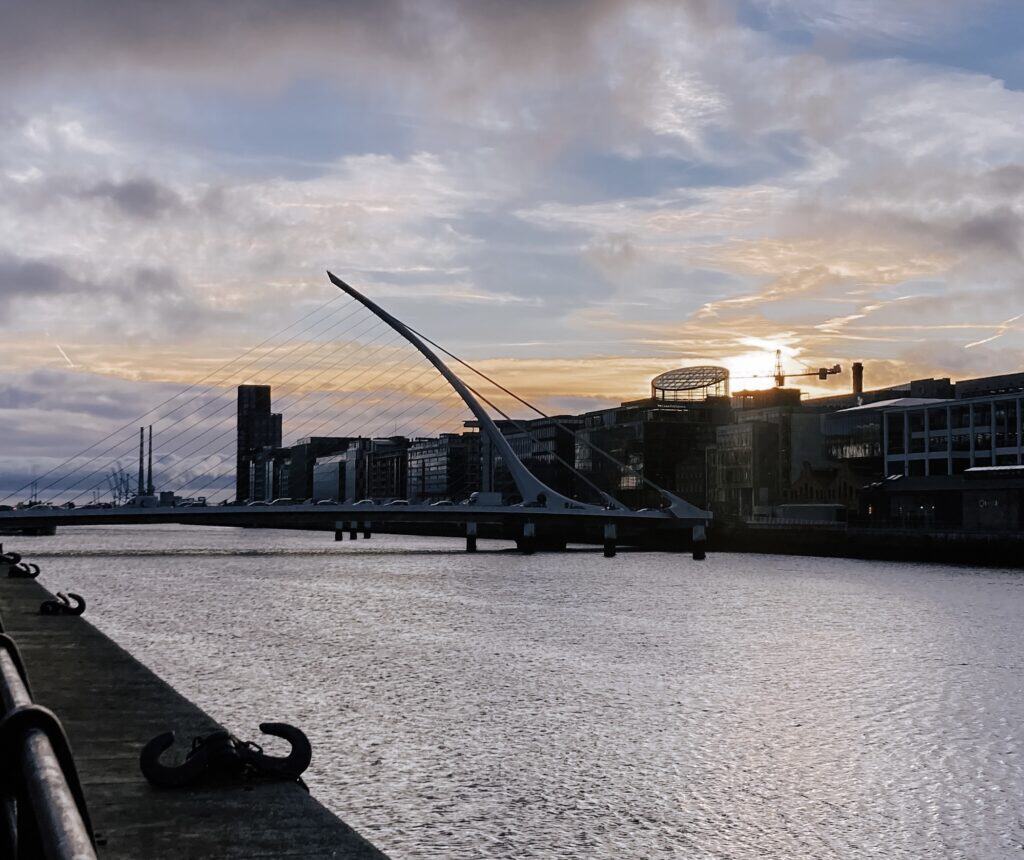
A standout piece of modern design is the Samuel Beckett Bridge in Dublin, designed by Santiago Calatrava, it’s a harp-shaped white cable-stay bridge, a nod to Ireland’s national symbol, the harp.
We always point it out on our Dublin city tours because it beautifully marries engineering with Irish identity.
You’ll find new office buildings in Dublin that preserve historic Georgian façades, or hip hotels in Galway repurposing old stone warehouses. This adaptive reuse is a big theme, for example, Kilmainham Gaol in Dublin is now a museum; its Victorian prison architecture stands preserved to tell the tale of Ireland’s revolutionaries, even as it functions as a modern exhibit space.
Sustainability is also influencing design (Ireland’s green ethos isn’t just about shamrocks!). New architecture often includes eco-friendly features but tries to maintain a distinct Irish character. A great example is the University of Limerick’s Bernal Institute building, contemporary glass and steel, but with patterns inspired by Celtic art in the facade screen. Or the Irish Emigration Museum (EPIC) in Dublin, which is entirely housed underground in restored 19th-century docks vaults rather than a flashy new building – preserving heritage while innovating the interior.
In short, modern Irish architecture respects its roots. Many architects here follow the ethos of famous Dublin architect Michael Scott, who gave us Busáras (the central bus station, a 1950s modernist building): they blend clean modern lines with touches of local culture. As a result, Ireland’s towns and cities feel dynamic yet familiar. On a tour, after days of castles and cottages, some guests are surprised to see how cutting-edge Ireland can be too – whether it’s the curvy glass of the Guinness Storehouse (with its gravity bar overlooking Dublin) or the bold copper-clad Museum of Country Life in Mayo.
Regions and Highlights to Inspire Your Trip:
- Dublin City: Georgian squares, Trinity College’s Old Library (a gorgeous 18th-century library hall), St. Patrick’s Cathedral, and even modern stunners like the Samuel Beckett Bridge. Don’t miss the row of Georgian doors on Fitzwilliam Square!
- Wicklow & East: Glendalough’s monastic ruins with that tall round tower; Powerscourt Estate (grand house and gardens); Russborough House (a Palladian mansion near Blessington Lakes). Wicklow is called the “Garden of Ireland,” and its estates and ruins are as lovely as its landscapes.
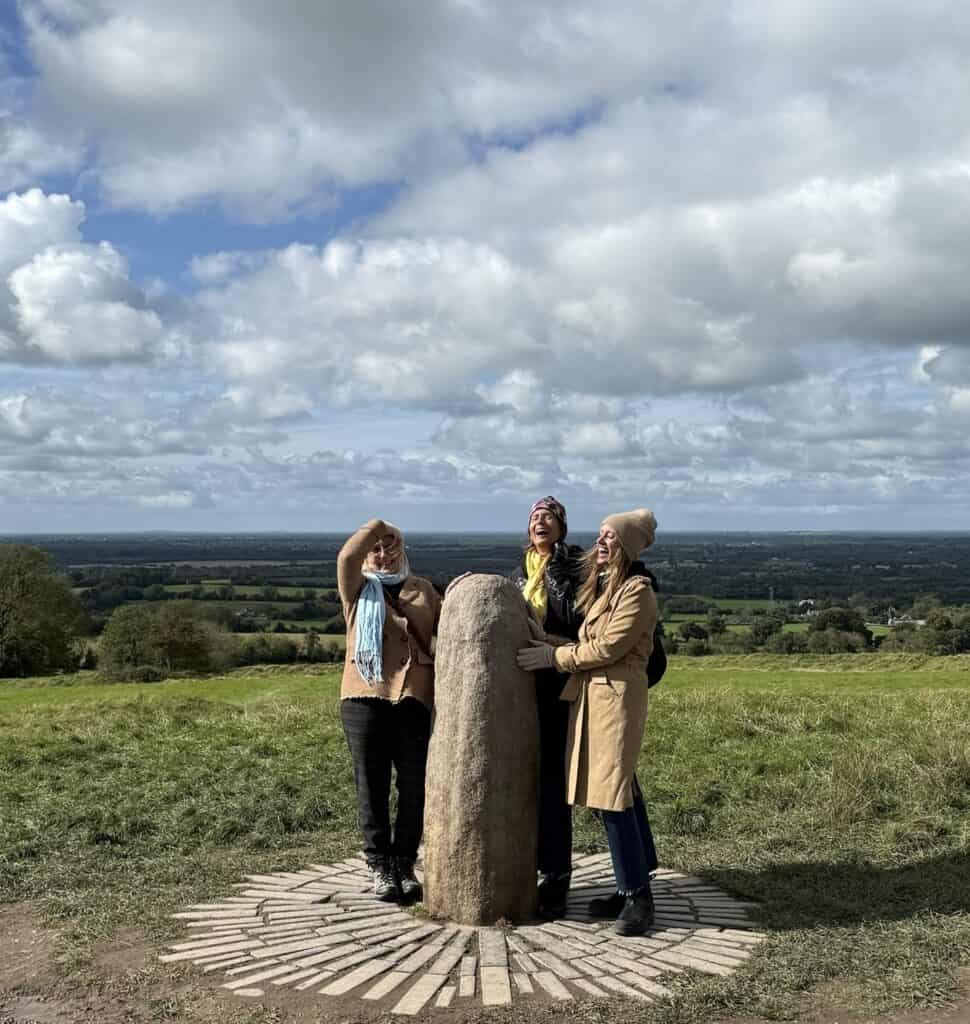
- Boyne Valley (Meath): Newgrange and Knowth for ancient tomb architecture; the Hill of Tara (seat of ancient kings, with earthworks and a Stone of Destiny, more landscape architecture); and Trim Castle, Ireland’s largest Norman castle, where Braveheart was filmed.
- Kilkenny & The Southeast: Kilkenny Castle and the medieval city lanes; Jerpoint Abbey (romantic ruins with carvings); Waterford City, Ireland’s oldest city, with Reginald’s Tower and a Viking/Norman street layout. Also check out Cahir Castle (picture-perfect fortress on a river) and Roscrea Castle if you’re a castle collector.
- Southwest (Cork/Kerry): Blarney Castle (kiss the famous stone if you dare the heights!), Ross Castle in Killarney (a 15th-century tower house on a lake), and Muckross House, a lovely 19th-century Victorian mansion in Killarney National Park. In Cork City, stroll the Huguenot Quarter for Georgian merchant houses and visit Saint Fin Barre’s Cathedral with its Gothic Revival splendor.
- West (Clare/Galway): While the Cliffs of Moher are all natural wonder, nearby Bunratty Castle & Folk Parkmarries architecture and heritage – a castle plus a recreated 19th-century village. In Galway, seek out Lynch’s Castle (a medieval townhome, now a bank!) and the Spanish Arch by the harbor. And if you venture to Connemara, Kylemore Abbey’s neo-Gothic architecture against the mountain backdrop is a photographer’s dream.
- North/Northern Ireland: Derry’s City Walls up north, Dunluce Castle dramatically perched on Antrim’s coast (inspiration for Game of Thrones’ Harrenhal), and Belfast City Hall (stately Baroque Revival) along with the ultra-modern Titanic Belfast museum. The Giant’s Causeway is nature’s architecture (those hexagonal basalt columns look designed by giants), and while there, a stop at Carrickfergus Castle or Hillsborough Castle (Georgian mansion) can round out the historical mix.
Wherever you go in Ireland, keep your eyes peeled, sometimes the most fascinating architectural details are not in guidebooks. It could be a medieval sheep gate built into a town wall in Kinsale, or an old famine-era cottage ruin on a hillside in Donegal. Each has a tale to tell, and locals are often happy to share legends if asked.
 Get in touch to learn more about Irish Architecture and plan your trip
Leave a Reply