
If you have Irish roots, chances are your family story contains at least one mystery. Maybe it is the ancestor who “came from Cork” with no village attached. Maybe it is a grandmother who used one surname in America and another in Ireland. Maybe it is a photograph with only a first name on the back, or a family tradition about a farm, a stone cottage, a crossing to Liverpool, or a ticket to New York. The good news is that Irish ancestry is far more searchable today than it was even a few years ago. In fact, as of April 18, 2026, the 1926 Census is live online, giving researchers a new bridge between the revolutionary era and the modern Irish family.
What makes Irish ancestry research exciting is that it is never just about names and dates. It is about place. Irish family history lives in townlands, parishes, registration districts, estate maps, graveyards, old newspaper notices, and the stories people carried with them when they left. That is why the most successful research is both documentary and local. You are not simply tracing a bloodline; you are reconstructing a world. And for travelers, that is exactly when heritage research becomes meaningful on the ground: the map stops being abstract and becomes personal.
Why Irish genealogy can be difficult and rich at the same time
Irish genealogy sits at the intersection of abundance and loss. Modern researchers benefit from free state-backed databases, digitised church registers, strong archival services, and an expanding ecosystem of searchable records. But the field is also shaped by one historic catastrophe: the destruction of the Public Record Office in 1922 during the Civil War. The Public Record Office had been established in 1867 to collect older administrative, court, and probate records, and when the Four Courts complex burned, vast quantities of material were lost, including many older census and probate records.
That loss helps explain why the 1901 and 1911 census returns have long been so central to Irish family history, and why the release of the 1926 census matters so much. The National Archives notes that the 1901 and 1911 returns are the only complete surviving pre-Independence censuses, while many earlier returns were either destroyed in 1922 or deliberately destroyed after statistical analysis. That sounds discouraging, but it is only part of the story. Irish ancestry researches have learned to work sideways: using land records, parish records, wills, cemetery evidence, newspaper notices, and destination-country records to reconstruct families even when one obvious source is missing.
A short history of Irish record-keeping
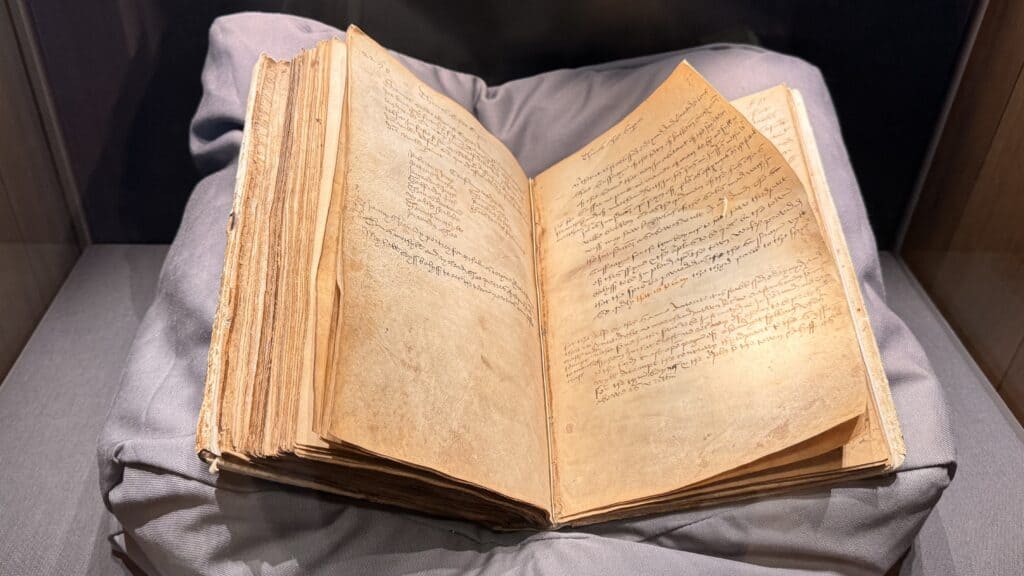
For many families, the modern paper trail for their Irish ancestry begins with civil registration. In the Republic, non-Roman Catholic marriages began to be recorded in 1845, while full civil registration of births, marriages, and deaths began in 1864. On IrishGenealogy, the free online historic indexes and images currently cover births from 1864 to 1925, marriages from 1845 to 1950, and deaths from 1871 to 1975, with Roman Catholic marriages beginning in 1864. These date ranges make civil records the backbone of post-Famine Irish research.
For earlier generations, church records are often crucial. The government’s guide to the National Library’s Catholic parish registers describes them as the single most important source for family history researchers before the 1901 census, and notes that the database contains images from the majority of Catholic parishes in Ireland and Northern Ireland up to 1880. Church of Ireland records are different: pre-1870 registers are public records, many are on microfilm at the National Archives, post-1870 access is generally through the Representative Church Body Library, and copies of surviving registers for northern dioceses are also held in PRONI.
Land and valuation records fill another major gap. The Tithe Applotment Books, compiled between 1823 and 1837, are among the most useful pre-Famine census substitutes. Griffith’s Valuation, completed between 1847 and 1864, remains one of the great middle-nineteenth-century anchors because it names occupiers and lessors and links them to mapped plots. The National Archives’ valuation office books and the later valuation material at Tailte Éireann help researchers trace continuity on the same holding over time.
How to start your Irish Ancestry history search
The best place to begin is not Ancestry or a DNA dashboard. It is your own family material. Gather certificates, funeral cards, letters, military papers, naturalization files, passenger lists, family bibles, school records, and old photographs. Write down every known name variation, every place reference, every witness, sponsor, neighbor, and occupation. The family memory that says “he was from near Clonakilty” may sound vague now, but later it could narrow a search dramatically. The National Library’s Family History Service and the National Archives’ Genealogy Advisory Service both emphasize starting with the information you already have and then building a focused search from there.
Once you have gathered your starting facts, create a working timeline for one person at a time. Include approximate birth, marriage, emigration, military service, children’s births, deaths, and every known address. Irish research becomes much easier when you aim to prove one identity in one place over one period, rather than trying to chase a whole surname across the country. This matters because common surnames appear everywhere, and because administrative units in Irish records do not always line up neatly with modern counties.
How to work through the sources in practice to research your Irish Ancestry
Start with civil records whenever the dates allow. A birth record can confirm parents, a marriage record can identify fathers and witnesses, and a death record can place someone in a precise registration district. If you are working inside the Republic, Irish Genealogy is the natural first stop; for the six counties, GRONI is essential, using a free name search and paid credits for deeper views.
When civil records run out, move to church records. Catholic parish registers are often where eighteenth- and early nineteenth-century Irish families and Irish Ancestry become visible. Look for baptisms, marriages, burial references where they survive, addresses, and the names of sponsors or witnesses, because those associates can point to siblings and cousins. For Church of Ireland families, consult National Archives guidance and then move outward to the RCB Library or PRONI as appropriate.
Use census records to verify the household and not just the individual. The 1911 census is especially valuable because it asked married women how long they had been married, how many children had been born alive, and how many were still living. That can help identify children who died young or narrow a marriage date range. The 1926 census is now especially important because it provides a post-independence snapshot and, in its initial phased release, focuses on the identifying details researchers search most often first.
Land records are where many Irish brick walls begin to move. Search the Tithe Applotment Books for a likely parish in the 1820s or 1830s, then Griffith’s Valuation for the same surname and townland later in the century. Once you have the plot reference, use valuation records and later revision books to see when the occupier changed. That change may suggest a death, inheritance, marriage, or emigration. Even when there is no explicit family relationship written down, occupancy patterns can establish continuity across generations.
Wills and probate calendars are the next layer. The National Archives explains that calendars after 1858 summarize key details such as name, address, grant type, executor details, and estate value. In Northern probate districts, PRONI’s will calendar search goes up to 1965, and in some cases digital images of copy wills survive. These records can be transformative, especially for families with property, business interests, or multiple siblings abroad.
Emigration research of Irish Ancestry works differently. The National Library explicitly notes that the key records are often inward migration records in the United States, Australia, and elsewhere, rather than Irish outward records. That means you should pair Irish evidence with destination-country arrival files, passenger lists, and federal immigration records. For U.S.-bound ancestors, the arrival collection at Ellis Island and immigrant holdings at the U.S. National Archives can help tie the emigrant back to an Irish place, while the National Archives of Ireland’s shipping agreements and crew lists are particularly useful for maritime ancestors.
Do not ignore newspapers, directories, cemetery records, and local repositories. The National Library says it holds the largest collection of Irish newspapers in the country, dating from the late seventeenth century to the present, and its e-resources page points researchers toward newspapers, directories, and major genealogy platforms available in reading rooms. Irish Genealogy’s graveyard pages explain that both cemetery burial records and headstone transcripts may exist, and PRONI’s street directory database is a strong urban tool for addresses, occupations, and trades. County archives and local studies services can then supply workhouse records, estate papers, school material, photographs, maps, and local histories that never make it into national databases.
DNA belongs late in the workflow, not first. Autosomal tests are usually the most useful for broad cousin matching. Used properly, DNA can test a documentary hypothesis, connect you to collateral branches, or confirm that two Irish families in different countries likely descended from the same line. But DNA is evidence to be interpreted, not a shortcut that replaces records. It is also sensitive data, which matters ethically as much as genealogically.
Common Irish genealogy problems and how to solve them
Name variation is the rule, not the exception. The surname collections behind Dúchas were explicitly organized with “surname headcards” to cross-reference related forms, and Gaois also groups Irish-language surnames with English equivalents. That means you should search with and without prefixes such as O’, Ó, Mac, and Mc; test phonetic variants; and search a spouse, witness, sponsor, or sibling when the principal name is not behaving.
Anglicisation and place-name confusion cause a second major set of problems. A family may remember an English county or village name that appears in older records under a different Irish form, or a townland may sit in a registration district that does not match the county assumption. The Placenames Database of Ireland is the best official tool for resolving Irish and English forms of place names, while the National Library’s civil registration districts map reminds researchers that registration districts historically followed poor law unions rather than neat modern county boundaries.
Missing records are the third obstacle. Some were destroyed in 1922, others never survived, and others remain scattered across different repositories and jurisdictions. The answer is to build around the gap rather than stop at it. If a census return is gone, use tithe, valuation, parish, and probate evidence. If a parish register is too sparse, move sideways to newspaper notices, estate papers, burial grounds, or destination-country records. The Virtual Record Treasury is also increasingly useful because it digitally reconstructs material lost in 1922 through copies and parallel sources held elsewhere.
The Irish traditions and folklore that bring records to life

The most memorable Irish ancestry work happens when you pair the paper trail with the cultural trail. A townland name can preserve the memory of landscape, settlement, saints, animals, crafts, or vanished field names.
The Placenames Database lets you search in Irish or English and browse by county, barony, civil parish, and townland, which is invaluable when you are trying to understand not just where your people lived, but what that place meant locally.
The folklore archive at Dúchas is one of the great underused tools in Irish family history. It allows searching by place, people, and topics; it includes the Schools’ Collection compiled by schoolchildren in the 1930s; and it offers an Irish surname index for alternate surname forms.
That means a family story can be enriched not only by a certificate, but by local material on wakes, holy wells, pattern days, cures, fairs, nicknames, field names, ghost stories, emigration memories, or the lore of a ruined fort near an ancestral farm.
This cultural layer matters especially for travel. Once you know the parish or townland, you can begin asking different questions. What fair town served the district? Which graveyard was used? Was there a landlord’s estate nearby? Was the place in a Gaeltacht area or a strongly anglicized one? What local stories survived in the 1930s? Those questions do not replace genealogy. They deepen it. They turn “a great-grandfather from Mayo” into a family rooted in a real landscape, with its own sounds, routes, customs, and memories.

Leave a Reply