

Ireland can be a wonderfully dog-friendly destination, especially if your idea of the perfect trip involves windswept beaches (with local rules), forest walks, mountain viewpoints, and scenic drives where your dog is right beside you. Tourism bodies actively promote dog-friendly stays and “bring your best friend” breaks, and many outdoor attractions explicitly welcome dogs on leads. With so many options, it’s easy to experience dog-friendly Ireland.
With its stunning landscapes and welcoming spirit, dog-friendly Ireland is a paradise for pet owners looking to explore the great outdoors together.
That said, “dog-friendly” Ireland comes with two big realities:
Exploring dog-friendly Ireland can be a delightful experience filled with adventure and discovery.
First, entry rules are strict and paperwork-driven. If you’re coming from the UK, the Animal Health Certificate (AHC) timeline is tight (10 days for EU entry), Ireland requires tapeworm treatment for dogs within a specific 24–120 hour window, and non-compliance can mean refused entry or quarantine.
Second, moving around without a car can be challenging. Most public bus services do not allow pet dogs (assistance dogs are an exception), trams require an enclosed carrier, and rail travel is feasible but constrained (small dogs on laps; larger dogs only in a guard’s van on certain intercity services).
Whether you’re hiking or lounging in a café, dog-friendly Ireland is the right choice.
What makes Ireland dog-friendly: Dogs in Irish History and Folklore

This rich heritage contributes to the appeal of dog-friendly Ireland for many visitors.
As you learn about the history of dogs in Ireland, remember that dog-friendly Ireland has deep cultural roots. To understand Ireland’s love for dogs, one must look at our mythology.
In ancient Ireland, dogs weren’t just pets; they were guardians, hunters, and symbols of nobility.
The Hound of Culann (Cú Chulainn)
Some of the most breathtaking parks are a testament to the dog-friendly Ireland ethos.
Perhaps the most famous “dog” story in Irish history involves our greatest mythological hero, Setanta. As a young boy, he accidentally killed the ferocious guard dog of Culann the smith in self-defense. To make amends, Setanta offered to take the dog’s place as protector, earning the name Cú Chulainn, which translates to “The Hound of Culann.” To this day, the word Cú (hound) is a prefix of honor in Irish names.
Every moment spent exploring dog-friendly Ireland is an opportunity to bond with your furry friend.
Fionn Mac Cumhaill and his Hounds, Bran and Sceólang
The legendary leader of the Fianna warriors, Fionn Mac Cumhaill, was rarely seen without his two faithful hounds, Bran and Sceólang. Folklore tells us these weren’t ordinary dogs—they were actually Fionn’s nephews, born to his aunt who had been magically transformed into a dog. Because of their human intelligence, they were Fionn’s most trusted advisors in both battle and the hunt.
The Majestic Irish Wolfhound
The Irish Wolfhound is the oldest of our native breeds. Once the exclusive property of kings and chieftains, they were used to hunt the wolves that once roamed Ireland’s dense forests. These “gentle giants” are so central to Irish identity that they appeared on early Irish coinage and continue to be the mascot of the Irish Guards.
Be sure to share your journey through dog-friendly Ireland with fellow dog lovers.
In modern travel terms, Ireland earns “dog-friendly” points for three practical reasons:
- Many tourism guides actively spotlight dog-welcoming hotels and destinations, and they’re explicit about the need to call ahead for current policies, fees, and breed limits.
- Outdoor attractions often publish clear dog rules. Ireland’s national parks commonly say dogs are welcome but must remain on leads, with added guidance to avoid sensitive wildlife times and busy hours.
- Some major managed parklands in Dublin publish detailed dog-owner codes of conduct that define where dogs are allowed, where they must be on leads, and where they are not permitted (for example, playgrounds and certain gardens).
The “tricky” side is equally real:
- Public transport is not universally pet-friendly. Buses generally prohibit pet dogs; rail allows some dogs with conditions; trams only allow animals in enclosed carriers.
- Some iconic walks ban dogs entirely due to livestock and access agreements. A prime example is the Cliffs of Moher Coastal Walk (the trail, not the visitor attraction grounds), which is described as operating on a strict no-dogs policy due to landowner concerns about livestock.
- Beach access is governed locally, and summer restrictions can be strict in designated bathing areas, often with time-of-day rules.
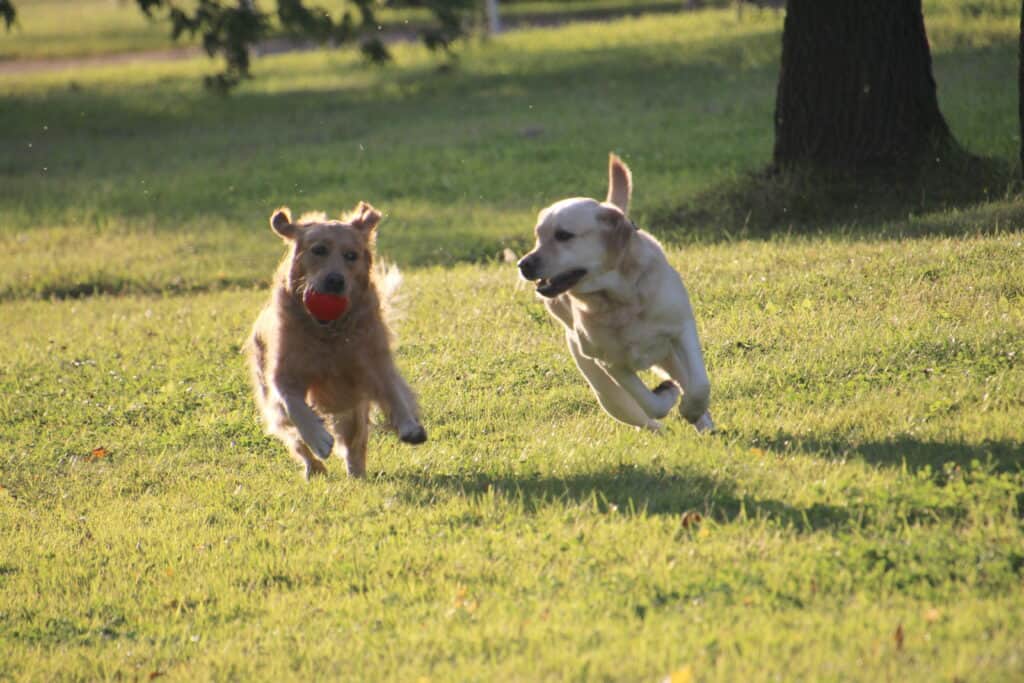
Top Dog-Friendly Activities in Ireland
- Walking the Waterford Greenway: This 46km off-road trail is perfect for a long-distance stroll with your pup, following an old railway line from the city to the sea.
- Beach Running in Donegal: Beaches like Rossnowlagh or Narin-Portnoo offer miles of golden sand where dogs can run free (always check local signage for seasonal restrictions).
- Exploring Killarney National Park: With over 26,000 acres of lakes, forests, and mountains, your dog will be in sensory heaven. Just keep them on a lead to protect the resident red deer!
- The Giant’s Causeway (Northern Ireland): Believe it or not, dogs on leads are welcome to explore the world-famous basalt columns with you.
- A “Doggie Day Out” in Galway City: Galway is arguably Ireland’s most bohemian and dog-friendly city. Grab a coffee and enjoy the street performers on Shop Street.
- In Wicklow Mountains National Park, the park asks that dogs are kept on a lead at all times, and even suggests avoiding bringing dogs at peak visit hours (10am–5pm). That combination – welcome, but managed – is a useful snapshot of how many Irish outdoor sites think about dogs.
- At Cliffs of Moher, dogs on leads are permitted outdoors on the premises, while non-assistance pets are prohibited inside the visitor centre building. This is a common Ireland pattern: outdoor access yes; indoor public buildings typically no (unless assistance dog). Important exception: the Cliffs of Moher Coastal Walk is operating a strict no-dogs policy due to landowner concerns about livestock. This is why your Ireland dog itinerary should always separate “viewpoint attractions” from “linear farmland trails.”
These experiences contribute to the growing reputation of dog-friendly Ireland.
Seasonal considerations
Busy hours matter. Wicklow Mountains National Park explicitly asks visitors not to bring dogs at peak times (10am–5pm), which is a strong signal that summer crowds can make dog management harder.
Wildlife nesting and breeding seasons matter. National parks frequently mention “sensitive times” for wildlife nesting and breeding and recommend avoiding disturbance—this is one reason Ireland leans toward “dogs welcome, but on lead.”
Beach rules and etiquette: assume local bylaws apply
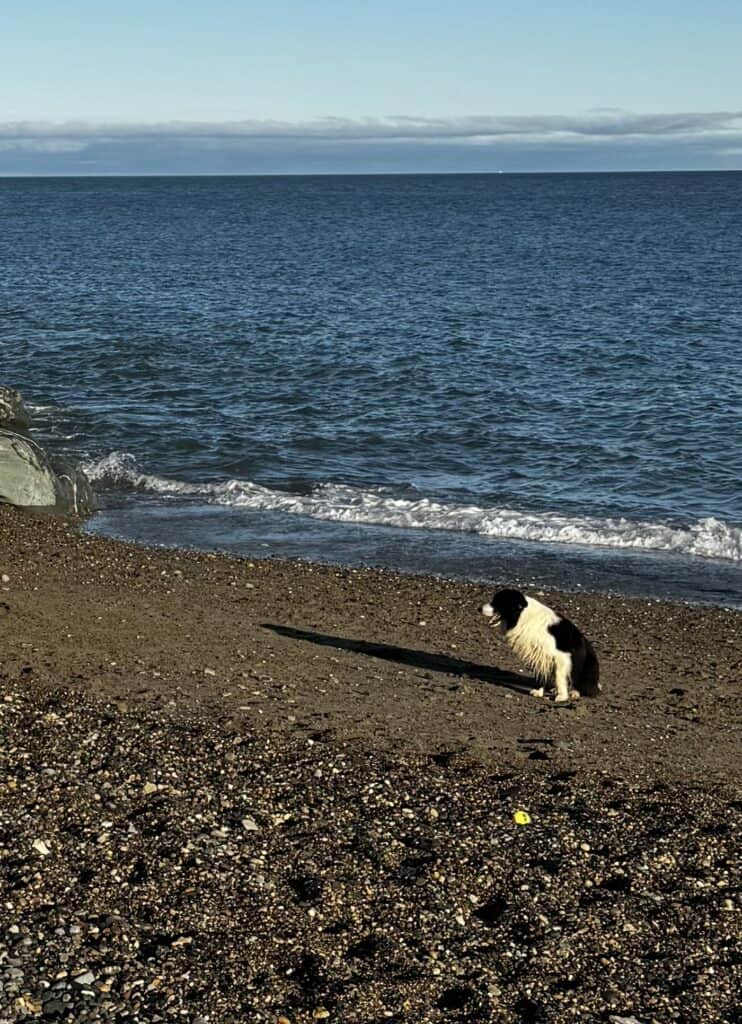
There is no single “Ireland dog beach rule.” Local authorities publish bylaws that can include seasonal and hourly restrictions, especially in designated bathing areas.
For example, Dún Laoghaire-Rathdown County Council lists bathing-area dog prohibitions and leash rules that can apply during the bathing season and at certain times of day.
Galway City Council states dogs are not permitted on its city beaches and waters between 9am and 8pm during May–September, but are allowed outside those hours on a leash (with specific beaches named).
For Blue Flag areas, Ireland’s beach awards guidance states that dogs/pets (other than assistance dogs) are not allowed on a Blue Flag beach or within the Blue Flag area, even if the broader beach outside that zone may allow dogs under local rules.
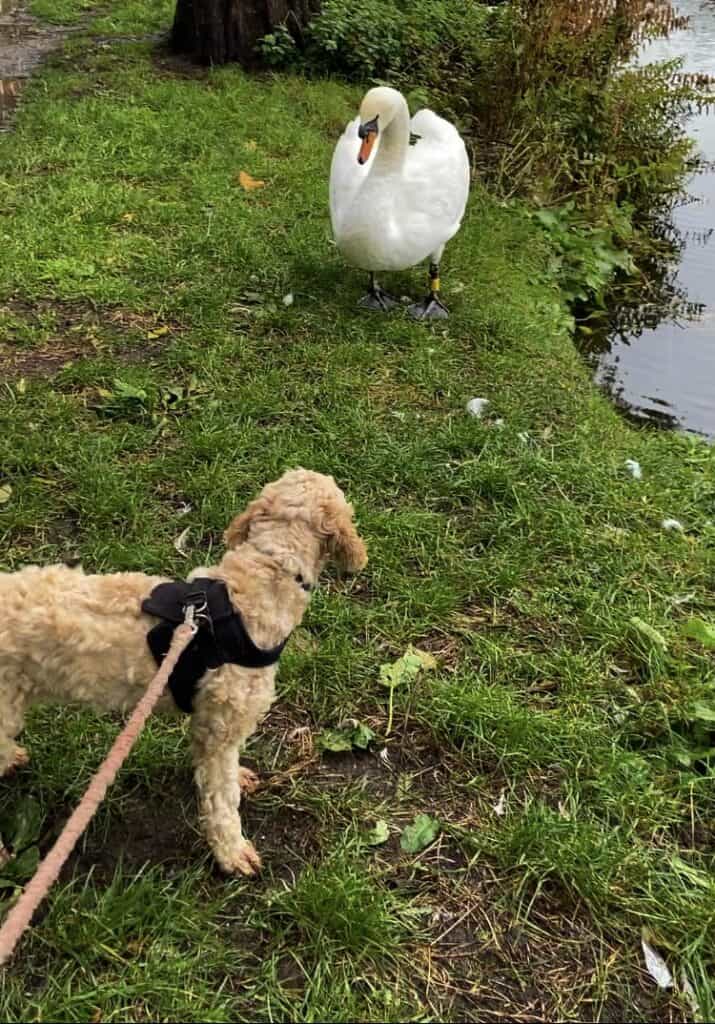
Trails, farmland, and livestock: the “Ireland rule” that saves trips
If a trail crosses private farmland, assume livestock and assume dog restrictions—sometimes absolute prohibitions.
The Cliffs of Moher Coastal Walk is a clear example of a no-dogs policy requested by landowners due to livestock concerns.
For national parks and public lands, follow Leave No Trace guidance: keep your dog in control, use a lead where required, and prevent wildlife harassment.
Interesting Facts & Traditions
- The “Madra” Connection: The Irish word for dog is Madra. You might hear the phrase “Madra Rua” (Red Dog), which is actually the Irish word for a fox!
- Native Breeds: Ireland has nine native dog breeds: The Irish Wolfhound, Irish Setter, Irish Red and White Setter, Irish Terrier, Irish Glen of Imaal Terrier, Irish Soft Coated Wheaten Terrier, Irish Water Spaniel, Kerry Blue Terrier, and the Kerry Beagle.
- Dog-Friendly Ireland Day: Every year in June, the charity Dogs Trust Ireland hosts a national “Dog-Friendly Ireland Day” to encourage businesses to open their doors to furry friends.
Core legal requirements that apply in most cases
Ireland follows EU pet movement rules for dogs (and cats/ferrets). In practice, you should assume you’ll need:
- An ISO-compliant microchip (or an older tattoo applied before July 3, 2011, if legible and documented), and the microchip must be implanted before (or at the same time as) the rabies vaccination.
- A valid rabies vaccination. For a first vaccination (“primary”), EU travel rules require a wait of at least 21 days after the vaccine course is completed before travel (and pets must be at least 12 weeks old to receive the rabies vaccine).
The correct document:
- EU residents typically use an EU Pet Passport.
- Non-EU arrivals use an EU Animal Health Certificate issued by an official state vet in the departure country not more than 10 days before arrival in the EU, plus a written declaration that the movement is non-commercial.
The tapeworm rule for Ireland
Ireland is one of the destinations that requires dogs to be treated against tapeworm (Echinococcus multilocularis) within a fixed time window before entry, unless you’re traveling directly from a limited set of territories that are exempt.
Ireland’s Department of Agriculture guidance for movements states that dogs coming from countries other than Finland, Malta, Norway, or Northern Ireland must have a tapeworm treatment containing praziquantel (or equivalent proven effective against Echinococcus multilocularis) administered by a vet within 24 to 120 hours before entry. If the requirement is not met, the animal can be refused entry, put into quarantine, or returned.
Major ferry carriers repeat the same timing requirement (24–120 hours prior to arrival) and emphasize that the treatment must be recorded on the EU Pet Passport or Animal Health Certificate.
Entering from Great Britain
For UK-based travelers driving or sailing over, the pressure point is paperwork timing.
UK government guidance states that the Animal Health Certificate must be issued within 10 days for entry to the EU, with onward EU travel validity described (four months for onward EU travel after entry, and four months for re-entry to Great Britain).
Ferry operators also clarify that Great Britain-issued EU pet passports are not valid for EU travel anymore, and that a new GB Animal Health Certificate is required for each entry into the EU (while EU pet passports issued by Northern Ireland remain valid for EU travel).
Entering from outside the EU (international, including the US and Canada)
EU rules require an EU Animal Health Certificate issued by an official state vet in the departure country not more than 10 days before arrival, plus a written non-commercial declaration; the pet must enter via a designated Travellers’ Point of Entry and undergo documentary and identity checks.
If you’re coming from an “unlisted” (higher rabies-risk) country, EU rules add a rabies antibody titration test – taken at least 30 days after vaccination – and a three-month waiting period after the blood sample shows a successful result.
Getting to Ireland: ferries, flights, and the practical realities
Most UK and near-Europe travelers find the ferry-and-car format the simplest. Ferry operators explicitly require pets to be declared at booking and provide structured options: pets stay in your vehicle, in onboard kennels, in a dedicated pet lounge/den (where available), or in pet-friendly cabins on certain vessels.
Air travel is possible, but it is airline-specific. Dublin Airport advises that each airline sets its own rules (some accept only assistance animals; others may allow cabin or hold), and emphasizes that advance booking is always required.
Veterinary care availability in Ireland
For travelers, the most reassuring fact is that veterinary premises and practitioners are formally registered, and there is a straightforward way to find legitimate care. Veterinary Council of Ireland regulates the veterinary profession, and Ireland’s government guidance points the public to the VCI register to find a registered veterinary premises, practitioner, or nurse.
Out-of-hours care exists, particularly in and around Dublin. Pet Emergency Hospital offers night and weekend coverage (weeknights 7pm–8am; weekends and bank holidays 24 hours) and operates in partnership with University College Dublin’s veterinary hospital.
Pros and cons of traveling Ireland with a dog
Ireland’s biggest advantage is that so many of its signature experiences are outdoor, nature-based, and compatible with a dog-on-lead style: national parks, coastline viewpoints, and historic parklands.
The biggest downside is that Ireland is not a “hop-on-hop-off with a dog” public-transport destination. Buses are largely a no; trams require carriers; trains are conditional. That means planning matters more here than in countries where pets are routinely accepted on all transit modes.

Leave a Reply